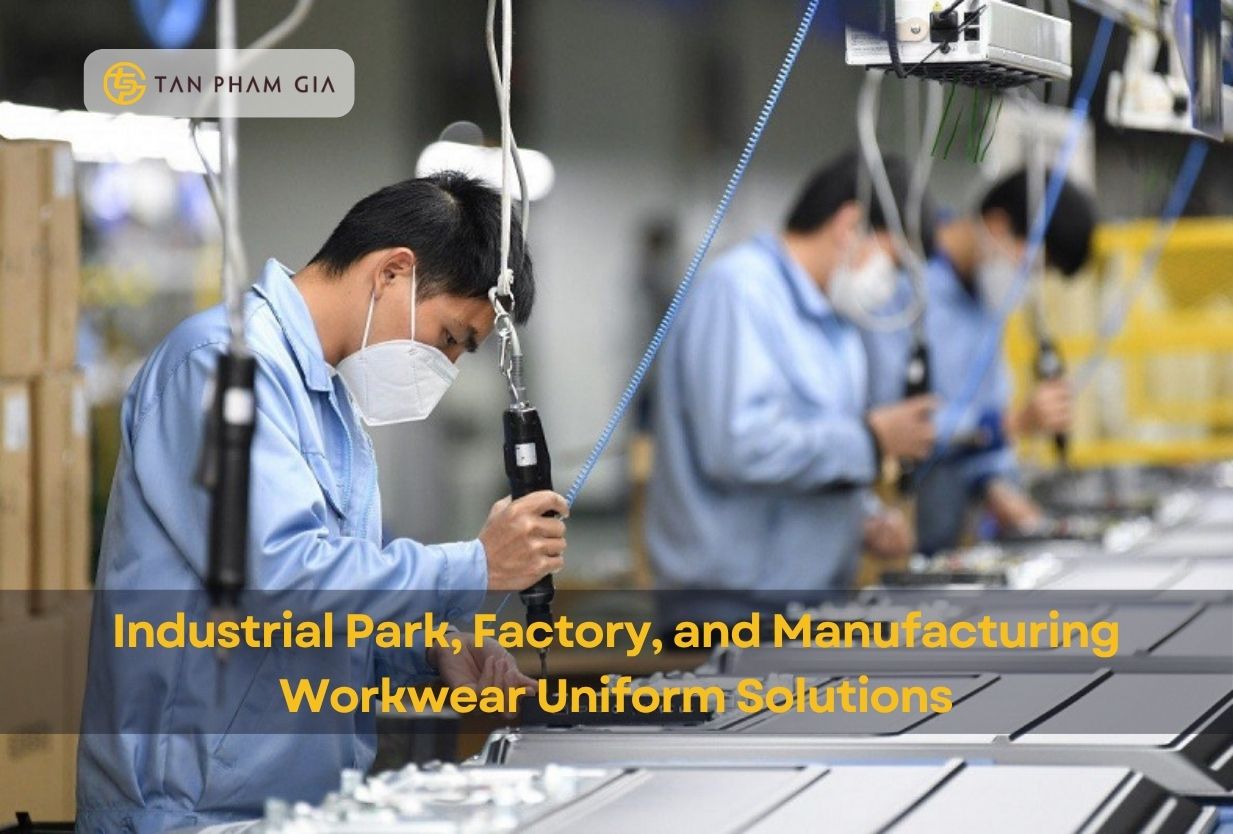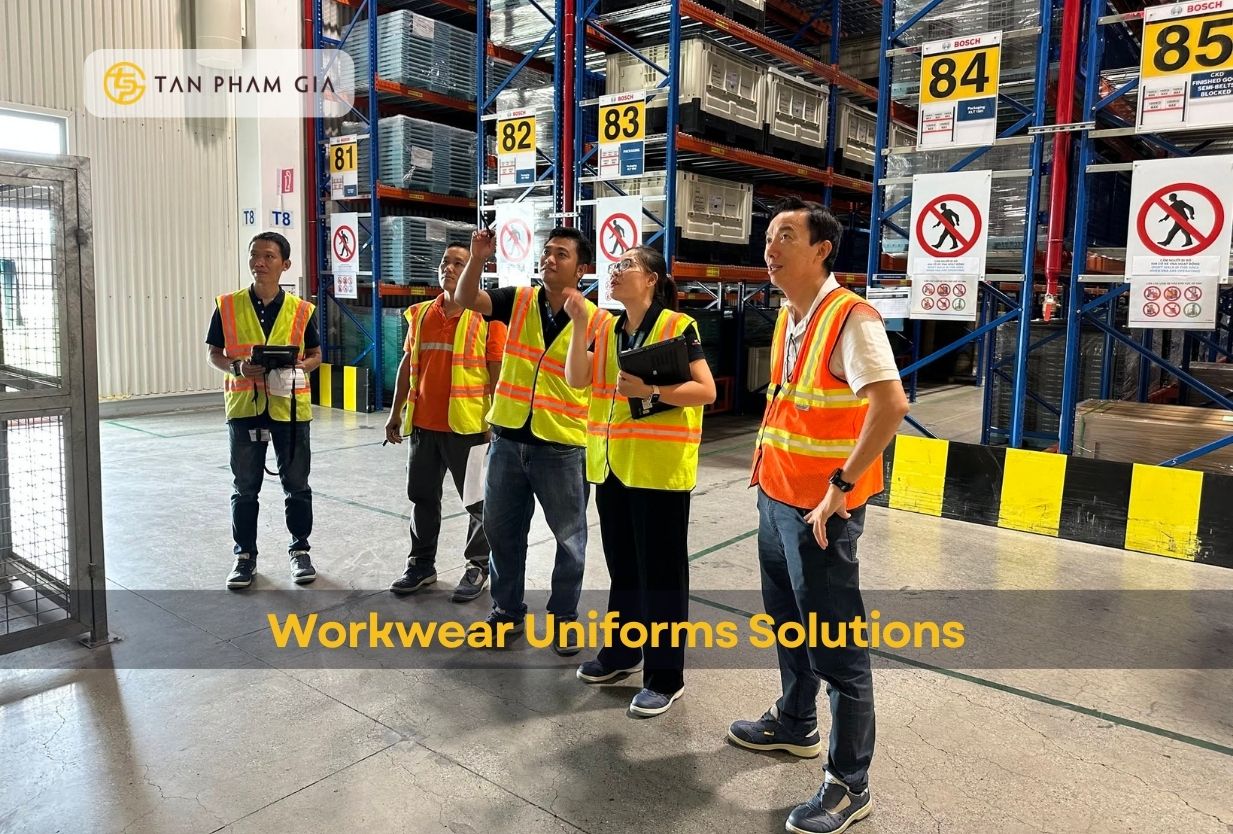
Workwear uniforms should be selected according to the specific working environment. Factories, production facilities, logistics operations, and technical teams have different requirements for durability, breathability, mobility, and ease of care. Beyond the working environment, businesses should also consider fabric, garment construction, and consistency with their corporate identity before placing a bulk order.
Tan Pham Gia Uniform provides fabric consultation and custom workwear uniform manufacturing, helping businesses develop suitable solutions for different departments rather than applying one standard uniform across the entire organization.
Why Should Businesses Choose the Right Workwear Uniforms?
The right workwear uniforms can help businesses manage long-term operating costs, support employee comfort during work, and maintain a professional appearance. These considerations should be addressed from the fabric-selection stage, not only during garment design.
Suitable Uniforms Make Daily Work More Convenient
When the fabric and fit are appropriate, employees can move and perform their tasks more comfortably throughout the working shift.
For positions involving frequent movement, bending, lifting, or continuous manual work, overly tight garments or fabrics with limited stretch can restrict movement. Selecting fabrics according to the actual job requirements can help minimize these issues.
Suitable Fabrics Can Improve Long-Term Garment Durability
Different working environments involve different levels of friction, washing frequency, and exposure to working conditions. A fabric selected according to actual usage can help maintain garment shape and color stability over time, potentially reducing the need for frequent replacement.
Conversely, an unsuitable fabric may wear out more quickly even when the garment is properly maintained.
Consistent Uniforms Make Workforce Management Easier
When uniforms are standardized by style, color, and department-specific combinations, businesses can more easily distinguish employees by work area or job function. This can be particularly useful in factories and logistics operations where multiple teams work simultaneously.
Standardized uniform specifications can also make distribution, replacement, and inventory management more straightforward.
Uniform Design Supports a Professional Corporate Image
Workwear serves a practical purpose, but it can also contribute to corporate identity-particularly for businesses that regularly receive factory visitors, business partners, or inspection teams.
A clean, well-designed uniform using appropriate brand colors can contribute to a professional appearance across the workplace.
Appropriate Uniforms Support More Predictable Replacement Planning
When fabric specifications and expected durability are established from the beginning, HR and administration teams can plan uniform distribution and replacement cycles more effectively instead of dealing with unexpected replacements caused by premature wear.
Not sure which fabric is suitable for your working environment? Tan Pham Gia offers a range of fabric options with different weights, breathability levels, and mobility characteristics for different job requirements. Contact the Tan Pham Gia team for fabric recommendations based on your actual working conditions.
What Should Businesses Consider When Selecting Workwear Uniforms?
Before placing a production order, businesses should evaluate the following five criteria to reduce the risk of selecting unsuitable fabrics or garment designs.
Is the Fabric Suitable for the Working Environment?
First, identify the actual working conditions: high temperatures, dusty environments, the need for breathability, or jobs involving frequent movement. Different environments require different fabric characteristics, and there is no single fabric specification suitable for every application.
Is the Fabric Durable Enough for Frequent Use and Washing?
Workwear is typically worn continuously throughout the working week and washed more frequently than everyday clothing. Businesses should review fabric composition and GSM to better understand durability before determining the production specification.
Does the Garment Allow Sufficient Freedom of Movement?
For positions involving bending, climbing, lifting, or continuous arm movement, a moderately relaxed fit or fabric with stretch content such as Spandex may provide greater mobility than a close-fitting garment made entirely from non-stretch fabric.
Are the Seams and Finishing Details Suitable for the Job?
Reinforced seams at high-stress areas, tool pockets, buttons, zippers, and other construction details should be evaluated according to the actual work requirements of each department rather than appearance alone.
Do the Colors and Design Align With the Corporate Identity?
Workwear colors should balance corporate identity requirements with practical working conditions. For example, environments with significant exposure to dust, dirt, or grease may favor darker or neutral tones that are easier to maintain.
Not sure which workwear style or fabric is right for your business? Share your industry, working environment, and workforce size with Tan Pham Gia for recommendations tailored to your requirements.
Which Fabrics Are Suitable for Workwear Uniforms?
Selecting the right workwear uniform fabric should be based on the working environment, job requirements, durability expectations, comfort, and mobility. Each fabric is suited to different working conditions.
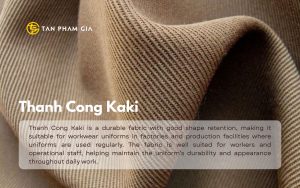
Thanh Cong Kaki – Workwear for Production Environments
Thanh Cong Kaki is a durable fabric with good shape retention, making it suitable for production environments where uniforms are worn frequently. It is suitable for production workers and operations personnel in factories and manufacturing facilities.
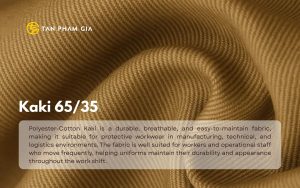
65% Polyester – 35% Cotton Kaki – A Balance of Durability and Comfort
This fabric balances durability, breathability, and ease of care, making it suitable for production, technical, and warehouse environments. It is a practical option for production workers, technical teams, and operations personnel who move frequently during their shifts.
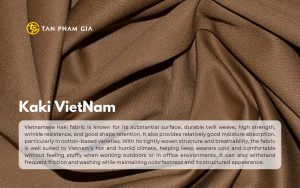
Vietnamese Kaki – A Practical Choice for Corporate Workwear
Vietnamese Kaki offers durability and practical performance for bulk uniform programs in factories, construction environments, and warehouses. It is commonly considered for production workers and technical personnel.
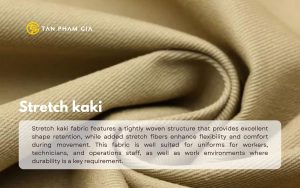
Stretch Kaki – For Jobs Requiring Greater Mobility
Stretch Kaki provides greater flexibility and supports movement during work. It is suitable for technical, maintenance, and operations personnel who frequently move, bend, or perform hands-on tasks.
Kate Silk – For Food Processing Workwear
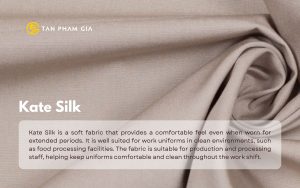
Kate Silk has a soft surface and comfortable hand feel for extended wear, making it suitable for clean working environments such as food processing. It can be used for production and processing personnel.
Kate Ford – A Workwear Option for Food Processing
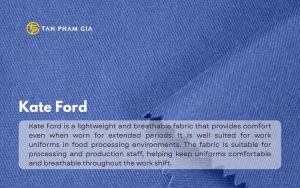
Kate Ford is lightweight, breathable, and comfortable for extended wear, making it suitable for food processing environments and production teams.
Micro – For Seafood Processing Workwear
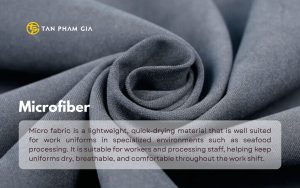
Micro is lightweight and quick-drying, making it suitable for specialized environments such as seafood processing. It can be used for production and processing personnel.
Need fabric recommendations for a workwear uniform order?
Tan Pham Gia can recommend fabric options based on the working environment, level of physical activity, and specific business requirements. Contact 0843 406 406 for consultation.
Workwear Uniform Styles for Factories and Businesses
Workwear Shirts for Production Workers
Workwear shirts for production workers typically prioritize durable fabrics and a moderately relaxed fit to allow employees to perform tasks comfortably around production lines and machinery.
Workwear Sets for Technical Personnel
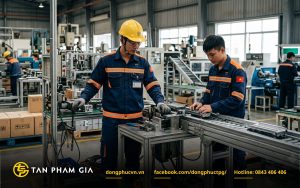
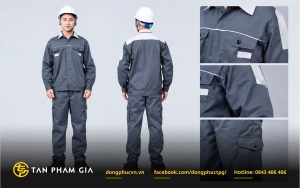
Uniform sets for technical personnel should combine appropriate mobility with practical features such as tool pockets and reinforced seams in high-stress areas.
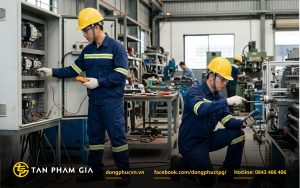
Workwear Uniforms for Factories and Production Facilities
For factory operations, workwear is often standardized by department-such as operations, technical teams, and line management-to make personnel easier to identify during daily supervision and workplace inspections.
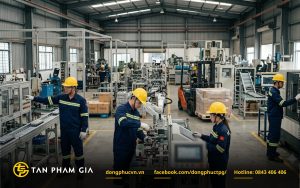
Workwear Uniforms for Warehousing and Logistics
Warehouse and logistics uniforms need to balance durability and breathability because employees may move continuously and handle goods for extended periods.
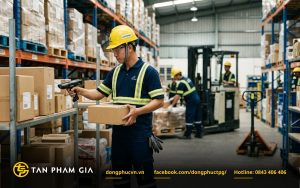
Workwear Uniforms Aligned With Corporate Identity
Beyond fabric performance, workwear can be developed around each company’s colors, logo, and preferred color combinations to maintain consistency with office uniforms and other corporate apparel.
Already have an idea for your workwear design?
Share your preferred colors, garment style, and brand identity requirements with Tan Pham Gia for design recommendations aligned with your corporate image and actual usage requirements.
Workwear Uniform Manufacturing Process at Tan Pham Gia
Define the Working Environment and Usage Requirements
The first step is to understand the job requirements, working environment, and usage frequency of each department. This information provides the basis for recommending suitable fabric and garment specifications.
Recommend Fabric, Garment Style, and Specifications
Based on the identified requirements, Tan Pham Gia recommends suitable fabric types, GSM specifications, and garment styles according to the company’s budget and actual working conditions.
Develop the Design and Approve the Sample
The uniform design is developed according to the required colors, logo, and garment fit. The sample is then submitted for approval before bulk production begins.
Bulk Production and Quality Control
Production is monitored through multiple quality-control stages to maintain consistency across production batches, particularly for large orders involving multiple sizes.
Packaging, Final Inspection, and Nationwide Delivery
Completed garments are packed, checked against the agreed quantities, and delivered nationwide according to the approved delivery plan.
What Factors Affect Workwear Uniform Pricing?
Workwear uniform pricing is not fixed and depends on the specific requirements of each order.
- Fabric and Technical Requirements: Different fabrics have different compositions and GSM specifications, which directly affect production costs.
- Order Quantity: Larger production quantities can often optimize the cost per garment through more efficient manufacturing processes.
- Garment Style, Colors, and Customization: Custom requirements for garment construction, color combinations, or special design details can affect production time and overall cost.
- Logo Printing, Embroidery, and Branding Details: The logo application method, number of branding positions, and number of design elements are also factors that contribute to the overall cost.
Why Should Businesses Avoid Applying One Fixed Price to Every Order?
Each business has different requirements for fabric, quantity, garment construction, and customization. A fixed price cannot accurately reflect the actual cost of every project and may not represent the appropriate specification for a particular order.
For this reason, Tan Pham Gia recommends reviewing the actual requirements before providing a project-specific quotation.
Already know your required quantity, garment style, or fabric?
Send your requirements to Tan Pham Gia for a tailored production solution and quotation.
Can Tan Pham Gia Handle Bulk Workwear Uniform Orders?
Yes. Tan Pham Gia serves businesses requiring bulk uniform production, including factories, corporate groups, and multi-department operations.
Experience in Bulk Uniform Manufacturing
Tan Pham Gia has more than 23 years of experience in the fashion and garment industry, with a focus on developing uniform solutions that help businesses maintain a consistent and professional corporate image.
In addition to durability and brand consistency, Tan Pham Gia applies its “Golden Ratio” approach together with 3D pattern technology and mannequin-based fitting to develop garments designed for comfort, proportions, and different wearer profiles.
A Dedicated Fabric System
Tan Pham Gia’s fabric system is developed specifically for corporate uniform applications in Vietnam, with control over fabric GSM to balance durability, breathability, and shape retention.
>>> Learn more: Fabric Collection – Corporate Uniform Materials | Tan Pham Gia
Fabric Recommendations Based on Working Conditions
Rather than applying one fabric specification across every department, Tan Pham Gia recommends materials according to specific working environments, as outlined above.
Material and Production Quality Control
Quality control is carried out through multiple stages to maintain consistency across production batches, which is particularly important for large orders involving multiple sizes.
Uniform Development Based on Corporate Identity
In addition to fabric selection, Tan Pham Gia supports uniform development based on each company’s colors, logo, and corporate identity requirements.
FAQs – Frequently Asked Questions About Workwear Uniforms
Questions 1. Which Fabric Should Businesses Choose for Workwear Uniforms?
The appropriate fabric depends on the working environment:
- Thanh Cong Kaki and Vietnamese Kaki: Suitable for factories, production facilities, and construction environments.
- 65% Polyester – 35% Cotton Kaki: Suitable for technical and warehouse operations.
- Stretch Kaki: Suitable for jobs requiring greater mobility.
- Kate Silk, Kate Ford, and Micro: Suitable for food and seafood processing environments.
See the fabric comparison table above for more details.
Questions 2. What Is the Minimum Order Quantity for Workwear Uniforms?
Tan Pham Gia accepts workwear uniform orders from 100 sets. For specific order quantities, businesses can contact the team or submit an inquiry form for production consultation.
Questions 3. Can Workwear Uniforms Be Customized?
Yes. Businesses can specify garment style, fabric, colors, logo placement, and other corporate identity requirements according to their internal standards.
Questions 4. How Is Workwear Uniform Pricing Calculated?
Pricing depends on fabric, order quantity, garment construction, logo printing or embroidery, and the level of design customization. There is no single fixed price applicable to every order.
Questions 5. How Long Does Workwear Uniform Production Take?
Production lead time depends on the order quantity, fabric specification, garment design, and level of customization required for each project.
Questions 6. Does Tan Pham Gia Accept Large Workwear Uniform Orders?
Yes. Tan Pham Gia has production capabilities and multi-stage quality control processes designed to support bulk orders from businesses, corporate groups, and operations involving multiple departments.
Order Custom Workwear Uniforms From Tan Pham Gia
- Submit Your Quantity, Industry, and Working Environment: Businesses provide basic information about the required quantity, industry, and working environment so Tan Pham Gia can develop an initial recommendation.
- Receive Fabric and Design Recommendations: Based on the information provided, Tan Pham Gia recommends suitable fabric options and garment designs according to actual usage requirements.
- Approve the Sample Before Production: The proposed sample is submitted for business approval before bulk production begins.
- Receive a Project-Specific Quotation: The quotation is developed based on the selected fabric, order quantity, garment design, and specific production requirements.
Choosing the right workwear uniforms requires an understanding of the actual working conditions of each department-from factories and logistics operations to technical teams-rather than applying one standard uniform across the entire organization.
Tan Pham Gia provides workwear uniform consultation and manufacturing solutions based on job requirements, working environments, and corporate identity specifications. Share your required quantity, working environment, and design requirements via Hotline 0843 406 406 or the contact form below to discuss a suitable uniform solution.