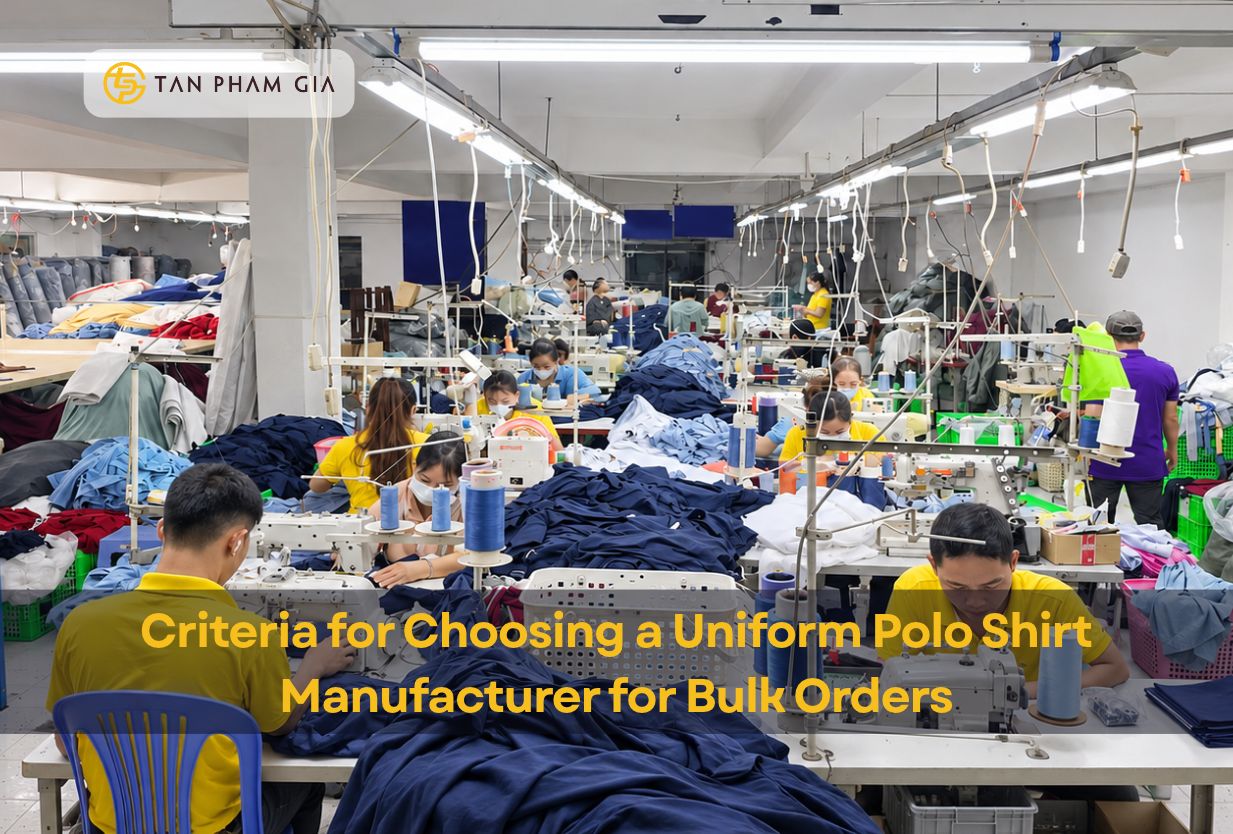
With orders ranging from several hundred to several thousand shirts, choosing the wrong manufacturer can lead to color inconsistencies, sizing discrepancies, and production delays. Businesses should establish clear criteria for choosing a uniform polo shirt manufacturer before comparing quotes.
In this article, Tan Pham Gia Uniform reviews seven practical criteria, including production capacity, materials, sample approval, quality control, printing and embroidery, delivery timelines, and pricing. Written from the perspective of administrative, HR, and procurement teams, this guide can help your business find a partner that fits its plans and brand identity.
Why Carefully Evaluate a Manufacturer Before Placing a Large Polo Shirt Order?
Large uniform polo shirt orders carry more risk than small orders because a minor error can affect the entire batch. If the approved sample is inaccurate or inspections are not thorough, your company may need to address the same issue across hundreds of shirts.
Common risks when choosing the wrong manufacturer include:
- The finished shirts do not match the approved sample, including the fit, logo placement, collar, or cuffs
- Color differences between batches or production runs
- Sizes do not match employees’ registration forms
- Delivery delays affect a rollout, event, or hiring schedule
Before comparing suppliers, prepare the following details so each manufacturer can quote the same product configuration:
- Quantity by size, including men’s and women’s sizes if applicable
- Preferred fabric and colors
- Logo, application method (printing or embroidery), and placement
- Required delivery date
- Estimated budget
A consistent product brief makes supplier evaluations more objective and helps reduce unexpected issues later.

7 Criteria for Evaluating a Uniform Manufacturer Before Ordering Polo Shirts
1. Relevant Experience and Production Capacity for Large Orders
Relevant experience means working with polo shirts and orders similar in size to your company’s needs. A manufacturer accustomed to small orders may not be equipped to manage several thousand shirts delivered in multiple batches.
When evaluating a manufacturer, ask about:
- Its operating history, factory size, and completed projects
- Projects of similar size and in similar industries, such as factories, retail chains, or offices
- Which production steps it handles in-house and which it outsources
- The capacity it can allocate to your order and the proposed production schedule
Compare these details with your company’s quantity, requirements, and deadline. This helps you evaluate the supplier based on specific information instead of general claims.
2. A Range of Fabrics with Consistent Quality for Different Needs and Budgets
Choose fabric based on the working environment, not price alone. Polo shirts for factory workers, office employees, and executives may have different requirements for comfort, durability, and feel.
Consider:
- The work environment, such as indoor or outdoor use and long shifts
- How the shirts feel and how many hours they will be worn each day
- Uniform replacement cycles and budget
A professional manufacturer should provide fabric details, including fiber content, knit or weave type, weight in GSM (grams per square meter), color, and care instructions. Request fabric swatches or a sample shirt so you can inspect them directly. If your company has specific requirements for colorfastness, shrinkage, or moisture absorption, discuss testing methods and supporting documentation in advance.
3. A Clear Sample-Making and Approval Process That Supports Your Brand Identity
A clear sample approval process helps your business finalize the product before bulk production. It typically includes receiving the requirements, design, sample making, revisions, and final approval.
Review the following on the sample:
- Fit, including the shoulders, body, length, and sleeves
- Fabric and color compared with your requirements
- Logo placement, size, and other brand details
Agree on who will approve the sample on your company’s behalf and how revisions will be recorded. The final approved sample should be the reference for production. Confirm all key requirements before bulk production begins.
4. Quality Control That Maintains Consistency Across Batches
Large companies often prioritize consistency between batches because employees wear the same uniforms in the same workplace. Ask the manufacturer which production stages include quality checks:
- Incoming materials
- Work in progress during sewing
- Finished shirts before packaging
Inspection criteria should be clearly defined, including measurements, stitching, color, logos, quantity, and packaging requirements. Finished products should be checked against the approved sample and agreed specifications. For orders delivered in multiple batches, agree on how the sample and specifications will be retained and used for comparison.
5. Careful Logo Printing or Embroidery That Matches Your Brand
The logo is one of the most visible brand elements on a polo shirt, so the application method should suit the design and fabric. Logos with small details or multiple colors may require a different approach from simpler designs.
Agree with the manufacturer on:
- A printing or embroidery method suited to the logo and shirt fabric
- The logo’s position, size, and colors
- A physical sample for reviewing clarity, placement, and overall appearance
Also clarify finishing details such as the collar, cuffs, color blocking, labels, and packaging. These details contribute to the overall appearance of the uniforms.
6. A Clear Production Schedule and Contract Terms That Fit Your Rollout
The production schedule should include specific milestones, not just a delivery date. Ask for a timeline covering sample approval, material preparation, production, inspection, and delivery. Also clarify how long your company will have to review samples and confirm revisions, since this affects the overall schedule.
The contract should clearly specify:
- Quantity, sizes, fabric, colors, and logo
- Delivery deadline and acceptance criteria
- How changes requested by your company will be handled
- How discrepancies from the agreement will be resolved
7. Helpful Guidance and Detailed, Transparent Quotes That Fit Your Procurement Process
A transparent quote clearly identifies the product specifications and each cost item. This helps your procurement team compare suppliers on the same basis.
When reviewing a quote, check:
- Product specifications, including fabric, color, fit, logo, and packaging
- Individual cost items
- Which costs are included and excluded
- Conditions that may result in additional costs
Also assess the manufacturer’s ability to advise on fabric, styles, sizing, and production options. Agree on a point of contact, how progress updates will be shared, and which documents your procurement process requires, such as contracts, invoices, and acceptance records.

Request a Quote for Bulk Uniform Polo Shirts
Preparing a quote request for a large polo shirt order? Send Tan Pham Gia your quantity, preferred fabric, and required delivery date so the team can recommend a production option suited to your needs.
How to Evaluate Uniform Manufacturers and Compare Suppliers
The most effective way to compare manufacturers is to send each one the same product brief. When suppliers respond to the same specifications, you can review their proposals more objectively.
You can follow these steps:
- Prepare a consistent brief with the quantity, sizes, fabric, colors, logo, and deadline
- Request fabric swatches, sample shirts, or details about similar projects
- Compare quotes based on the same product specifications
- Record each supplier’s results against your criteria
- Confirm key details in writing
Use the table below to record your evaluation of each manufacturer:
Consider all the criteria together instead of relying on just one factor. This can help you identify a reputable uniform polo shirt manufacturer based on its actual capacity and processes.
Tan Pham Gia: A Uniform Polo Shirt Manufacturer for Bulk Corporate Orders
Tan Pham Gia provides corporate uniform solutions for B2B customers, including large orders. Its process includes consultation, sample and fabric selection, design, sample approval, production, quality inspection, and delivery. Each step is intended to help businesses maintain consistency with their brand identity.
For fabric, Tan Pham Gia develops options for different work environments. For example, the TPG Prime™ line with Royal Pique™ (100% polyester, 270 GSM) is often considered for factories, logistics, F&B, and retail chains. The TPG Signature™ line with Soft Pique™ (60% cotton / 40% polyester, 210 GSM) is suited to executive teams and premium corporate needs. Patternmaking and draping on a dress form support fit development, while a multistage quality control process helps track consistency across large orders.
Frequently Asked Questions About Choosing a Uniform Polo Shirt Manufacturer
Questions 1. Where should I start when evaluating a uniform polo shirt manufacturer?
Start with your company’s product brief. Include the quantity by size, fabric, colors, logo, delivery deadline, and budget. Sending the same brief to several manufacturers makes it easier to compare their capacity, fabric samples, and quotes objectively.
Questions 2. Should I choose a manufacturer based only on the lowest price?
No. Price is meaningful only when the quotes cover the same specifications, including fabric, fit, printing or embroidery method, and quality inspection requirements. Consider the fabric, sample approval process, quality control, timeline, and contract terms as well.
Questions 3. Why approve a sample before bulk production?
Sample approval lets your business confirm the fit, fabric, color, and logo placement before mass production. The approved final sample serves as a reference for checking the finished products and helps reduce discrepancies across the order.
Questions 4. What should a contract for a large polo shirt order include?
The contract should specify the quantity, sizes, fabric, colors, logo, delivery deadline, and acceptance criteria. It should also explain how changes requested by your company or discrepancies from the agreement will be handled.
Questions 5. What should a uniform polo shirt quote include?
The quote should list the product specifications and cost items, along with what is included, what is excluded, and the conditions that may result in additional charges. To request a quote for your specific needs, contact Tan Pham Gia at 0843 406 406 or submit the consultation form.

Choosing a manufacturer for a large polo shirt order involves evaluating seven areas: experience and production capacity, fabric, sample approval, quality control, printing and embroidery, timelines and contract terms, and guidance and pricing. Comparing suppliers against the same product brief can help your business find a partner that fits its schedule and brand identity. These are the key criteria for choosing a uniform polo shirt manufacturer and reducing risk on a large order.
If your company is planning a uniform polo shirt order, contact Tan Pham Gia to discuss fabric, fit, and a production process suited to your needs.