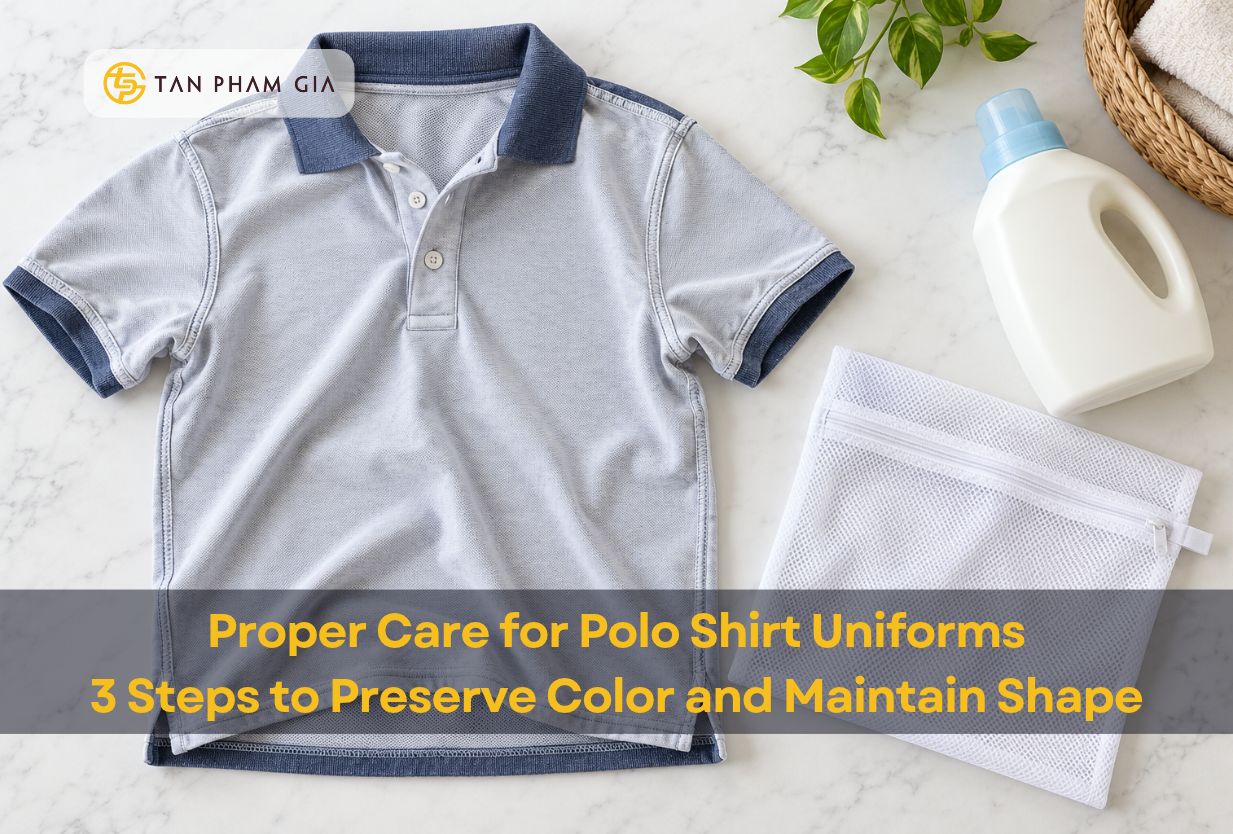
Proper care for polo shirt uniforms helps businesses maintain garment shape, color consistency, and a consistent team appearance throughout their service life. Incorrect washing or storage, on the other hand, can cause fading, stretched collars, and unplanned replacement costs. In this guide, Tan Pham Gia Uniform explains how to identify fabric types, read care labels, follow a three-step wash–dry–iron routine, and establish storage standards for the entire workforce.
Why Proper Polo Shirt Care Is a Business Cost-Control Issue
Proper care helps corporate uniform polo shirts retain their shape, color, and durability for longer, reducing the number of shirts that need to be replaced outside the original plan.
For large workforces, uniform costs do not end with the initial order. They also depend on how the garments are used and cared for over the following months. That is why corporate uniform polo shirt care should be treated as part of the uniform budget plan.
Extend the Uniform Lifecycle and Reduce Replacement Frequency
Shirts washed and stored according to their fabric characteristics are less likely to pill, fade, or develop stretched collars. This allows them to remain in use for the planned service cycle, so replacements can be scheduled periodically instead of handled case by case throughout the year.
Reduce Hidden Costs During Replenishment Orders
Several small replenishment orders are often less cost-efficient than one well-planned order and may also involve additional production lead time. Administrative and HR teams must recheck sizes, collect old shirts, and distribute new ones, increasing the workload beyond the original plan.
In addition, a replenishment batch may have a slightly different shade from the previous batch if the existing shirts have faded after repeated improper washing.
Protect Brand Image: The Intangible Cost
Faded shirts, stretched collars, or visible shade differences between new and existing employees can make the team look inconsistent in front of customers and business partners. This cost is difficult to measure, but it directly affects the professional impression that the uniforms were intended to create.
Take Control of the Uniform Budget
When uniform service life is more stable, businesses can forecast annual costs more accurately and compare planned spending with actual usage. A shared care standard helps limit unplanned expenses and allows the purchasing team to prepare replacement plans more proactively.
Corporate Uniform Polo Shirt Fabrics: A Key Factor in Durability and Shape Retention
Each polo fabric has different characteristics in terms of colorfastness, stretch, and heat resistance. Washing, drying, and ironing methods should therefore be adjusted for each fabric type. Understanding the material helps businesses create practical care instructions that reduce damage and keep uniforms consistent over time.
>>> See also: 13 Corporate Polo Shirt Fabrics – TPG Fabric Collection™
Polyester Polo Shirts: Quick-Drying and Color-Stable, but Sensitive to High Heat
Polyester is widely used for corporate uniforms because it dries quickly, resists wrinkles, and generally maintains color stability after repeated washing. It is suitable for high-intensity operating environments where uniforms need frequent laundering while maintaining a neat appearance.
The key consideration is heat sensitivity. Very hot water, high-heat drying, or ironing directly at a high temperature can make the fabric surface look shiny, pill, or lose its shape. Cold or warm water and low-temperature ironing are generally preferred.
Cotton and Cotton-Blend Polo Shirts: Soft, Breathable, and Prone to Slight Shrinkage
Cotton provides a soft, breathable feel and natural moisture absorption, making it a common choice for office, education, and service employees. Cotton blends balance the softness of natural fibers with the durability and shape retention of synthetic fibers.
These fabrics may shrink slightly or fade when washed in hot water or exposed to strong bleach. Businesses should instruct employees to separate garments by color and avoid prolonged exposure to intense sunlight so that colors remain more consistent across batches.
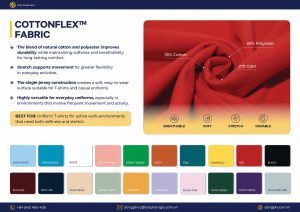
Spandex-Blend Polo Shirts: Stretchy and Comfortable, but Avoid Twisting
Spandex is added in a small percentage to increase stretch, allowing the shirt to move more comfortably and maintain a closer silhouette. This type of fabric is often suitable for employees who move frequently, work in restaurants or events, or participate in sports and team-building activities.
Stretch fibers may lose elasticity when exposed to high heat or repeatedly twisted and pulled. Avoid twisting the shirt during wringing, limit high-heat drying, and reshape the collar and sleeve cuffs before hanging the garment to help it retain its form.
The information above is general guidance. Always check the care label on each product for the correct instructions.
Polo Shirt Care Labels: The Manufacturer’s Main Guide
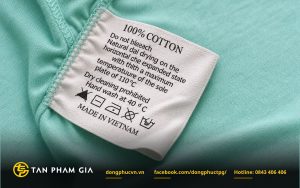
Care labels list the fiber content and care symbols, making them the most reliable reference for selecting the correct wash cycle and temperature. Checking the label before washing helps prevent common mistakes such as using water that is too hot, applying unsuitable bleach, or ironing at the wrong temperature.
Each uniform batch may use a different fabric, so businesses should consolidate label information into a short care guide for employees and laundry providers. This helps ensure that corporate polo shirt care is applied consistently rather than based on individual habits.
A Three-Step Wash–Dry–Iron Routine for Maintaining Shape and Color
The three steps-washing, drying, and ironing-should be completed in the correct order to help limit pilling, fading, and stretched collars. The following process applies to corporate polo shirts in general, but each product label should still be checked first.
Step 1: Wash Corporate Polo Shirts Gently With Cold or Warm Water
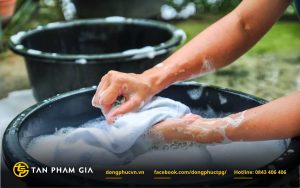
Proper corporate polo shirt washing begins by separating garments by color, turning shirts inside out, and selecting a gentle cycle with cold or warm water. Strong bleach should be avoided because it can fade the fabric and affect printed or embroidered logos.
To prevent damage to the collar, avoid aggressive wringing and do not hang a shirt while it is heavily saturated. The weight of the water can stretch the collar and shoulders. If using a washing machine, place the shirt in a laundry bag and select a low spin speed to help preserve the collar and cuffs.
Step 2: Air-Dry or Tumble-Dry With Good Ventilation and Limited Heat
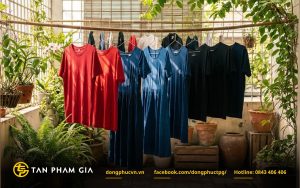
Before hanging the shirt, smooth the fabric and reshape the collar and cuffs so the garment dries in the correct form. Dry shirts in a well-ventilated area and avoid prolonged exposure to intense sunlight, which can accelerate fading.
For better color retention, limit high-heat drying, especially for polyester and spandex-blend shirts. If machine drying is necessary, select a low-heat setting according to the care label and remove the shirt while it is still slightly damp to help prevent shrinkage and excessive wrinkling.
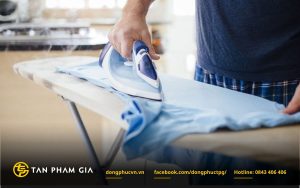
Step 3: Iron at Low Heat, Turn the Shirt Inside Out, and Protect the Logo
Iron polo shirts at low to medium heat according to the care label. Turn the shirt inside out whenever possible to help prevent the fabric surface from becoming shiny. Avoid pressing the iron directly over printed or embroidered logos. A thin protective cloth can be placed between the iron and the logo area.
Wrinkle-resistant shirts may only require light ironing around the collar, placket, and shoulders. Using the correct heat level keeps the shirt looking neat without shortening the fabric’s service life.
Three-Step Checklist for Businesses to Print and Share With Employees:
- Wash: Separate colors, turn shirts inside out, use a gentle cycle, choose cold or warm water, and avoid aggressive wringing.
- Dry: Reshape the collar and cuffs, dry in a well-ventilated area, avoid intense sunlight, and limit high-heat drying.
- Iron: Use low to medium heat, iron inside out, and avoid pressing directly over the logo.
A Corporate Polo Shirt Care Standard Helps Maintain a Consistent Appearance
Businesses should establish uniform-care rules for the entire workforce instead of leaving each employee to follow personal habits. Clear standards help new and frequently worn shirts maintain a more consistent appearance while limiting unplanned replacement costs.
Hang, Fold, and Store Corporate Polo Shirts in a Dry, Well-Ventilated Area
After washing and ironing, shirts should be hung on hangers with suitable shoulder support or folded neatly and stored in a dry, well-ventilated space. This basic approach to corporate polo shirt storage helps prevent mildew, unpleasant odors, and discoloration caused by direct sunlight.
For shirts stored over a long period, inspect them periodically and make sure they are completely dry before folding. Avoid stacking too many heavy garments on top of one another, as this can create deep creases and deform the collar.
Rotate Multiple Uniform Sets for Each Employee
Providing each employee with at least two uniform sets allows the garments to rest between wear and washing cycles. This is particularly useful for employees working multiple shifts or moving frequently because shirts are less likely to be washed and dried in a hurry, helping them retain color and shape for longer.
Manage Reserve Uniforms With Consistent Styles, Color Codes, and Sizes
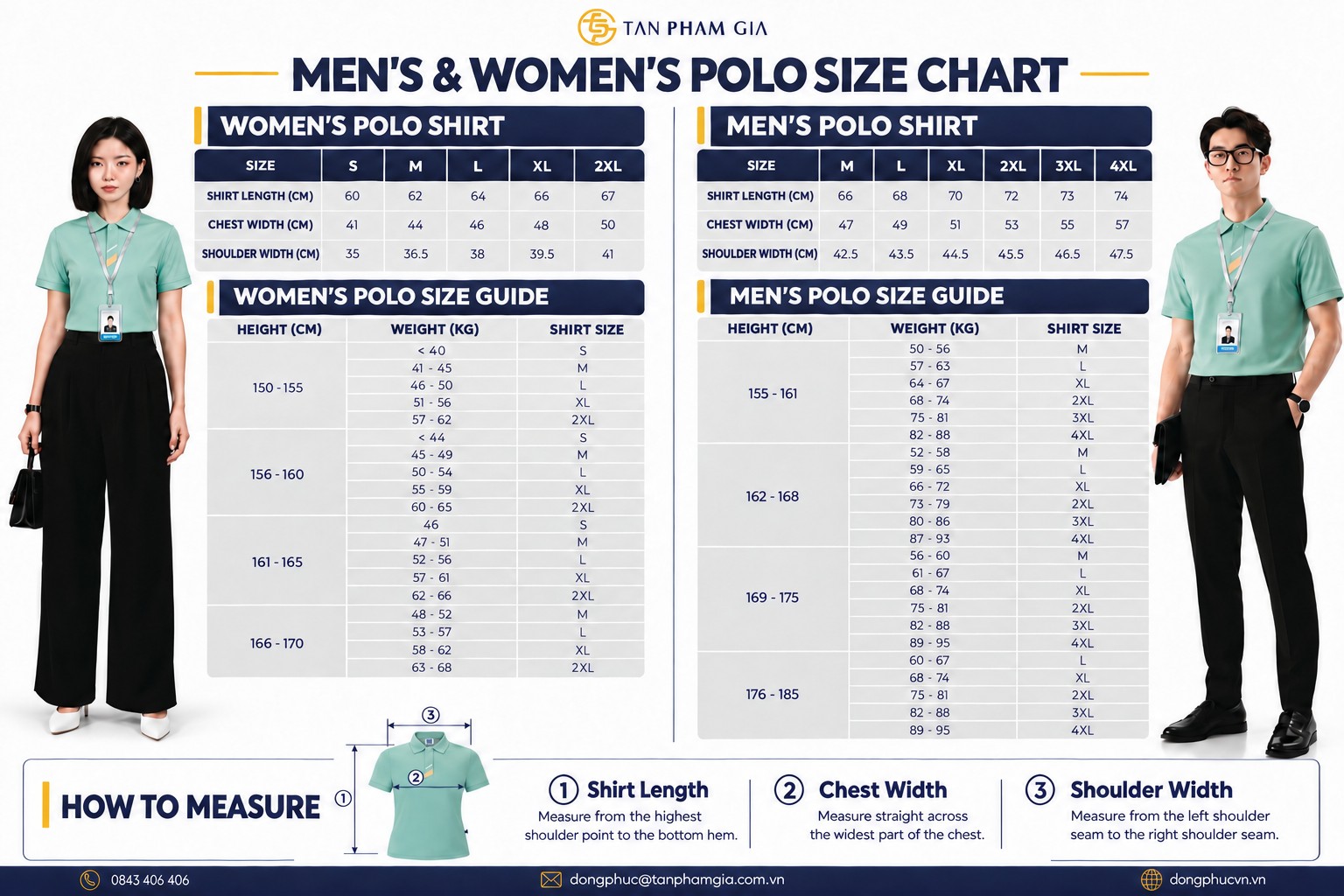
Businesses should maintain a small reserve stock for new employees and unexpected replacements, together with size records for each branch. For multi-location operations, keeping an approved sample, color codes, and size chart on file helps ensure that replenishment orders remain consistent with previous batches and prevents shade or shape differences between locations.
Corporate Polo Shirt Care Tips: Separate Colors, Treat Stains Early, and Keep Shirts Dry
A few simple but effective tips include separating white shirts from colored garments, treating stains early before they penetrate the fibers, and never leaving damp shirts in sealed bags. Trapped moisture can cause odors and stains, especially in hot and humid conditions.

Does your business need a uniform-care standard to accompany a corporate uniform order? Submit the contact form so Tan Pham Gia Uniform can discuss a solution suited to your workforce size, selected fabrics, and actual uniform-management needs.
Tan Pham Gia Uniform Helps Businesses Maintain Polo Uniform Quality Over Time
The long-term quality of corporate polo uniforms depends on three factors: fabric, garment construction, and care. Tan Pham Gia Uniform supports businesses across all three areas-from consultation and production to post-delivery care guidance.
Production Experience and a Structured Quality-Control System
With more than 23 years of experience in fashion and apparel, Tan Pham Gia Uniform has worked with more than 500 businesses and produced over 1,000,000 garments. A structured production and quality-control system helps maintain consistency in fabric, color, and stitching across each uniform batch.
Traditional Dress-Form Draping for More Consistent Garment Shapes
Tan Pham Gia Uniform applies the Golden Ratio standard and traditional draping directly on a dress form to develop garments that accommodate a range of body shapes. Establishing the garment form correctly from the beginning helps polo shirts retain their shape through repeated washing and use.
Support From Consultation Through Delivery, Including Care Guidance
The consulting team helps businesses select fabrics and production options suited to their working environment while also recommending uniform-care standards after delivery. Businesses can explore Tan Pham Gia Uniform’s corporate polo uniform solutions or contact the hotline at +84 843 406 406 and submit the contact form for advice based on workforce size.

Frequently Asked Questions About Corporate Uniform Polo Shirt Care
Questions 1. Should corporate polo shirts be machine-washed or hand-washed?
They can be machine-washed if the care label allows it. Use a gentle cycle, cold or warm water, turn the shirt inside out, and place it in a laundry bag to protect the collar and logo. Shirts with embroidered or complex printed logos, or collars that stretch easily, may be better suited to gentle hand-washing. Regardless of the method, separate white and colored shirts to help prevent color transfer.
Questions 2. Should bleach be used on white corporate polo shirts?
Only use bleach when the care label permits it, and choose a mild product instead of a strong bleaching agent. If the label shows a crossed-out triangle, do not use bleach. For shirts with colored logos or contrast details, test the product on a hidden area first to avoid fading or damage to printed and embroidered details.
Questions 3. How can you prevent a polo collar from stretching or rolling?
Avoid aggressive wringing and do not hang the shirt while it is heavily saturated because the water weight can stretch the collar and shoulders. Before drying, smooth the shirt and reshape the collar and cuffs. When ironing, turn the shirt inside out and use low to medium heat. Also avoid pulling the collar forcefully when putting the shirt on or taking it off.
Questions 4. Can corporate polo shirts be tumble-dried?
It depends on the care label. For polyester and spandex-blend shirts, high-heat drying should be limited because it can cause pilling and reduce elasticity. If drying by machine is necessary, choose a low-heat setting and remove the shirt while it is still slightly damp. Air-drying in a well-ventilated area remains the safer option for color retention and garment shape.
Questions 5. Should businesses outsource uniform laundry services?
This solution may be suitable for companies with large workforces or multiple branches. Businesses should provide the laundry provider with a consolidated guide based on the care labels, agree on wash temperatures and cycles, and periodically inspect garment quality after washing to ensure that uniforms are cared for consistently.