The fabric used for a corporate polo directly affects wearer comfort, shape retention, brand presentation, and long-term operating costs. However, a material suited to office employees may not meet the needs of warehouse teams, restaurant staff, or employees who work outdoors.
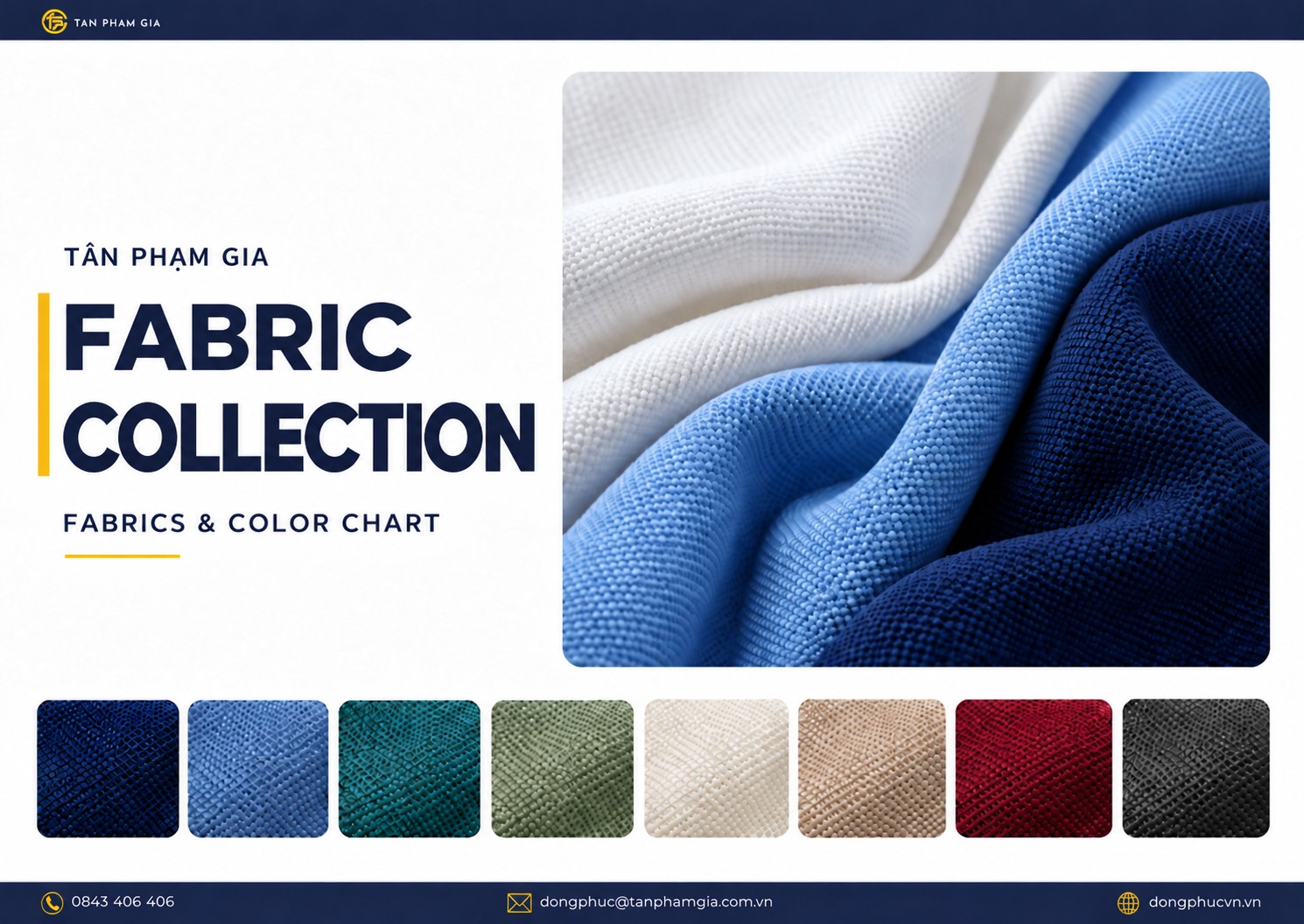
Tan Pham Gia Uniform developed the TPG Fabric Collection™ to help businesses compare 13 types of polo shirt fabric by fiber composition, GSM, surface structure, and intended working environment. This guide examines each fabric group, explains important selection criteria, and shows how to narrow the options before approving a production sample.
How Is the TPG Polo Uniform Fabric System Organized?
The TPG Fabric Collection™ includes 13 fabrics divided into five groups. Each group addresses different priorities, including frequent wear, service environments, a cotton-rich feel, outdoor activity, and business-casual presentation.
This classification helps businesses avoid selecting fabric based only on a trade name or fiber ratio. For example, Royal Pique™ and AirFlex™ are both made from 100% polyester, but Royal Pique™ has a structured piqué knit surface and a weight of 270 GSM, while AirFlex™ has a lightweight micro-mesh surface and weighs 190–200 GSM. Their appearance, hand feel, and suitable applications therefore differ.
Why Does Fabric Determine the Quality and Value of a Polo Uniform?
Fabric affects wearer experience, garment structure, logo presentation, and the total cost of ownership for corporate polo uniforms. For orders covering hundreds of employees, selecting the right polo uniform fabric from the beginning also helps maintain consistency across job functions and repeat orders.
Wearer Experience Throughout the Workday
Daily wearing time, workplace temperature, and activity level are the first three factors to consider. Employees working in warm environments or moving frequently may prioritize fabric weight, airflow, and moisture-management requirements. Customer-facing positions may place greater emphasis on a polished surface and consistent garment shape.
Comfort should not be evaluated solely by the percentage of cotton or polyester. Knit structure, GSM, and surface finishing also affect the wearing experience. Businesses should examine a physical fabric sample and test a completed garment under conditions similar to the actual workplace.
Garment Shape and a Consistent Corporate Image
A stable fabric structure helps a polo maintain a polished appearance, particularly around the collar, placket, and sleeve cuffs. Softer fabrics or fabrics with more drape may create a refined appearance, but they still need to be evaluated with the garment fit and intended wearer group.
GSM indicates the weight of one square meter of fabric; it is not a complete measure of quality. A higher-GSM fabric generally feels heavier and more substantial, while a lower-GSM fabric may feel lighter. Suitability depends on knit structure, the intended environment, and the image the business wants to present.
Stability During Use and Care
Fabric stability should be assessed through several criteria, including color, surface condition, garment shape, shrinkage after washing, and dimensional consistency. These characteristics also depend on dyeing, finishing, washing methods, and frequency of use.
Businesses should request care instructions for the specific fabric code and test the approved sample before bulk production. If uniforms will be washed frequently, consider internal wash testing or request suitable test results rather than relying only on a visual or tactile description.
Logo and Brand-Color Presentation
Fabric surface, thickness, and stretch affect the appropriate printing or embroidery method. Highly stretchable fabric should be tested directly to reduce the risk of pulling, puckering, or distortion around the decorated area. Fabrics with a prominent texture also require testing to confirm that fine logo details remain clear.
Fabric colors should be approved under realistic lighting and compared with the company’s brand guidelines. For repeat orders, businesses should use the approved fabric code, color reference, and sample to reduce variation between production batches.
Not sure which fabric criteria to prioritize? Record the workplace, daily wearing time, activity level, and desired garment structure. Tan Pham Gia Uniform can use this information to help narrow the appropriate fabric groups.
TPG Fabric Collection™: Five Fabric Groups and 13 Options
The TPG Fabric Collection™ is divided into five groups containing 13 fabrics. The following table provides an initial comparison of composition, GSM, and suggested application before each option is examined in detail.
TPG Prime™: Fabrics for Frequent Wear
TPG Prime™ includes Royal Pique™ and CoolDry Pique™. Both are made from 100% polyester, but their different weights and structures support different use cases. Royal Pique™ feels more substantial and structured, while CoolDry Pique™ is lighter for businesses considering warm indoor environments or extended wear.
Royal Pique™: A Structured Option for Operational Environments
Royal Pique™ is a higher-weight piqué knit developed for businesses that require a stable uniform appearance in demanding operational environments.
- Composition: 100% polyester
- Weight: 270 GSM
- Structure: A clearly defined, crocodile-style piqué knit surface with a substantial body
- Business value: Helps maintain a consistent, polished uniform appearance across larger teams
- Suggested environments: Manufacturing, logistics, food and beverage, and retail chains
Royal Pique™ is worth considering when garment structure and visual consistency are priorities for employees who wear uniforms frequently.
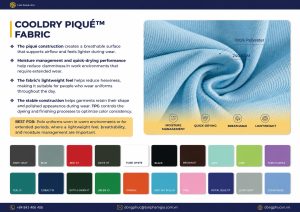
CoolDry Pique™: A Lighter Option for Indoor Environments
CoolDry Pique™ is a lighter piqué knit suited to positions requiring employees to wear uniforms for extended periods.
- Composition: 100% polyester
- Weight: 240 GSM, which is 30 GSM lighter than Royal Pique™
- Structure: A characteristic polo piqué surface with a lighter overall weight
- Business value: Supports extended daily wear while maintaining a professional appearance
- Suggested environments: Offices, food and beverage operations, and other roles involving long uniform-wearing periods
CoolDry Pique™ is suitable for businesses that want to balance employee wearing experience with a consistent brand presentation.
TPG Airsoft™: Lightweight Fabrics for Service and Active Roles
TPG Airsoft™ prioritizes a lightweight feel and freedom of movement. AirFlex™ and Micro Grid Air™ allow businesses to compare options for service teams, restaurants, events, and other roles that require frequent movement.
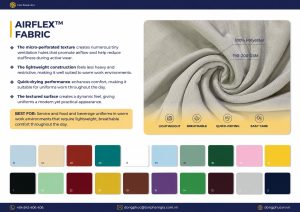
AirFlex™: Lightweight Polyester with a Micro-Mesh Surface
AirFlex™ is a lightweight polyester fabric with a micro-mesh knit surface. It is designed for service environments that require a neat uniform and ease of movement.
- Composition: 100% polyester
- Weight: 190–200 GSM
- Structure: A micro-mesh knit surface with small openings that create a lighter feel
- Business value: Supports convenient movement during a shift while maintaining a neat uniform appearance
- Suggested environments: Spas, coffee shops, showrooms, restaurants, event teams, and warm indoor spaces
AirFlex™ is worth considering for service businesses that prioritize a lightweight and practical corporate polo.
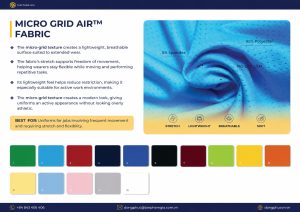
Micro Grid Air™: Stretch Fabric for Movement-Intensive Roles
Micro Grid Air™ blends polyester with spandex and is suited to positions requiring regular movement.
- Composition: 95% polyester, 5% spandex
- Weight: 190–200 GSM
- Structure: A fine grid surface with stretch that supports movement through the arms, shoulders, and torso
- Business value: Helps employees move comfortably while maintaining a professional, modern appearance
- Suggested environments: Restaurants, service operations, and mobile event teams
Micro Grid Air™ is appropriate for businesses seeking a balance between mobility and a polished brand image without creating an overly athletic appearance.
TPG CottonFlex™: Cotton and Cotton-Blend Fabrics
TPG CottonFlex™ includes one 100% cotton option and one cotton-polyester blend. This group allows businesses to compare the natural feel of cotton with the additional stability often required for everyday uniforms.
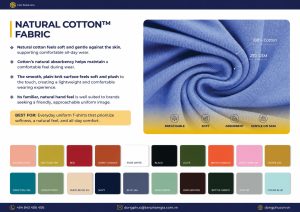
Natural Cotton™: A 100% Cotton Fabric
Natural Cotton™ is a 100% cotton fabric intended to provide a soft feel and approachable appearance.
- Composition: 100% cotton
- Weight: 270 GSM
- Structure: A natural surface with the softness and moisture absorption associated with cotton fibers
- Business value: Creates a friendly, approachable uniform image while prioritizing wearer comfort
- Suggested environments: Offices, education, and workplaces seeking a more natural presentation
Natural Cotton™ is suitable for businesses that prioritize softness and a natural character in everyday uniforms.
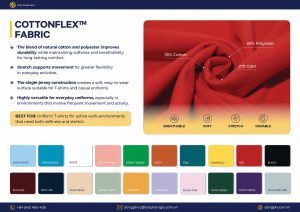
CottonFlex™: Balancing Cotton and Polyester
CottonFlex™ combines cotton and polyester for uniforms that require both softness and a more stable garment body.
- Composition: 35% cotton, 65% polyester
- Weight: 270 GSM
- Structure: Single jersey knit; the higher polyester content supports stability, while cotton contributes softness
- Business value: Balances wearer comfort, garment shape, and everyday care requirements
- Suggested environments: Offices, schools, and service businesses
CottonFlex™ is worth considering when businesses need an accessible everyday uniform that maintains its shape and remains manageable over extended use.
TPG AirPique™: Fabrics for Sports and Outdoor Activities
TPG AirPique™ contains two polyester-spandex fabrics designed for movement. AeroGrid™ is lighter, while AirMax Tech™ has a higher spandex percentage and greater fabric weight. Businesses should compare physical samples when activities require a broad range of motion.
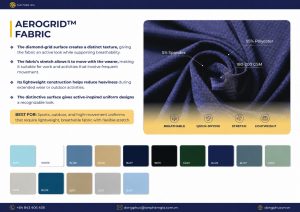
AeroGrid™: A Diamond-Textured Stretch Fabric
AeroGrid™ combines polyester and spandex with a diamond-textured surface for active applications.
- Composition: 95% polyester, 5% spandex
- Weight: 180–200 GSM
- Structure: A diamond-textured surface that creates an athletic appearance, with a relatively light weight and stretch
- Business value: Supports movement while maintaining a coordinated and energetic team image
- Suggested environments: Running events, pickleball, team-building programs, and outdoor work
AeroGrid™ is suitable for businesses organizing sports activities, internal events, or uniform programs that require a dynamic appearance.
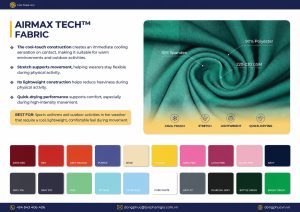
AirMax Tech™: High-Stretch Performance Fabric
AirMax Tech™ is a higher-stretch performance fabric suited to outdoor activities requiring a more substantial fabric body and greater flexibility.
- Composition: 90% polyester, 10% spandex
- Weight: 220–230 GSM
- Structure: Twice the spandex percentage of AeroGrid™, combined with a higher GSM for a more substantial feel
- Business value: Supports extended movement during programs and events with a higher activity level
- Suggested environments: Outdoor activities, sports, and team-building programs
AirMax Tech™ is worth considering when businesses need a polo with greater stretch and a more substantial body for active outdoor use.
TPG Signature™: Fabrics Focused on Surface and Presentation
TPG Signature™ includes five fabrics with different textures, drape characteristics, and fiber blends. This group is suitable for management teams, executives, customer-facing roles, or business-casual programs. Because appearance is an important selection criterion, each fabric should be evaluated as a completed garment.
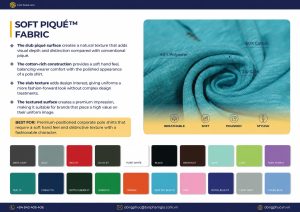
Soft Pique™
Soft Pique™ is a cotton-polyester slub piqué knit intended for premium or fashion-oriented polo designs.
- Composition: 60% cotton, 40% polyester
- Weight: 210 GSM
- Structure: A slub piqué surface combining cotton softness with the structural support of polyester
- Business value: Creates greater visual depth for brands that place emphasis on uniform presentation
- Suggested environments: Premium or fashion-oriented polo programs
Soft Pique™ is suitable for businesses seeking a soft uniform with a polished, textured appearance.
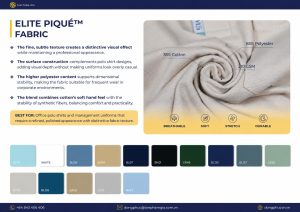
Elite Pique™
Elite Pique™ is a cotton-polyester blend with a fine textured stripe surface, creating a streamlined appearance for office teams.
- Composition: 35% cotton, 65% polyester
- Weight: 210 GSM
- Structure: A refined textured stripe surface; polyester supports stability, while cotton adds softness
- Business value: Supports a neat, professional image for customer-facing employees
- Suggested environments: Office polos, management uniforms, and customer-facing positions
Elite Pique™ is worth considering for businesses that require a polished polo with a stable appearance in office environments.
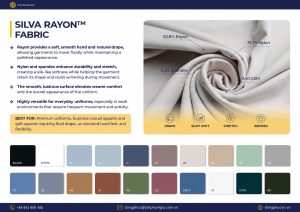
Silva Rayon™
Silva Rayon™ blends rayon, nylon, and spandex to create a soft, fluid fabric for premium corporate apparel.
- Composition: 62.8% rayon, 31.7% nylon, 5.5% spandex
- Weight: 240 GSM
- Structure: Rayon creates softness and drape; nylon and spandex support durability and stretch; the surface is smooth with a subtle luster
- Business value: Supports a more refined and elevated corporate-uniform presentation
- Suggested environments: Premium polos, business-casual programs, and golf apparel
Silva Rayon™ is suitable for businesses developing a premium image for management teams or other important customer-facing roles.
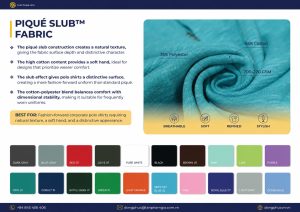
Piqué Slub™
Piqué Slub™ is a cotton-polyester fabric with a deliberate slub-yarn effect that creates a natural-looking surface with visual depth.
- Composition: 65% cotton, 35% polyester
- Weight: 200–220 GSM
- Structure: An intentionally irregular slub effect combined with the characteristic structure of piqué knit
- Business value: Adds a fashion-oriented character while maintaining the stability expected of a corporate polo
- Suggested environments: Polo programs requiring a more distinctive, fashion-led appearance
Piqué Slub™ is suitable for businesses that want a uniform with an individual character while retaining a professional presentation.
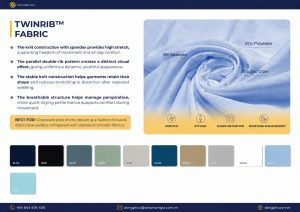
TWINRIB™
TWINRIB™ is a polyester-spandex fabric with a distinctive double-rib texture, developed for stretch and shape retention.
- Composition: 92% polyester, 8% spandex
- Weight: 120–200 GSM
- Structure: A double-rib surface that creates a recognizable visual effect, with spandex supporting stretch
- Business value: Creates a distinctive uniform appearance while supporting freedom of movement
- Suggested use: Stretch polo uniforms requiring a differentiated textured surface
TWINRIB™ is suitable for businesses seeking a flexible polo that maintains its shape and presents a more distinctive appearance.
Technical specifications help businesses screen their options, but color, surface appearance, drape, and hand feel still need to be evaluated using physical samples. Businesses can request TPG Fabric Collection™ swatches to compare suitable options before selecting the final fabric.
Which Fabric Is Suitable for a Corporate Polo Uniform?
Businesses should select polo fabric according to the working environment, activity level, and desired brand presentation—not solely by price, GSM, or cotton percentage. The following recommendations can help narrow the options, but the final decision should be based on physical fabric and garment samples.
Polo Shirts for Offices and Customer-Facing Roles
CoolDry Pique™ may be considered when a business wants a lighter polyester option than Royal Pique™. Natural Cotton™ provides a more natural feel, while CottonFlex™ balances cotton and polyester.
For management or customer-facing positions, Elite Pique™, Soft Pique™, and other TPG Signature™ fabrics can be included in sample testing to compare their texture, structure, and drape.
Polo Shirts for Manufacturing, Logistics, and Retail Chains
These environments often require a stable garment shape, consistent appearance, manageable care requirements, and suitability for frequent wear. Royal Pique™ is one option to compare.
For employees working in warmer areas or moving frequently, businesses should also test CoolDry Pique™, AirFlex™, or Micro Grid Air™ to balance structure with the intended wearing experience.
Polo Shirts for Restaurants, Coffee Shops, and Service Businesses
AirFlex™ is suited to programs prioritizing a lightweight feel and micro-mesh surface. Micro Grid Air™ adds spandex for roles involving more movement, while CoolDry Pique™ is an option for businesses that prefer a traditional piqué appearance.
For all three fabrics, businesses should test logo execution and shape retention on an actual sample garment.
Polo Shirts for Team Building and Outdoor Activities
AeroGrid™ weighs 180–200 GSM and contains 5% spandex, making it an option for activities requiring a lighter garment. AirMax Tech™ contains 10% spandex and weighs 220–230 GSM, providing greater stretch and a more substantial fabric body.
Micro Grid Air™ may serve as an intermediate option when the business wants flexibility without a strongly athletic surface.
Polo Shirts for Management, Executives, and Business-Casual Programs
TPG Signature™ provides several options for surface texture and drape. Elite Pique™ creates a streamlined appearance; Soft Pique™ and Piqué Slub™ emphasize texture; Silva Rayon™ focuses on drape and a smooth surface; and TWINRIB™ creates a double-rib effect.
These fabrics should be reviewed together with the garment fit, brand colors, and logo sample rather than selected independently.
Still comparing multiple fabrics? Send Tan Pham Gia Uniform five details: your industry, intended wearer positions, estimated quantity, wearing frequency, and logo printing or embroidery requirements. The consultation team can use this information to narrow the fabrics that should be sampled.
What Should a Business Check Before Approving Polo Fabric?
Before bulk production, a business should inspect both the physical fabric and a completed garment sample rather than approving the material from images alone. This step allows the wearer experience, garment shape, colors, and logo execution to be evaluated together.
- Composition and GSM: Verify the trade name, fabric code, fiber ratio, and GSM of the approved sample.
- Fabric color under actual lighting: Review the color under office lighting, natural light, and the expected working environment.
- Garment fit across different body types: Test representative sizes and inspect the shoulders, chest, body length, collar, and sleeve cuffs.
- Wearing experience: Simulate the expected wearing time and typical workplace movements.
- Printing or embroidery result: Check logo colors, definition, surface flatness, and the effect of the decoration on the fabric.
- Care instructions: Confirm washing, drying, ironing, and other requirements for the specific fabric code.
- Repeat-order consistency: Establish how fabric codes, colors, garment fit, size charts, and logo specifications will be managed across production batches.
If shrinkage, colorfastness, pilling, moisture management, or drying speed will be acceptance criteria, these requirements should be written as measurable specifications with an agreed evaluation method. Commercial descriptions and hand-feel assessments do not replace appropriate testing.
Before approving production, businesses should evaluate the fabric on a completed sample garment instead of relying only on a color card or loose swatch. Tan Pham Gia Uniform can help compare garment fit, colors, logo placement, and construction specifications against the agreed requirements.
How Does Tan Pham Gia Uniform Support Fabric Selection and Polo Production?
Tan Pham Gia Uniform follows a process covering requirements consultation, garment and fabric selection, design, sample approval, production, quality control, and delivery. The objective is to convert the intended use into clear product specifications before bulk production begins.
Consultation Based on the Working Environment and Wearer Role
The required information includes the industry, employee groups, daily wearing time, activity level, workplace temperature, and desired brand presentation. If a business has several job functions, each group should be evaluated separately before deciding whether to use one fabric or multiple materials.
Physical Fabric Samples for Comparison
Physical samples allow businesses to compare composition, GSM, colors, texture, and hand feel. From the TPG Fabric Collection™, a business can create a shortlist instead of testing all 13 fabrics, keeping the review focused on options relevant to its operational needs.
Garment Sample and Logo Development
Fabric should be evaluated together with garment fit, color combinations, collar construction, sleeve cuffs, and the printing or embroidery method. A completed sample helps identify required adjustments before production, particularly for small logos, highly stretchable fabrics, or surfaces with prominent textures.
Production Specifications and Consistency Control
After sample approval, the fabric code, color, garment fit, size chart, logo position, and decoration specifications should be documented in the production file. Multi-stage quality control then provides checkpoints for comparing the products with the approved sample and reducing variation in larger orders.
Need a corporate polo uniform plan? Send Tan Pham Gia Uniform the estimated quantity, wearer groups, logo, fabrics under consideration, and required delivery date. The team can recommend product specifications and prepare a quotation based on the project’s actual requirements.
Frequently Asked Questions About Polo Shirt Fabrics
Questions 1. Should a Corporate Polo Use Cotton or Polyester?
There is no single fiber composition that suits every business. Cotton generally provides a soft, natural feel but requires consideration of shrinkage, garment shape, and drying time. Polyester often provides greater stability during use and care, while blends can balance several criteria. The final choice should reflect the workplace, activity level, desired image, and sample-test results.
Questions 2. Is a Higher GSM Always Better for Polo Fabric?
No. GSM measures the weight of one square meter of fabric; it is not a complete quality score. A higher GSM may feel thicker and more substantial, while a lower GSM may feel lighter. Suitability also depends on knit structure, fiber type, finishing, garment fit, and the intended working environment.
Questions 3. Which Fabrics Should Be Considered for Active Employees?
Businesses can consider Micro Grid Air™, AeroGrid™, or AirMax Tech™ because these fabrics contain spandex to support stretch. AirFlex™ is another option when a lighter weight is important. The final selection should reflect activity intensity, wearing duration, workplace temperature, and the completed garment sample.
Questions 4. Should a Business Use One Fabric for Every Employee Role?
One fabric may be appropriate when employee groups have similar working conditions and presentation requirements. If office, warehouse, service, and outdoor teams work in clearly different environments, the business can maintain consistent colors, garment fit, or branding details while selecting fabrics suited to each wearer group.
Questions 5. How Can a Business Evaluate Fabric Before Bulk Production?
Verify the fabric code, composition, and GSM; inspect colors under actual lighting; test representative sizes; review the logo on a completed garment; conduct a wash test according to the care instructions; and document the approved specifications. When technical performance is important, request an appropriate evaluation method or test result.
The TPG Fabric Collection™ helps businesses organize different types of polo shirt fabric by composition, GSM, surface structure, and intended working environment. The value of the collection is not simply choosing an available fabric name. It lies in comparing options, reviewing physical samples, and converting operational requirements into clear product specifications.
Businesses can send Tan Pham Gia Uniform their industry, wearer positions, quantity, wearing frequency, logo, and required delivery date to receive fabric recommendations, compare samples, and develop an appropriate corporate polo uniform plan. Call +84 843 406 406 or visit dongphucvn.vn to discuss your specific requirements.