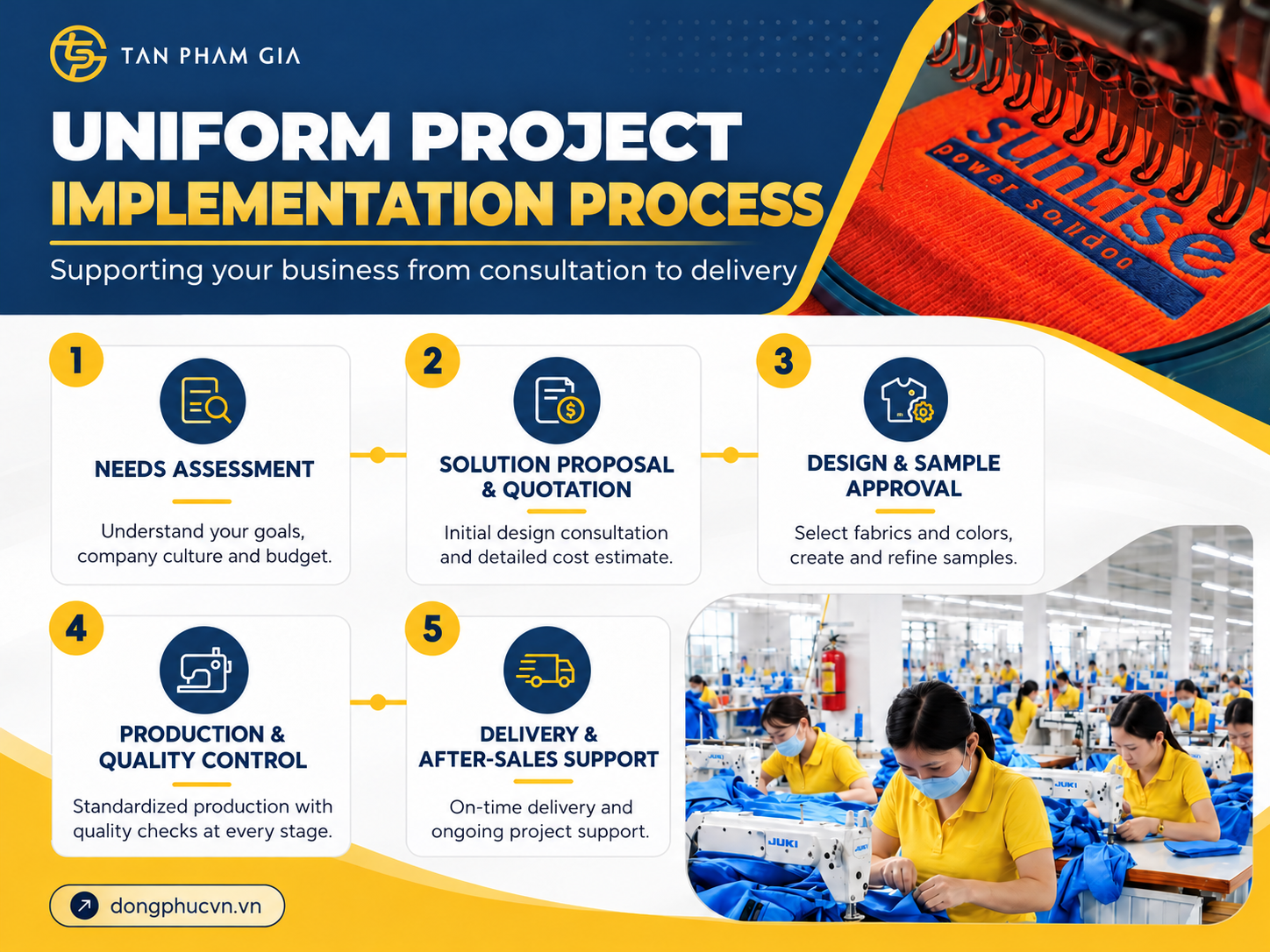
The custom polo uniform ordering process at Tan Pham Gia Uniform includes five main steps: requirements analysis; solution consultation and quotation; design, sample development, and approval; bulk production and quality control; and final inspection and delivery. Standardizing requirements from the beginning gives businesses greater control over garment design, fabric, quantities, schedules, and uniform allocation across departments or branches.
For a business order, the process involves more than producing a polo shirt that matches a design. The more important objective is to establish one approved production standard before bulk manufacturing begins. This helps reduce variations in color, garment fit, sizing, logo placement, finishing specifications, and delivery arrangements.
Custom Polo Uniform Ordering Process at a Glance
The five-step process establishes the information and approvals required before the order moves from one stage to the next. The timelines below are estimates for individual stages rather than guaranteed lead times for every order.
These estimated timelines apply to each stage and do not represent a fixed commitment for every project. Actual timing depends on order quantity, design complexity, the number of sample revisions, technical requirements, and the agreed delivery plan.
Step 1: Collect Requirements and Analyze Uniform Needs
The first step is to standardize all order information so Tan Pham Gia Uniform can accurately define the project scope. The more clearly a business identifies the wearers, intended use, and allocation plan, the more closely the recommendations in later stages can reflect its operational needs.
Information the Business Should Prepare
The initial discussion should cover:
- The total number of garments, reserve quantities, and employee breakdown by department, job title, or branch.
- The intended use, such as office uniforms, sales-team apparel, operational staff uniforms, or branded promotional programs.
- Initial requirements for garment style, colors, logo, fabric, and working conditions.
- The required use date, delivery locations, estimated budget, and designated approver.
- Sorting, packaging, or allocation requirements for each department when the program covers multiple teams or locations.
For example, a company ordering polo shirts for office employees, a sales team, and staff at multiple branches should separate quantities by wearer group and include each delivery location and allocation date. This data structure helps prevent one garment configuration from being applied to different working environments before its suitability has been evaluated.
Estimated time: 1–2 days, depending on the level of detail required and how quickly the business can provide the necessary information.

Step 2: Recommend a Solution and Prepare the Quotation
In the second step, Tan Pham Gia Uniform converts the collected requirements into an actionable polo uniform proposal and prepares a quotation based on the agreed configuration. Businesses should evaluate garment style, fabric, branding, and delivery scope together rather than comparing only the unit price per shirt.
What the Consultation and Quotation Should Cover
The proposed solution generally addresses:
- A garment style suited to the brand position, working conditions, and intended employee groups.
- Fabric-selection criteria based on the work environment, wearing frequency, care requirements, desired breathability, stretch, and shape retention.
- Color combinations, logo position, branding dimensions, and the proposed printing or embroidery method.
- The size chart, size breakdown, sorting requirements, and delivery scope.
- A quotation based on quantity, product configuration, selected fabric, branding method, and agreed implementation scope.
The minimum order quantity for uniform orders is 100 sets. The configuration of each set should be defined in the approved quotation so both parties have the same basis for production and delivery.
Estimated time: 2–3 days, depending on the complexity of the requirements and the time needed to confirm the proposed solution.
>>> Read More: Comprehensive Corporate Uniform Solutions from Tan Pham Gia Uniform

Step 3: Develop the Design, Produce a Sample, and Approve It
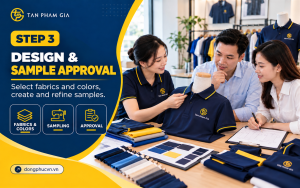
The third step produces a physical sample for review before bulk production. At this stage, the business should confirm the garment fit, colors, fabric, construction, size specifications, and brand-identity placement.
Design and Sample-Approval Activities
The design and approval process includes:
- Developing the polo shirt design based on the company’s brand identity and intended use.
- Selecting the fabric, fabric color, size specifications, and logo-finishing method.
- Refining proportions, structure, and fit through traditional draping and fit adjustment on a dress form.
- Producing a physical sample to assess fit, color, fabric, construction, and logo placement.
- Collecting feedback, revising the required details, and approving the final sample before bulk production.
The dress-form process refers to traditional garment development and fit refinement. It is not digital 3D patternmaking software.
What to Check During Sample Approval
The person responsible for approval should use one coordinated checklist instead of sending separate, unstructured comments. Review criteria may include:
- Collar and sleeve-cuff construction.
- Garment length and body width.
- Main and accent colors.
- Thread color.
- Logo dimensions.
- Printing or embroidery position.
- Size specifications.
- Packaging requirements.
The approved sample should be retained as the production reference. This is particularly important when the order is allocated across several departments or locations or includes multiple size groups.
Estimated time: 5–7 days, depending on sample complexity and the number of revisions.
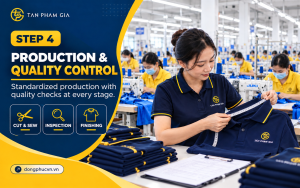
Step 4: Begin Bulk Production and Multi-Stage Quality Control
After the sample is approved, the order enters bulk production using the confirmed product configuration. The production process must follow the same reference for fabrics and trims, measurements, colors, logo execution, construction, and finishing requirements.
Main Production Activities
The principal activities include:
- Preparing fabrics, trims, and accessories according to the approved proposal.
- Cutting, sewing, printing or embroidering the logo, and completing the garments according to the approved design.
- Inspecting incoming materials, in-process garments, finished products, and products before shipment.
- Checking quantities, sizes, colors, logo position, and finishing against the order requirements.
- Monitoring progress, coordinating solutions for issues within the agreed scope, and preparing the order for delivery.
Multi-Stage Quality-Control Checkpoints
A multi-stage quality-control process distributes inspections across production instead of concentrating every check at the final stage.
If a business requests changes after production has begun, both parties need to reassess how the change affects the approved sample, materials, cost, and schedule. Routing all updates through one designated approver helps prevent different versions of the requirements from reaching the production team.
Estimated time: 15–25 days, depending on order quantity, design complexity, and technical requirements.
Step 5: Conduct Final Inspection, Delivery, and Post-Project Support
The final step is to verify the completed order and organize delivery according to the agreed plan. For a business with multiple departments or branches, the sorting method and information shown on each package should be confirmed in advance.
Final Inspection and Delivery Activities
The final stage includes:
- Checking quantities, sizes, packaging specifications, and sorting information by department or receiving location.
- Comparing the completed garments with the approved sample and order scope.
- Delivering the order according to the agreed schedule, location, and method.
- Coordinating the handling of any issues within the commitments defined for the order.
- Receiving replenishment requirements when the business hires new employees, opens additional branches, or needs a repeat order.
Before closing the project, the business should retain the approved sample, measurement chart, color references, logo specifications, and actual size breakdown. These records provide a useful reference for future replenishment orders. However, fabric and color availability should still be reconfirmed when a repeat order is placed.
Estimated time: 1–3 days, depending on the delivery method and scope.

How to Make the Polo Uniform Ordering Process More Efficient
To reduce coordination time while maintaining quality control, businesses should standardize project information and establish one approval contact before sample development begins. The following six practices directly influence the proposed solution, quotation, and implementation schedule.
- Confirm Quantities and Employee Groups: Businesses should consolidate requirements by department, job title, branch, and allocation date. In addition to current quantities, consider hiring or expansion plans during the expected usage period when determining an appropriate reserve quantity. This reduces the need for multiple small replenishment orders outside the original plan.
- Establish Clear Fabric-Selection Criteria: Fabric should be assessed according to the working environment, daily wearing duration, washing frequency, care requirements, and desired appearance. Before approval, the business should review a physical fabric sample and compare its composition and weight with the needs of the intended wearer group. A fabric should not be selected solely by its trade name or appearance in a photograph.
- Standardize the Design and Brand Identity: The color palette, reference color codes, approved logo version, logo dimensions, print or embroidery position, and accent details should be confirmed before sample development. Assigning one contact to consolidate feedback helps prevent different departments from submitting conflicting requirements.
- Approve a Physical Sample Before Bulk Production: The physical sample provides a direct reference for reviewing garment fit, fabric, colors, stitching, and logo placement. The business should record all approved details in a clear checklist and authorize bulk production only after both parties have confirmed the final sample version.
- Build the Schedule Around the Required Use Date: The plan should allow time for consultation, fabric selection, design, sample development, revisions, bulk production, quality control, and delivery. If the garments are required for an event or a fixed allocation date, provide that deadline during the requirements-intake stage so the proposed schedule can be evaluated before work begins.
- Select a Supplier with Suitable Production Capabilities: Businesses should evaluate the supplier’s ability to handle the required quantity, develop the garment fit, manage quality control, and coordinate deliveries to multiple locations when needed. In addition to reviewing product samples, clarify the approval process, inspection checkpoints, change-management procedure, and records that should be retained for repeat orders.
Plan Your Custom Polo Uniform Order with Tan Pham Gia Uniform
A structured process gives businesses greater control over wearer requirements, fabric selection, garment design, sample approval, production, and delivery. Tan Pham Gia Uniform approaches each project as a uniform solution, combining fabric consultation, traditional draping and fit refinement on a dress form, and multi-stage quality control within the agreed scope. Standardizing requirements at the beginning creates a clearer foundation for a custom polo uniform ordering process suited to actual business needs.
Is your business planning coordinated polo uniforms for its employees? Submit the expected quantity, wearer groups, receiving locations, logo, and required delivery date, or contact Tan Pham Gia Uniform at +84 843 406 406 for recommendations on fabrics, design, and a production plan aligned with your requirements.