>>> Explore More Articles on Uniform Solutions
- Industrial Park, Factory, and Manufacturing Workwear Uniform Solutions
- #1 Office Uniform Solutions to Elevate Your Corporate Image
- Comprehensive Logistics Industry Uniforms Solutions for Businesses
- Medical Uniforms Solutions for Hospitals, Clinics, and Healthcare Facilities
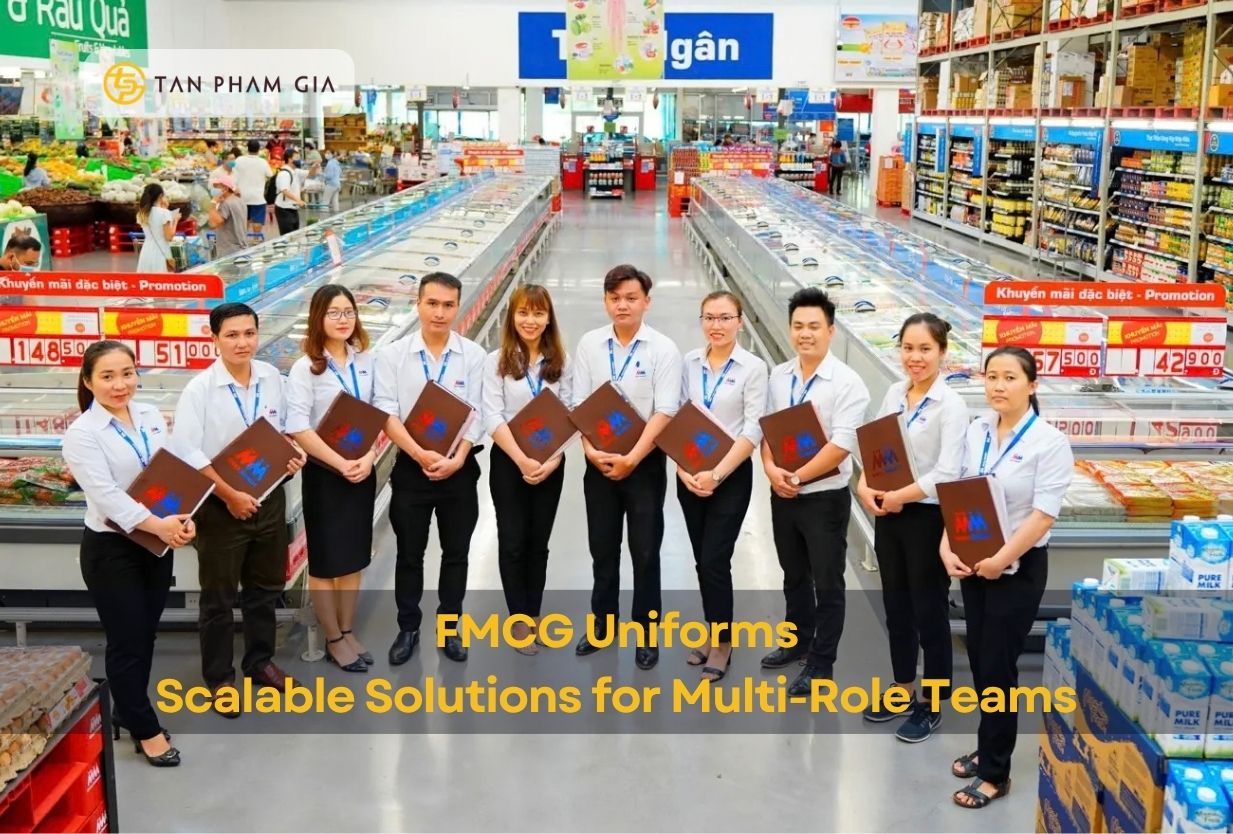
- FMCG Uniforms: Scalable Solutions for Multi-Role Teams
As a retail chain expands, maintaining consistent uniforms across locations becomes a matter of standardization and operational control. Differences in color, fit, fabric, or finishing quality can arise when uniforms are produced in separate runs or sourced from multiple suppliers. In this article, Tan Pham Gia Uniform outlines the standards that should be defined for retail chain store uniforms, helping businesses create a consistent uniform program that remains easier to manage as their network grows.
What Are Retail Chain Store Uniforms?
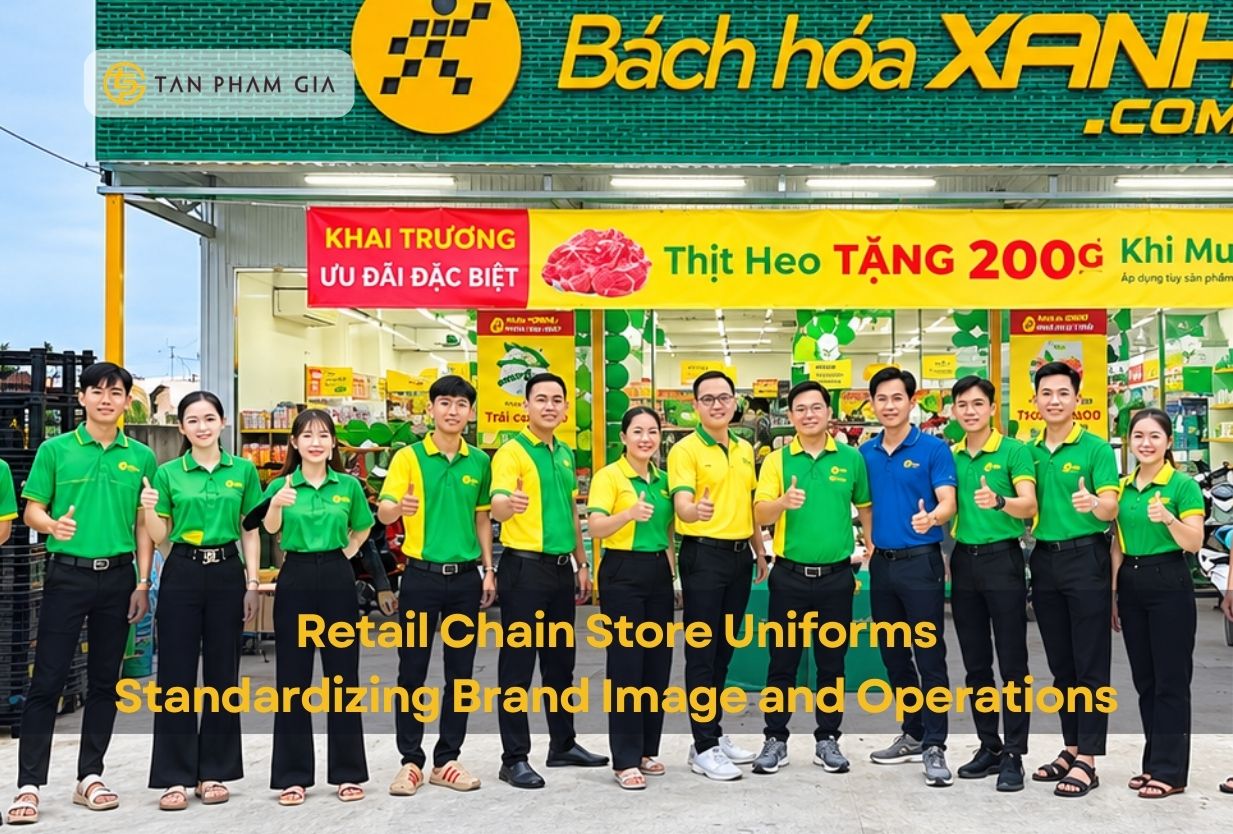
Retail chain store uniforms are garments designed and produced according to one approved standard for employees working across multiple locations within the same retail or service network. The standard covers color, garment design, fabric, sizing, and logo placement so each location presents a coordinated brand image.
What Makes Multi-Location Retail Uniforms Different?
A multi-location uniform program must retain documented technical requirements across repeat production runs. Businesses should keep an approved sample, fabric specification, color reference, logo file, placement measurements, pattern information, and size chart for future orders and new store openings.
These references help the supplier reproduce the approved design more accurately. Because fabric and dye lots can vary, each repeat order should still be checked against the retained standard before production.
How Do Single-Store and Chain-Store Uniforms Differ?
A single store only needs to coordinate uniforms within one location, and its order quantity may remain relatively stable. A retail chain must plan for continuing replenishment as it hires employees and opens stores.
For that reason, chain-store uniforms require stronger controls for approved colors, fabrics, patterns, sizing, logo placement, packing, and allocation by location.
When Should a Business Create a Uniform Standard?
A business should establish a uniform standard as soon as it operates multiple locations or begins planning an expansion. Early standardization prevents individual stores from ordering independently and gradually creating inconsistencies in color, fit, fabric, or logo application.
Why Should Retail Chains Standardize Their Uniforms?
Uniform standardization helps a retail chain maintain a recognizable brand image regardless of which location a customer visits. It also gives procurement, human resources, marketing, and store operations a common reference for future orders.
Consistent Brand Identity at Every Location
A coordinated uniform makes the brand easier to recognize when a customer visits a new location for the first time. Consistent colors, logo presentation, and garment styling also extend the visual identity customers see in packaging, signage, advertising, and digital channels.
Faster Employee Identification
In large or busy stores, customers need to distinguish employees from shoppers quickly. Consistent retail employee uniforms make it easier to locate someone for product information, checkout assistance, or service support.
Clearer Role Identification
Managers, sales associates, cashiers, service technicians, and warehouse employees perform different tasks. Controlled differences in garment type, trim color, or department labeling can help customers and coworkers identify the appropriate point of contact.
These variations should remain part of one coordinated design system rather than appearing as unrelated uniforms.
Brand Consistency During Expansion
As a chain grows, the risk of differences between production runs also increases. Maintaining an approved sample and complete technical specification gives new locations a clearer standard and helps procurement teams identify deviations before bulk production.
What Should Be Standardized in a Retail Uniform Program?
Before confirming quantities or pricing, a retail chain should determine which elements must remain consistent across every location and production run.
Brand Colors
Uniform colors should follow the approved brand guidelines instead of being selected independently for each order. Keep a Pantone reference, approved lab dip, or physical fabric swatch so future production can be evaluated against the original standard.
Screen colors alone are not a reliable textile production reference. Differences between dye lots should be reviewed before a replenishment order moves into production.
Garment Design, Patterns, and Sizing
Technical patterns and size specifications should be retained as production documents rather than relying only on garments from the previous order. This helps future production follow the approved measurements and grading system.
The business should also maintain one size chart for the program and document any approved differences between employee groups.
Fabric Specifications
Each approved fabric should be recorded by product name, construction, composition, fabric weight, color, and any verified finish or performance requirement. Replacing it with a material that merely looks similar may change the fit, comfort, care routine, or service life of the uniform.
Logo Application and Brand Details
Logo placement, dimensions, colors, and printing or embroidery methods should be documented in writing and supported by an approved visual reference. This reduces the risk of changes in position, scale, stitch density, or print appearance between orders.
Approval and Control Across Locations
The business should appoint one central owner – such as human resources, administration, procurement, or marketing – to approve uniform samples and technical specifications for the entire network. Individual stores should not make uncoordinated changes to an approved system.
Businesses that have identified what needs to be standardized but are unsure how to begin can contact Tan Pham Gia to develop a uniform plan around their store network, employee roles, and brand requirements.
How Should Retail Chain Store Uniforms Be Designed by Role?
Different positions have different movement, customer-contact, and presentation requirements. Garments can be adapted by role while retaining the same core colors, logo system, and design language.
Store Manager Uniforms
Store managers may wear a button-up shirt or polo shirt with a controlled distinguishing detail, such as different cuff or collar trim, a manager identifier, or an adjusted logo treatment. The result should communicate the role clearly while remaining visually connected to the rest of the team.

Sales Associate and Customer Advisor Uniforms
Sales associates and customer advisors need clothing that supports frequent movement around the store. Polo shirts and crew-neck T-shirts are common options and can be paired with a name badge.
The fit should be neat without restricting product handling, shelf work, or customer assistance.
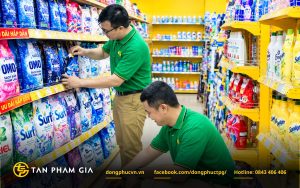
Cashier Uniforms
Cashiers usually work at a fixed service point and may wear a button-up shirt or a more structured polo. Some retail chains add a uniform vest or waist apron to distinguish the position while retaining the approved brand colors.

Service Technician Uniforms
Employees who repair, install, or provide technical product support generally need a more durable uniform with enough room for upper-body movement. A crew-neck T-shirt or polo shirt made from an approved stretch fabric may be more practical than a formal button-up shirt, depending on the work involved.
Warehouse and Operations Uniforms
Warehouse and operations employees move frequently and may handle cartons, equipment, and inventory throughout the shift. Their uniforms should prioritize movement, durability, and care requirements while remaining identifiable as part of the retail chain.

Which Fabrics Work for Different Retail Environments?
The most suitable fabric depends on the store format, working conditions, employee role, garment type, and care routine. A retail chain does not need to use one fabric for every position as long as each approved option fits within the same uniform standard.
This table is a general selection framework, not a substitute for wear testing. The final fabric should be approved against the garment design, indoor temperature, physical tasks, required care process, and expected wearing frequency.
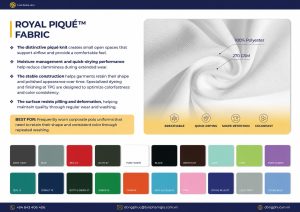
Royal Pique™ for Retail Chains and Showrooms
Royal Pique™ is a structured piqué knit from the TPG Prime™ Performance Fabric Collection. It is made from 100% polyester and has a fabric weight of 270 GSM.
The fabric is intended for demanding daily use and is listed for retail chains, logistics operations, factories, food and beverage businesses, and offices. It can be evaluated for polo shirts where a substantial fabric and structured appearance are preferred.
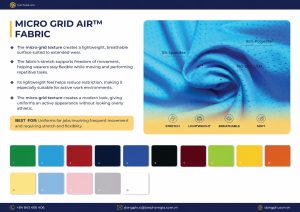
Micro Grid Air™ for Food and Beverage Teams
Micro Grid Air™ is a 190–200 GSM knit made from 95% polyester and 5% spandex. It provides four-way stretch and a soft feel against the skin, supporting restaurant, service, and event roles that involve frequent movement.
The fabric should not be described as heat-resistant or protective against kitchen hazards unless a separate technical standard confirms those properties.
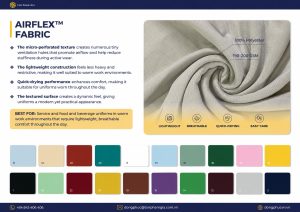
AirFlex™ for Cosmetics and Beauty Retail
AirFlex™ is a 190–200 GSM polyester fabric from the TPG Airsoft™ Comfort Fabric Collection. Its verified characteristics include softness, light stretch, and breathability.
It can be evaluated for beauty retail, spa, showroom, and other indoor customer-facing environments where employees need a friendly, polished appearance and all-day comfort.
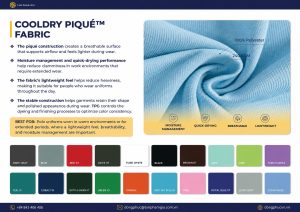
CoolDry Pique™ for Convenience and Fast-Paced Retail
CoolDry Pique™ is a 240 GSM polyester piqué knit. It is lightweight, breathable, and quick-drying, making it an option to evaluate for employees who stand and move throughout long indoor shifts.
The final selection should still be tested with the approved garment design and actual store conditions.
Royal Pique™ for Warehouse and Operations Teams
Royal Pique™ may also be considered for warehouse and operations employees when a structured, durable polo fabric is preferred. The garment construction, seam reinforcement, fit, and care process should be specified alongside the fabric because material selection alone does not determine garment durability.
>>> See Also: Fabric Collection – Corporate Uniform Fabrics | Tan Pham Gia Uniform
Businesses can consult the TPG Fabric Collection to compare verified composition and fabric-weight information before approving materials for each role.
Which Garment Types Work for Retail Chains?
Retail chains can use several garment types according to their business model and employee roles, provided the complete program follows one coordinated identity.
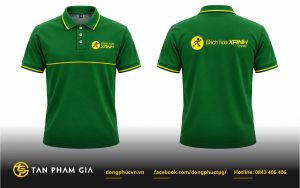
Uniform Polo Shirts
Uniform polo shirts are a common choice for sales associates, customer advisors, supervisors, and service technicians. They offer a business-casual appearance, allow movement, and can incorporate brand colors through the body, collar, cuffs, or trim.
Their repeatable construction also makes polo shirts practical to standardize for future store openings and replenishment orders.
Uniform T-Shirts
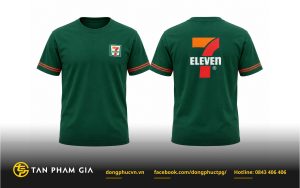
Crew-neck T-shirts can suit warehouse employees, technicians, promotional teams, and retail concepts with a casual or youthful brand identity. Their cost depends on fabric, construction, order quantity, and logo application, so they should not be assumed to be less expensive in every case.
Uniform Button-Up Shirts
Uniform button-up shirts can support a more formal presentation for managers, cashiers, premium retail staff, or customer-service positions. The fabric should be selected according to movement, care, climate, and the level of structure required.
Uniform Vests, Aprons, and Accessories
Retail chains may add uniform vests, waist aprons, caps, scarves, or other accessories to distinguish roles, support seasonal programs, or reinforce a specific brand concept. These elements should have documented color, material, logo, and wearing standards across locations.
Complete Uniform Sets
Retail concepts with a clearly defined visual identity may develop a coordinated set that includes tops, pants or skirts, and accessories. This approach can suit premium chains or brands with specific presentation requirements, but every component should remain practical for the employee’s role.
Businesses can explore polo shirts, button-up shirts, and uniform T-shirts previously produced by Tan Pham Gia Uniform for reference before planning a uniform program for their own network.
What Is the Implementation Process for a Multi-Location Retail Uniform Program?
A chain-wide uniform rollout requires more control than a single-store order because the business must plan for expansion, employee turnover, and replenishment.
- Step 1: Review the Store Network and Workforce – Record the number of locations, employee quantities by role, current uniform issues, and the expected expansion plan.
- Step 2: Review the Brand Identity and Build the Design Concept – Use the existing brand guidelines to define colors, visual style, logo treatment, and the relationship between different employee roles.
- Step 3: Select Garments and Fabrics – Choose garment types and fabrics according to each role’s actual working environment, customer contact, movement, and care requirements.
- Step 4: Develop Patterns and Samples – Create technical patterns and a sample for review before bulk production. Where appropriate, Tan Pham Gia uses traditional dress-form draping and fit refinement to evaluate garment balance and silhouette. This is a hands-on garment-development method, not digital 3D patternmaking software.
- Step 5: Approve the Sample and Technical Specification – Confirm the design, fit, measurements, fabric, color, construction, logo placement, and packing requirements. Retain the approved sample and technical records for future production.
- Step 6: Produce and Inspect the Order – Manufacture the order according to the approved specification and complete multi-stage quality checks before packing.
- Step 7: Allocate Uniforms by Store – Sort quantities by location, role, garment type, and size so each store receives its approved allocation.
- Step 8: Manage Replenishment – Use the retained sample and technical specification when new employees join or new stores open. Replenishment quantities, material availability, and production schedules should be reconfirmed for each order.
How Can Retail Chains Maintain Consistency Across Production Runs?
Most repeat-order issues begin when the first order is not documented completely. The following controls address common problems.
Complete records from the first order provide the best basis for future production. Businesses should request a technical file covering colors, patterns, measurements, logo requirements, and approved materials alongside the finished garments.
Retail chains already experiencing differences between locations can contact Tan Pham Gia to review the current uniform standard and identify practical corrective steps.
How Can Retail Chains Control Uniform Costs?
The total cost of a retail uniform program includes more than the price of each garment. Planning for repeat orders, replacements, packing, and distribution can reduce avoidable costs over the life of the program.
- Consolidate Quantities Across the Network: Combining requirements from several locations into one planned production run may improve production efficiency and unit pricing. The final effect depends on garment types, fabrics, colors, logo applications, and packing requirements.
- Choose Designs That Can Be Reproduced Reliably: A controlled design with documented components is generally easier to reproduce than a garment with many unrecorded details. This can reduce repeated sample development when the business needs additional uniforms.
- Match Fabric to Wearing Frequency: High-movement roles such as warehouse operations and technical support may need a more durable specification. For lower-movement positions, the business can balance comfort, presentation, care requirements, and budget.
- Plan for Replacements and New Employees: Estimate reasonable stock for new hires, replacements, and seasonal demand instead of ordering only for the current headcount. The reserve quantity should reflect turnover, storage capacity, garment use, and the supplier’s replenishment terms.
- Evaluate Total Cost, Not Unit Price Alone: A low unit price does not necessarily produce a lower program cost if garments need frequent replacement or cannot be reproduced consistently. Compare expected wear, care requirements, replacement frequency, development costs, and distribution needs.
For a project-specific quotation, provide Tan Pham Gia with employee quantities by role and location, garment types, fabric requirements, logo specifications, packing needs, and the expected rollout schedule.
How Should a Business Select a Retail Uniform Supplier?
Not every supplier is structured for a multi-location retail program. The following criteria should be reviewed before a long-term partnership is approved.
- Production Planning for Large Orders: The supplier should demonstrate that it can plan a chain-wide order, coordinate required garment types, and communicate a realistic production schedule. Capacity claims should be evaluated against the confirmed project scope rather than general statements alone.
- Technical Standardization: The supplier should maintain clear records for approved patterns, measurements, colors, fabrics, logo applications, and packing instructions. This is essential for a retail chain that expects ongoing replenishment.
- Multi-Stage Quality Control: Quality checks should cover incoming materials, in-process production, finished garments, logo application, quantities, and packing. The inspection plan should reference the approved sample and technical specification.
- Allocation and Multi-Location Delivery: If the business requires direct distribution, confirm that the supplier can sort and deliver the approved quantities to multiple stores. The location list, recipient details, packing method, and delivery schedule should be documented before shipment.
- Replenishment Support: Ask how the supplier handles additional orders for new employees and locations. Tan Pham Gia supports replenishment orders, including smaller follow-up quantities, but minimum quantities, fabric availability, pricing, and production time should be reconfirmed for each order.
- Experience With Multi-Location Businesses: A supplier familiar with multi-location programs is more likely to anticipate issues involving retained samples, sizing by store, location-based packing, and repeat-order control. Businesses should review relevant project examples and confirm how the supplier documented and managed those requirements.
Retail Chain Store Uniform Solutions from Tan Pham Gia
Tan Pham Gia has more than 23 years of experience in fashion and apparel manufacturing. The company has worked with more than 500 businesses and produced more than 1,000,000 uniform products, including programs for organizations with employees across multiple locations and functions.
- Recommendations Based on Store Format and Working Environment: Tan Pham Gia Uniform develops uniform solutions based on each retail format, employee role, and actual working conditions rather than applying the same garment and fabric to every position.
- Brand-Aligned Design, Pattern, and Sample Development: Designs, technical patterns, and samples are developed from the approved brand identity and functional requirements. Traditional dress-form draping and fit refinement may be used to evaluate garment balance and silhouette during development. Approved patterns and technical specifications are retained to support consistency in future production.
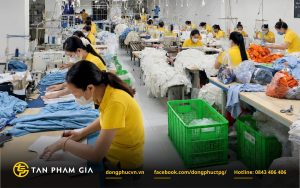
- Centralized Production and Multi-Stage Quality Control: Production is managed through a multi-stage quality-control process covering materials, in-process work, finished garments, logo application, quantities, and packing. These checkpoints help identify deviations before uniforms are allocated across the store network.
- Technical Records for Repeat Orders: Tan Pham Gia retains approved color references, patterns, measurements, and technical specifications by customer. These records provide the basis for future replenishment, although material availability and production details should still be reconfirmed for each order.
- Store-Level Allocation and Replenishment Support: Tan Pham Gia can sort and distribute uniforms according to the agreed quantities for each location and support additional orders when the business adds stores or employees. Delivery locations, quantities, minimums, and schedules are confirmed as part of each order.
Frequently Asked Questions About Retail Chain Store Uniforms
Questions 1. Should Every Employee in a Retail Chain Wear the Same Uniform?
Not necessarily. Managers, sales associates, cashiers, technicians, and warehouse employees have different responsibilities. Their garment types or details can vary while retaining consistent brand colors, logo standards, and overall design language.
Questions 2. How Can a Business Keep Uniforms Consistent Across Stores?
Retain the approved sample, color reference, pattern, size chart, fabric specification, logo requirements, and packing instructions from the first order. Use these records to review every repeat production run and new-store order.
Questions 3. Should a Retail Chain Choose Polo Shirts or Button-Up Shirts?
Polo shirts are often practical for sales, advisory, and technical roles that involve frequent movement. Button-up shirts can suit managers, cashiers, premium retail staff, or positions that require a more formal appearance. The final choice should reflect the role and store concept.
Questions 4. Can Each Employee Role Have a Different Uniform?
Yes. Role-specific garments are practical when they retain the same core colors, logo system, and visual identity. Differences should be documented as part of one approved uniform program.
Questions 5. Can a New Store Reorder the Existing Uniform?
Yes. A retained sample and complete technical specification provide the basis for reproducing the approved design. Fabric availability, dye-lot differences, quantities, pricing, and production time should still be checked before each order.
Questions 6. What Information Is Needed for a Retail Chain Uniform Order?
Prepare employee quantities by role and location, size data, brand colors, logo artwork, garment requirements, preferred fabrics, packing instructions, delivery locations, and the expected expansion or replenishment plan.
Questions 7. What Is the Minimum Order Quantity for Retail Chain Store Uniforms?
Tan Pham Gia’s minimum order quantity is 100 uniform sets. The final set configuration, garment types, colors, logo applications, size allocation, packing requirements, and delivery plan should be confirmed for each project.
Standardizing retail chain store uniforms from the first production run helps a business maintain a coordinated brand image as it opens locations and hires employees. The most important controls are an approved sample, documented colors and fabrics, retained patterns and measurements, standardized logo requirements, and clear allocation by store.
For a uniform program designed around your retail network, contact Tan Pham Gia at +84 843 406 406 or submit the website contact form to discuss employee roles, fabrics, quantities, sizing, brand requirements, and rollout plans.
Product designs, fabrics, printing and embroidery methods, and service policies may be updated or changed over time. Please contact Tan Pham Gia at +84 843 406 406 or submit the contact form for current information and a retail uniform solution based on your requirements.