>>> Read more: F&B Uniforms: Solutions for Businesses & Chains
Hotel uniforms are designed around the needs of each department, including front desk, management, bell staff, housekeeping, restaurants, kitchens, and security. Each outfit should support the employee’s work while reflecting the hotel’s overall image.
The right combination of garment styles, fabrics, and colors also helps create a consistent brand identity across departments and shifts.
This guide covers popular hotel uniform styles, design considerations, fabric options, procurement planning, and the bulk ordering process at Tan Pham Gia Uniform.
What Is a Hotel Uniform, and Why Should Hotels Invest in Staff Uniforms?
A hotel uniform program is a coordinated collection of staff apparel designed for different departments. It creates a consistent appearance while accommodating the practical requirements of each role.
For hotels with multiple departments and shifts, uniforms also support daily operations by making employees and their responsibilities easier to identify.
What Does a Hotel Uniform Program Include?
A hotel uniform program standardizes garment styles, fabrics, and colors according to staff roles.
Each department has different priorities. Front desk teams need a polished appearance, housekeeping staff need freedom of movement, and kitchen teams need garments that are easy to clean. These differences should fit within a shared hotel identity.
Why Invest in Hotel Staff Uniforms?
Uniforms help establish a consistent impression from the guest’s first interaction with your team.
Four practical benefits include:
- A cohesive, professional appearance: Employees across departments and shifts reflect the same visual standards.
- Stronger brand recognition: Colors, logos, and design details give your hotel a distinctive identity.
- Easier staff identification: Guests can recognize the appropriate person to approach, from front desk agents to bell staff and restaurant servers.
- Role-specific comfort and function: Garments can be selected for the working environment, movement requirements, and shift length.
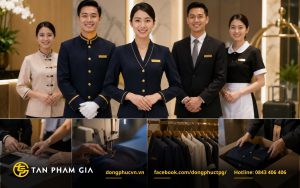
How to Choose Hotel Uniforms for Each Department
Start with the responsibilities of each role, then coordinate the designs through a shared color palette and brand identity.
Hotel Front Desk Uniforms
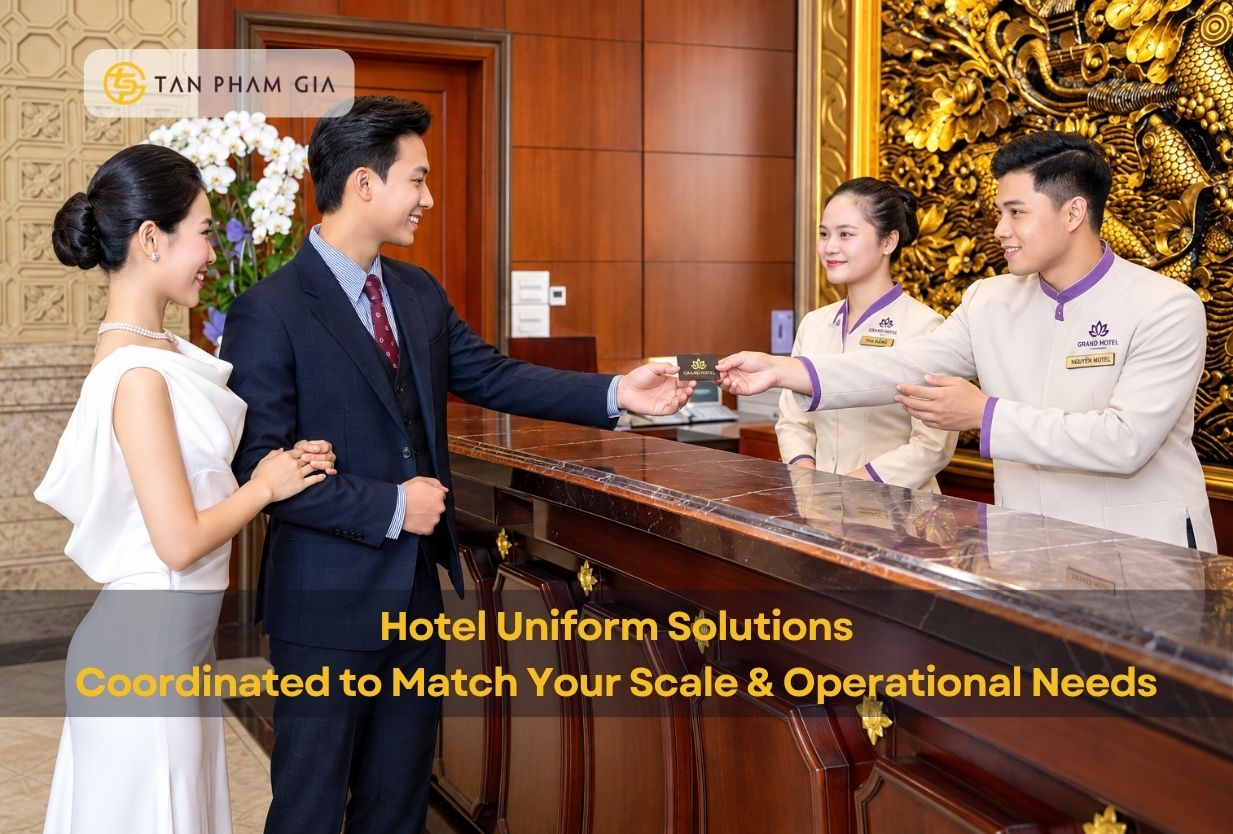
Front desk uniforms should look polished, fit neatly, and reflect the hotel’s character. This team is often the guest’s first point of contact.
Prioritize a flattering fit, precise construction, and colors that complement the lobby. Depending on the hotel concept, options may include coordinated suits, blazers, dress shirts, or culturally inspired garments.
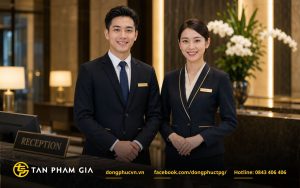
Hotel Management Uniforms
Management uniforms often feature suits, blazers, or premium dress shirts to distinguish supervisory and leadership roles.
The design should stand apart subtly from other staff uniforms while remaining within the hotel’s overall palette.
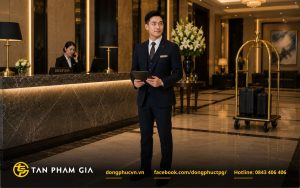
Bell Staff and Door Staff Uniforms
Bell staff and door staff need recognizable uniforms that retain their shape and allow comfortable movement.
Longline coats, tailored jackets, decorative buttons, and contrast trim can create a distinctive entrance experience. Select materials and garment construction appropriate for carrying luggage, standing for extended periods, and working outdoors.
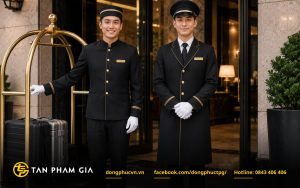
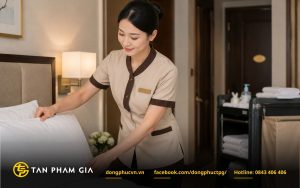
Hotel Housekeeping Uniforms
Hotel housekeeping uniforms should prioritize comfort, breathability, and easy care. Employees need to bend, reach, and move frequently throughout their shifts.
Simple silhouettes, useful pockets, and an unrestricted fit are more practical than elaborate styling. Light and neutral colors can convey a clean appearance, but consider how readily everyday marks will show.
Public-Area Cleaning Staff Uniforms
Uniforms for public-area cleaning teams should withstand regular wear and frequent laundering.
Polos or stand-collar tops paired with practical uniform pants are common options. A distinct color or design detail can differentiate these employees from guest-room housekeeping teams.
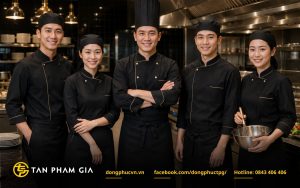
Hotel Restaurant, Kitchen, and Bar Uniforms
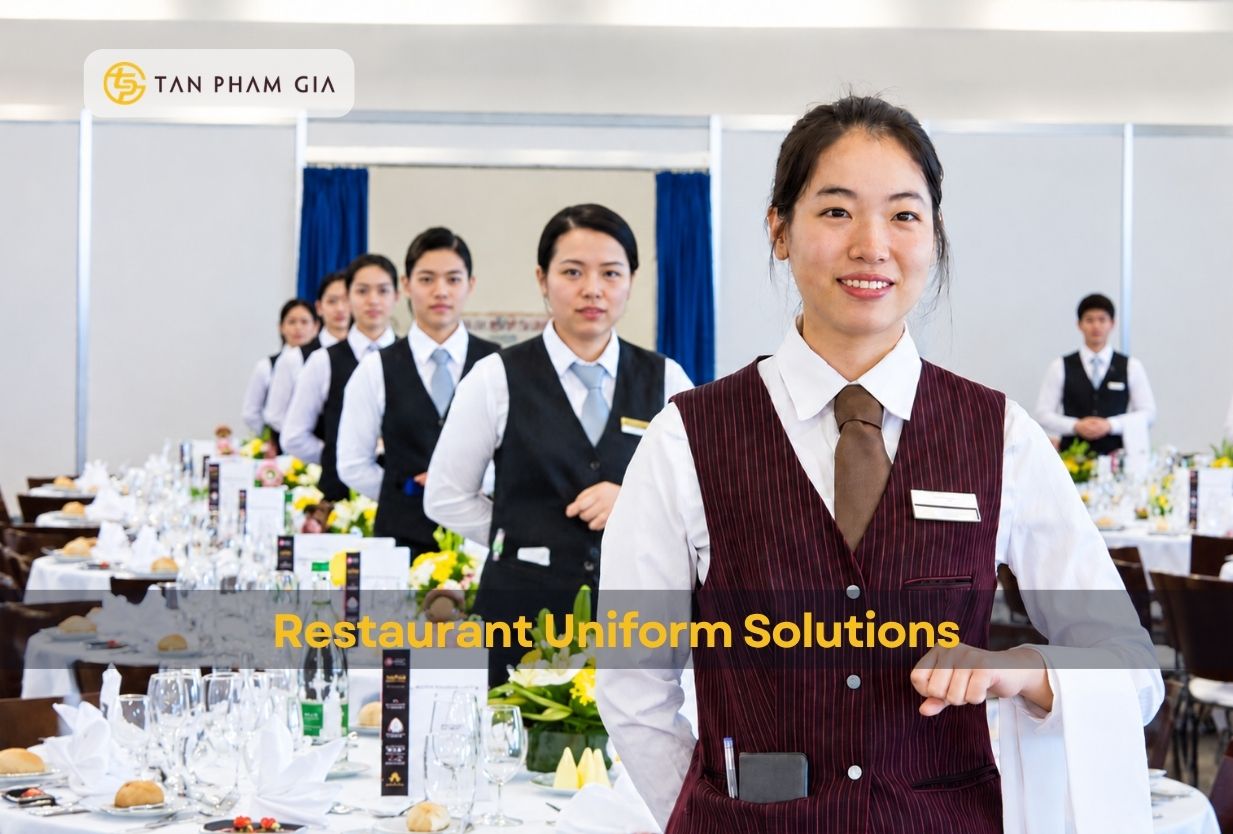
Restaurant uniforms should coordinate with the hotel’s front-of-house identity while reflecting the style of each dining venue.
A fine-dining restaurant typically calls for more formal apparel than an in-house café or buffet restaurant. Kitchen and bar uniforms also need to account for frequent cleaning and exposure to spills.
For more details on restaurant and hotel uniforms, explore 199+ Premium, Elegant Restaurant Uniform Designs.
Hotel Security Uniforms
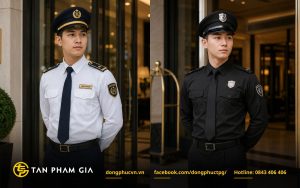
Security uniforms should communicate authority, make staff easy to recognize, and remain comfortable during long periods of standing.
Consider structured fabrics, appropriate coverage for the weather, and practical pocket and belt arrangements. Dark or neutral colors can distinguish security personnel from guest-service teams.
Hotel Maintenance Uniforms
Maintenance staff need durable garments, useful tool pockets, and freedom of movement for technical tasks.
These employees often work in service and equipment areas, making abrasion resistance and easy care useful selection criteria. Choose colors that clearly distinguish maintenance staff from guest-facing teams.
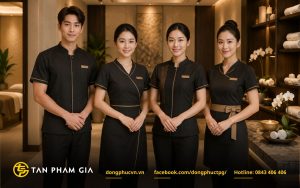
Hotel Spa Uniforms
Spa uniforms should feel soft, allow comfortable movement, and complement the atmosphere of the wellness space.
Gentle colors and refined silhouettes help create a calm, coordinated appearance.
Planning Uniforms for Several Departments?
Send Tan Pham Gia your department list and staffing requirements to receive recommendations for each team.
Hotel Uniform Designs by Style
Your hotel uniform design should complement the property’s architecture, interiors, and market positioning. A consistent approach helps connect staff appearance with the guest experience.
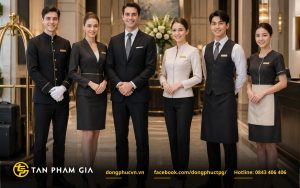
Modern European-Inspired Style
Suitable for: International hotels, four- and five-star business hotels, and global hotel brands.
Design features: Streamlined cuts, solid colors, and tonal combinations in black, white, navy, or charcoal. Structured suit jackets, crisp collared shirts, ties, and bow ties create a polished appearance.
The emphasis is on precise construction and carefully finished details rather than complex patterns.
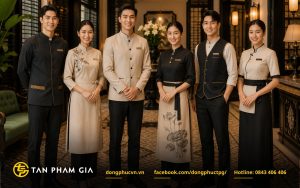
Indochine Style
Suitable for: Boutique resorts, heritage hotels in destinations such as Hoi An, Hue, and Hanoi’s Old Quarter, and properties with French colonial influences.
Design features: Contemporary áo dài or Mandarin-collar shirts paired with dress pants. Warm colors may include creamy beige, earthy brown, moss green, pale yellow, and brick red.
Linen or linen blends and understated interpretations of traditional motifs can reinforce the concept.
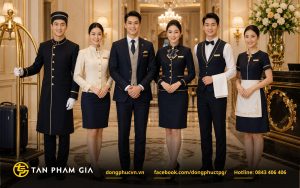
Neoclassical and Regal Style
Suitable for: Palace-style hotels, grand luxury resorts, and restored heritage properties.
Design features: Ceremonial-style jackets, decorative epaulets, cross-body detailing, and brass or gold-tone buttons.
Burgundy, deep navy, black, gold, and ivory support a regal palette. Wool-blend fabrics, velvet accents, and detailed embroidery can complete the look.
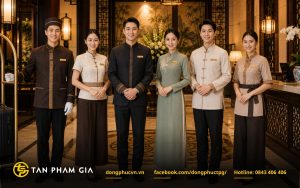
Traditional Asian-Inspired Style
Suitable for: Hotels whose identity draws on Vietnamese, Japanese, Korean, or Chinese cultural traditions.
Design features: Traditional áo dài, contemporary hanbok-inspired garments, or adapted cheongsam silhouettes, selected to reflect the specific cultural concept.
Colors may include vermilion, blue, golden tones, or contrasting black and white. Lotus, bamboo, wave, and cloud motifs can be incorporated with appropriate accessories.
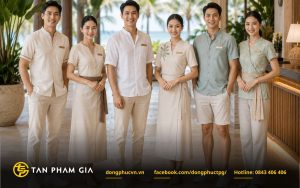
Resort and Tropical Style
Suitable for: Beach resorts, eco-resorts, villas, and bungalow properties in destinations such as Phu Quoc, Da Nang, Nha Trang, Mui Ne, and Con Dao.
Design features: Short-sleeve shirts with understated tropical prints, paired with straight-leg linen pants.
Ocean blue, tropical green, coral, cream, and sand create a relaxed palette. Lightweight linen and cotton suit an overall style that feels casual yet refined and complements open-air surroundings.
Minimalist Style
Suitable for: Contemporary boutique hotels, design-led hotels, and properties serving younger travelers or business guests.
Design features: Clean silhouettes, solid colors, and restrained accessories. White, black, concrete gray, and beige are common choices.
Functional details take priority over decoration. Branding can remain subtle through tonal embroidery or another suitable understated application.
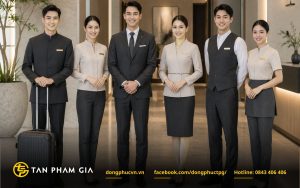
Explore Tan Pham Gia’s projects for ideas on coordinating uniforms across departments.
Which Fabrics Should You Choose for Hotel Uniforms?
Choose fabrics according to the department. Front desk and management teams typically prioritize a polished appearance, while housekeeping and kitchen teams need comfort and easy care.
TPG Fabric Collection: Developed by Tan Pham Gia
The TPG Fabric Collection organizes materials around different working environments and garment requirements. The following options are relevant to hotel uniform planning.
GSM means grams per square meter and indicates fabric weight.
Elite Pique™ is positioned for hotels and resorts, including polos and business casual apparel for management and front-of-house teams.
Soft Pique™ provides another option for premium corporate apparel, including executive uniform programs.
Silva Rayon™ is suited to premium shirts where a soft feel and fluid drape are desired, including front desk and management apparel.
AirFlex™ and Micro Grid Air™ are options for spa, restaurant, and service teams where comfort and movement are priorities.
Royal Pique™ is a substantial piqué fabric with a structured feel. It is an option for uniform polos in demanding food and beverage environments where durability is a priority.
“Kate” Shirting Fabric
“Kate” is a Vietnamese trade name used for shirting fabrics. The material described here is lightweight with a smooth surface and is commonly used for uniform shirts.
It may suit front desk and restaurant teams seeking a neat appearance and straightforward care. Review the actual sample and care requirements before selection.
“Kaki” Fabric
The fabric referred to locally as “kaki” is described as substantial, structured, and suitable for frequent use.
It is commonly considered for security, maintenance, and cleaning staff uniforms where durability is a priority.
Cotton and “Cotton Lanh”
Cotton offers a soft feel and absorbs perspiration, making it an option for staff working long shifts.
“Cotton lanh” is a local trade name for fabric described as cool to the touch. It does not, by itself, confirm cotton content or a particular cooling technology.
Depending on the actual specifications, these materials may suit polos and T-shirts for housekeeping, cleaning, and restaurant teams.
“Tuyet Mua” Suiting Fabric
“Tuyet mua” is a Vietnamese trade name used for fabrics commonly selected for suit jackets, skirts, and dress pants.
The material described in this collection has a smooth surface and is intended to provide shape retention and reduced wrinkling. It may suit front desk and management uniforms requiring a polished appearance throughout the shift.
Fabric Marketed as “Cashmere”
The source refers to “cashmere” for structured jackets and suits intended to create a premium appearance for management or front desk teams.
However, genuine cashmere is a specific animal fiber. A local fabric trade name does not establish that the material contains cashmere.
Linen
Linen offers a natural appearance and is often selected for resort uniforms and relaxed hospitality settings.
It wrinkles readily, so consider whether that characteristic suits the property’s style and the presentation requirements of each role. Review linen blends when comparing alternatives.
Match Fabrics to Each Hotel Department
These are starting points for selection. Review the fabric’s compatibility with the garment, working environment, and laundry process before approval.
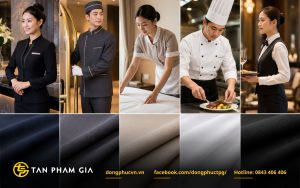
Compare Fabrics Before You Decide
Request fabric information or arrange to review physical swatches with Tan Pham Gia’s consulting team.
Five Design Priorities for Luxury Hotel Uniforms
A refined hotel uniform should meet five priorities: practical suitability, design style, brand identity, department recognition, and fabric performance.
Design for the Actual Work
Uniforms need to support everyday tasks as well as look attractive.
Housekeeping staff need unrestricted arm movement, while front desk agents may spend long periods standing. Laundry frequency also affects fabric selection and garment construction.
Reflect the Hotel Concept Through Style and Fit
The uniform should reflect the hotel’s concept, whether contemporary, classic, resort-inspired, or rooted in local culture.
A good fit creates a polished silhouette without restricting movement. Physical samples and fittings help establish how the design will look and feel in daily use.
Make Brand Identity Consistent
Colors, logos, construction details, and accessories all contribute to brand recognition.
Document logo placement and dimensions so the same specifications can be used across departments and future orders.
Distinguish Departments Within One Collection
Each department can have a recognizable detail, such as a different color, collar treatment, or accessory.
These distinctions should share a common design language so guests can identify staff roles without the overall collection appearing disconnected.
Balance Durability, Care, and Comfort
Consider shape retention, colorfastness, wrinkle behavior, and comfort during long shifts.
For hotels with frequent laundering, review the proposed fabrics against the actual washing and finishing process before production.
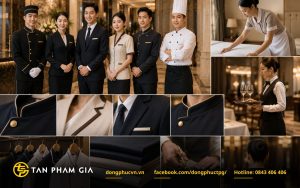
Practical Tips for Ordering Custom Hotel Uniforms
Prepare department requirements, design references, and sizing information before requesting a proposal.
List Every Department and Its Requirements
Record all departments, employee numbers, and the number of uniform sets needed per person.
Include maintenance and public-area cleaning teams alongside guest-facing departments to avoid unplanned orders that differ from the original collection.
Agree on the Hotel’s Design Direction
Obtain agreement on the overall uniform style before detailed design work begins.
Provide brand guidelines, color references, and photographs of the property so the manufacturer can develop relevant recommendations.
Standardize Sizing and Arrange Staff Fittings
For larger teams, use a sample size set so employees can try garments rather than relying only on self-reported measurements.
This is especially useful for suits, blazers, and áo dài, where fit has a substantial effect on appearance and comfort.
Approve Samples Before Bulk Production
Sample approval allows your team to review fabric, fit, stitching, and branding before the full order is manufactured.
Invite representatives from different departments to test the garments and provide feedback based on their daily work.
Allow for New Hires and Future Reorders
Plan spare uniforms and a practical size mix for staffing changes.
Retain approved samples, fabric references, colors, and size specifications so future orders can follow the original collection.
The Hotel Uniform Design and Manufacturing Process at Tan Pham Gia
The process includes seven steps, from the initial consultation to quality control and delivery.
- Step 1: Define Your Hotel Uniform Requirements: Tan Pham Gia gathers information about departments, quantities, the hotel concept, and the proposed budget.
- Step 2: Recommend Styles and Fabrics: The team proposes garment styles and materials for each department based on working conditions and staff requirements.
- Step 3: Develop the Design: Free design development incorporates your hotel’s brand identity, colors, logo placement, and department-specific details.
- Step 4: Review Fabrics and Physical Samples: Your team reviews actual materials and sample garments to assess color, feel, and fit.
- Step 5: Refine and Approve the Samples: Both teams review the samples, make agreed adjustments, and confirm the final production specifications.
- Step 6: Begin Bulk Manufacturing: Production follows the approved samples and agreed sizing specifications.
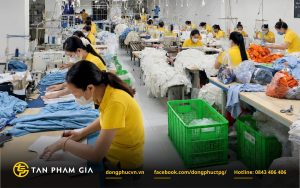
- Step 7: Complete Quality Control and Delivery: Garments undergo quality checks at multiple stages to support consistency across the order before delivery.
Hotel Uniform Pricing for Your Business
Custom hotel uniform pricing depends on the fabric, garment design, quantities, and branding requirements.
A project-specific quotation helps account for the different needs of each department.
What Affects Hotel Uniform Costs?
- Fabric selection: Premium front desk and management fabrics may differ in cost from materials selected for more physically active roles.
- Design complexity: Suits, blazers, and áo dài typically involve more construction steps than polos or T-shirts.
- Order quantity: Larger production runs can help improve manufacturing costs per garment.
- Logo application: Printing, embroidery, and other decorative techniques affect pricing and the finished appearance.
- Number of designs: More department-specific styles require additional design, sampling, and sizing work.
How to Request a Hotel Uniform Quote
Provide four core details:
- The departments requiring uniforms.
- Employee numbers and required quantities.
- The hotel’s design concept.
- Preferred fabrics, if already selected.
Tan Pham Gia will recommend suitable options and provide a quote based on your hotel’s requirements. You can submit your details in either of the following ways:
Frequently Asked Questions About Hotel Uniforms
Questions 1. Which Departments Need Hotel Uniforms?
A hotel uniform collection commonly covers front desk, management, bell staff, door staff, housekeeping, public-area cleaning, restaurants, kitchens, bars, security, maintenance, and spa teams.
Each department can have its own styles and fabrics while remaining part of a shared brand identity.
Questions 2. Which Fabrics Are Suitable for Hotel Uniforms?
Choose fabrics according to the role and garment.
Front desk and management teams may need structured suiting, suitable shirting, or selected TPG Signature™ fabrics. Housekeeping, cleaning, and restaurant teams often prioritize comfort and easy care, while security and maintenance teams need durable options.
Review physical samples and confirmed specifications before selecting any fabric sold under a local trade name.
Questions 3. Why Are Hotel Uniforms Important?
Uniforms create a coordinated staff appearance, support brand recognition, and help guests identify different departments.
When designed around the work, they also help employees move and perform their tasks comfortably.
Questions 4. What Makes a Good Hotel Uniform Design?
A good design suits the employee’s responsibilities, reflects the hotel’s style, communicates brand identity, distinguishes departments, and balances comfort with practical care requirements.
Questions 5. How Much Do Custom Hotel Uniforms Cost?
Pricing varies according to fabrics, garment styles, quantities, printing or embroidery, and the number of department-specific designs.
Tan Pham Gia provides quotations based on your requirements. Submit an inquiry through the contact form or call +84 843 406 406 for a consultation.
Tan Pham Gia: Custom Hotel Uniform Design and Manufacturing
Tan Pham Gia provides corporate uniform solutions, with more than 23 years of experience in fashion and apparel, over 500 corporate clients, and more than 1,000,000 garments manufactured.
For hotel projects, the focus is on coordinating department-specific designs, fabric selection, manufacturing, and delivery.
- Designs That Reflect Your Hotel Brand: Uniforms are developed around the hotel’s concept, palette, and brand identity to create a consistent staff appearance.
- Recommendations for Each Department: Each team receives style recommendations based on its responsibilities and working environment, within one coordinated uniform collection.
- Fabric Selection Support: Tan Pham Gia recommends materials from the TPG Fabric Collection and other available fabric options according to the requirements of each garment and role.
- Physical Samples Before Production: Your hotel reviews actual samples before bulk manufacturing, allowing the team to check fabric, fit, stitching, and branding.
- Consistent Logo Printing and Embroidery: Logo applications follow the agreed placement and dimensions to support a consistent appearance throughout the order.
- Bulk Manufacturing and Reorder Planning: The production process and quality checks support larger orders that require coordination across departments and future replenishment. Traditional draping on a dress form supports garment development, while sample fittings help refine the fit for different body types.
Build a Hotel Uniform Program Around Your Brand
Selecting hotel uniforms starts with the work of each department, then brings together fabric, design, sizing, sample approval, and plans for future orders.
With clear requirements and approved references, your uniform collection can become a consistent part of the guest experience.
Contact Tan Pham Gia to discuss department-specific options and request a quotation.
- Consultation form: Request a hotel uniform consultation
- Email: dongphuc@tanphamgia.com.vn
- Phone / Zalo: +84 843 406 406
Styles, fabric options, printing and embroidery methods, and service policies may change over time. Contact Tan Pham Gia for current information and recommendations for your hotel uniform project.