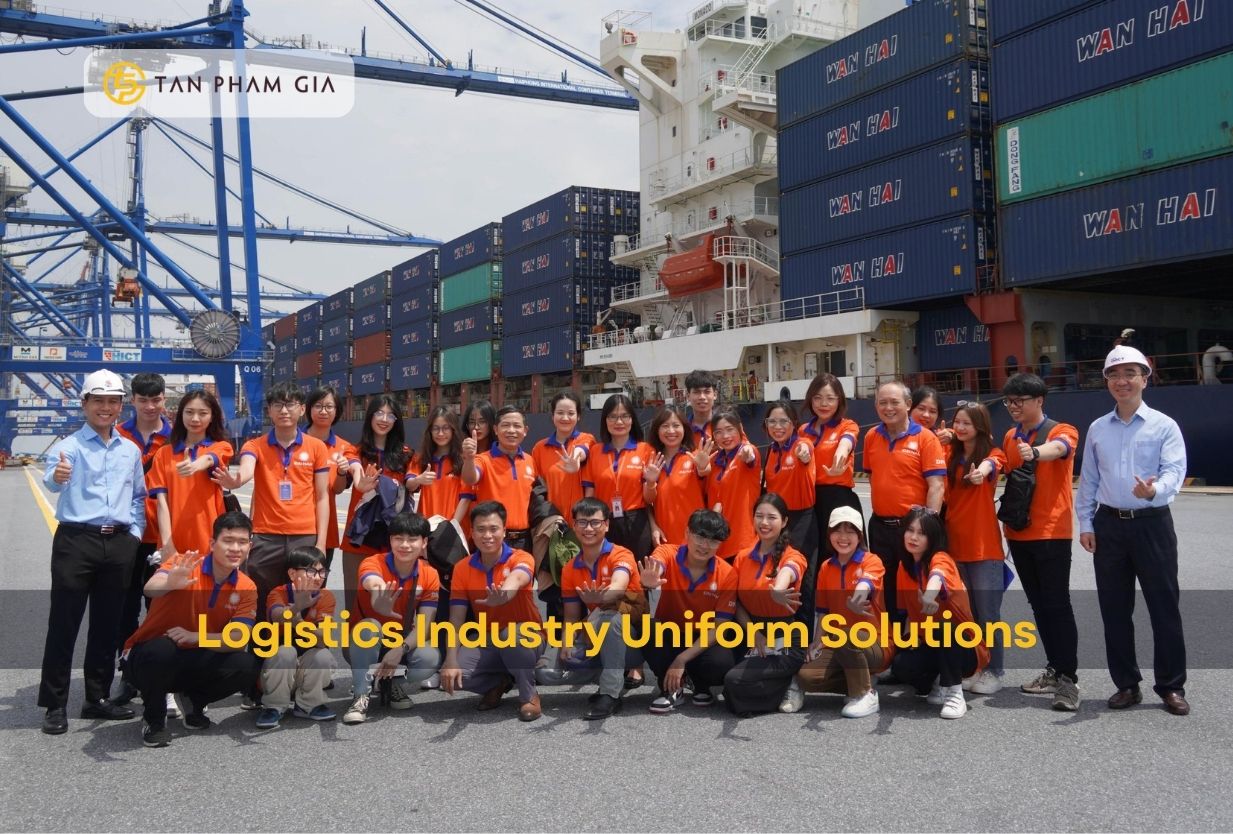
The logistics industry involves employees working across a wide range of environments, from warehouses and delivery sites to documentation offices and customer-facing roles.
As a result, an effective logistics industry uniforms program should not rely on one style or fabric for every employee. Uniform specifications need to be tailored to the working conditions and responsibilities of each department.
This guide by Tan Pham Gia Uniform outlines comprehensive logistics uniform solutions by job function, fabric, color, branding, and implementation process, helping businesses develop a uniform program that aligns with their operational scale and workforce structure.
What Is the Logistics Industry? Why Do Logistics Companies Need Uniforms?
What Is the Logistics Industry?
Logistics covers a broad range of activities involved in transporting, storing, handling, documenting, and coordinating goods from their point of origin to their final destination.
These activities involve multiple departments with different working conditions:
- Warehouse and operations staff work directly with goods at warehouses, ports, distribution centers, and delivery sites.
- Documentation, sales, and supply chain personnel primarily work in offices or interact with customers, suppliers, and business partners.
Because working environments vary significantly across these functions, logistics companies need a structured uniform program rather than applying one standard uniform across the entire workforce.
Why Should Logistics Companies Invest in Uniforms?
Logistics companies typically have frequent interactions with customers, business partners, and people around operational locations such as warehouses, ports, and distribution sites.
A well-planned uniform program helps maintain consistent brand presentation across departments, warehouses, and branches operating simultaneously. It also makes employees easier to identify on-site, supporting workforce management and, where applicable, workplace safety considerations.
For customer-facing teams such as sales, documentation, and customer service, uniforms can also contribute to a professional B2B image. This is particularly relevant when employees represent the company in meetings with corporate customers, international partners, FDI companies, and large enterprises.
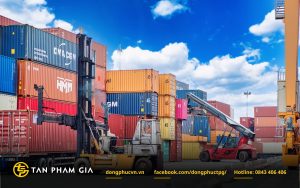
Are Logistics Industry Uniforms Required to Be Protective Workwear?
No. Logistics industry uniforms do not necessarily need to be protective workwear for every employee.
Logistics operations involve different working environments, so uniform specifications should be determined according to each role. Employees working directly in warehouses, operational areas, or delivery sites-where they may encounter goods, forklifts, vehicles, and handling equipment-may require workwear designed with durability, abrasion resistance, ease of movement, and visibility considerations in mind.
For office-based employees in documentation, sales, customer service, or administrative roles, uniform polos or uniform shirts are generally more appropriate, with greater emphasis on professional appearance and long-term wearing comfort.
Businesses should therefore assess the actual working conditions of each employee group before defining uniform specifications rather than applying the same protective-workwear standard across the entire workforce.
Comprehensive Logistics Industry Uniform Solutions for Businesses
Logistics industry uniforms can generally be organized into three primary garment categories based on the nature of the work.
>>> Learn more: Corporate Uniform Solutions for FMCG & Distribution Networks
Uniform Polo Shirts – For Logistics Office Staff
Uniform polo shirts are suitable for office-based employees such as documentation staff, customer service teams, and roles that do not regularly require formal meetings with external partners.
This style offers a practical balance between long-wearing comfort and a polished appearance suitable for a business environment.
Polo shirts also provide flexibility for department differentiation through color combinations and branded details on the collar, cuffs, or body.

Workwear Uniforms – For Warehouse, Operations, and Delivery Teams
Employees working directly in warehouses, operational areas, and delivery environments need uniforms that prioritize durability, abrasion resistance, and freedom of movement.
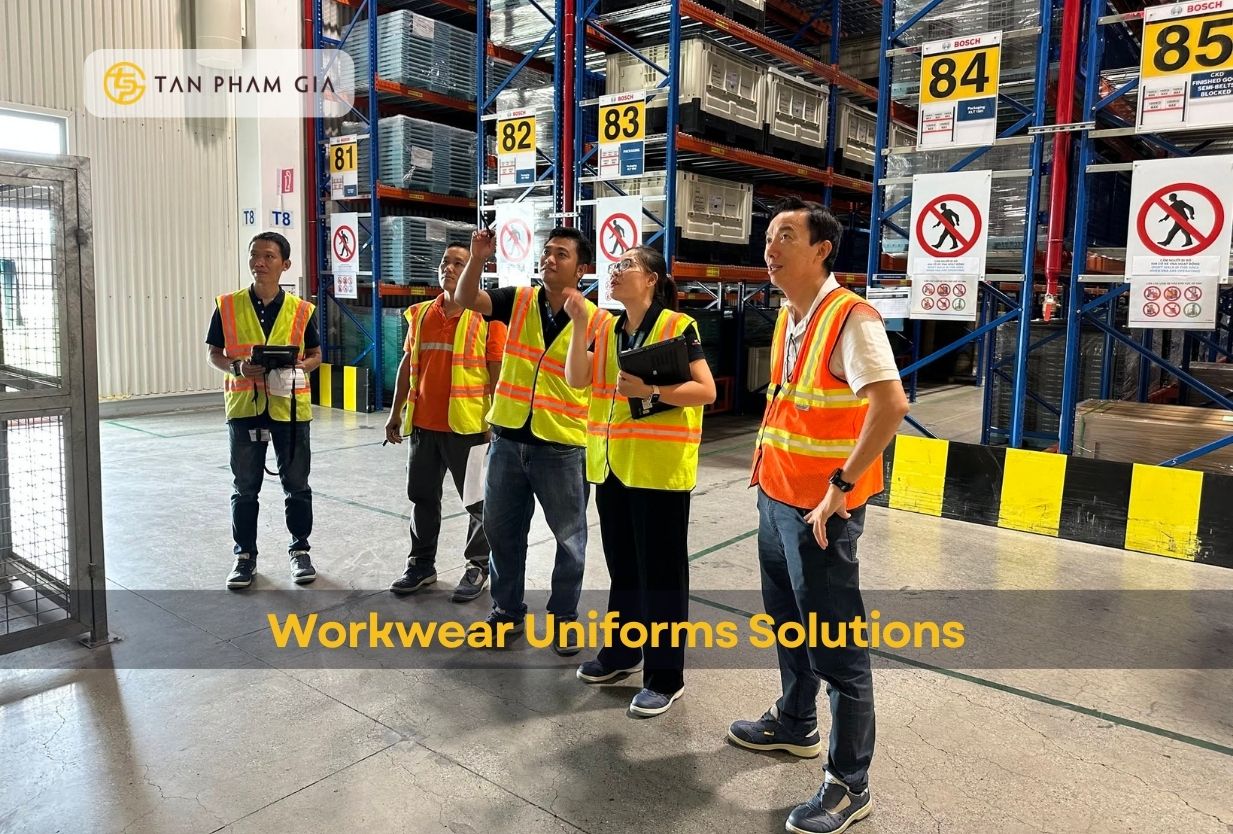
Logistics workwear uniforms can feature a relaxed fit, functional pockets, and visibility details such as reflective elements when appropriate for the working environment – for example, night shifts, outdoor operations, or areas with frequent vehicle movement.
Fabric selection is particularly important for these teams because their uniforms are generally exposed to higher levels of daily wear and repeated washing.
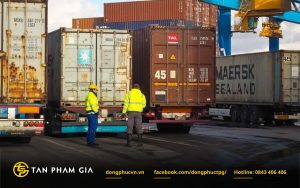
Uniform Shirts – For Customer- and Partner-Facing Employees
Uniform shirts are suitable for sales, purchasing, import-export, and management personnel who regularly interact with customers and business partners.
This style supports a more formal and professional appearance when employees represent the company during business meetings, negotiations, and international partner engagements.
Uniform shirts can also incorporate corporate identity through details such as an embroidered left-chest logo and brand-specific color combinations.

Looking for a uniform solution tailored to different departments within your logistics operation? Contact Tan Pham Gia at 0843 406 406 to discuss your workforce structure, working environments, and uniform requirements.
Fabric Solutions for Logistics Industry Uniforms
Fabric selection for logistics industry uniforms should be based on the actual working environment and garment performance requirements rather than appearance alone.
The following fabric groups can be considered for different logistics industry uniform applications:
For warehouse and operations teams, Kaki fabrics – including Thanh Cong Kaki, 65/35 Kaki, Kaki Ford, Vietnam-made Kaki, and Stretch Kaki – are commonly considered for their durability and suitability for frequent wear and washing.
For office, customer-facing, and uniform shirt applications, Kate Silk and Microfiber can be considered where a softer hand feel and extended-wear comfort are priorities.
Logistics Industry Uniform Solutions by Department
Each department within a logistics operation has its own working conditions and responsibilities. Uniform specifications should therefore be developed according to the role rather than applying one standard design to every employee.
Warehouse Staff Uniforms
Warehouse staff need uniforms that provide durability, breathability, and freedom of movement because their work often involves frequent walking, handling, and loading activities.
The design should suit the warehouse environment and high-mobility requirements, with optional functional pockets or other practical details where needed.
Businesses can also distinguish warehouse teams from other departments through specific colors or branded design elements.
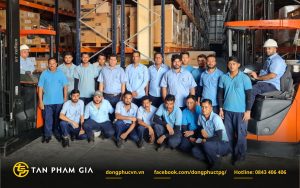
Operations Staff (OPS) Uniforms
OPS personnel frequently travel and work on-site at ports, warehouses, yards, and delivery locations. Their uniforms should prioritize mobility, breathability, and ease of care.
Where employees work around moving vehicles or in low-light conditions, uniform designs can incorporate higher-contrast colors or reflective elements to improve visibility.
For this group, visibility and other relevant safety considerations should be assessed alongside brand identity.
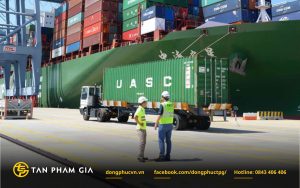
Documentation Staff (Docs) Uniforms
Documentation staff primarily work in office environments, so their uniforms should project a professional image while remaining comfortable for extended periods of wear.
Their uniforms can follow the company’s corporate identity through standardized colors and logo placement. Depending on the company’s workplace culture, uniform shirts or polo shirts can both be appropriate options.

Customer Service (CUS) Uniforms
Customer service personnel frequently communicate directly with customers, making a polished and professional uniform important for both employee presentation and brand consistency.
Businesses can choose between polo shirts and uniform shirts depending on the department’s working environment, whether it is an office, service counter, or operational site.
A standardized CUS uniform also makes customer service personnel easier to identify when customers require assistance.
Purchasing / Procurement Specialist Uniforms
Purchasing and procurement roles typically combine office work, supplier meetings, and external business interactions. Their uniforms therefore need to balance professional presentation with flexibility.
Uniform shirts are often suitable for these roles because they provide a more formal appearance when employees represent the company in meetings with suppliers and external partners.
Logistics Sales Uniforms
Logistics sales teams need a professional appearance when meeting customers and business partners. Depending on the company’s brand identity, they may wear uniform polo shirts, uniform shirts, or coordinated business-casual combinations.
Because sales teams may operate across different locations, uniform specifications should remain consistent in terms of colors, styles, and logo placement.
Import-Export Specialist Uniforms
Import-export personnel combine documentation work, office responsibilities, and interactions with parties such as customs authorities, carriers, and business partners.
Their uniforms should therefore be professional, comfortable, and appropriate for a corporate environment.
Uniform shirts are a common option for this role because they provide a polished appearance and pair easily with other business attire.
International Payment Specialist Uniforms
International payment specialists typically work in professional office environments and require uniforms that are comfortable, polished, and easy to coordinate with business attire.
Because their work involves international transactions and financial partners, their uniform presentation should also align with the company’s professional corporate image.
Warehouse Supervisor / Manager Uniforms
Uniforms for warehouse supervisors and managers should distinguish leadership roles from operations staff while maintaining consistency with the company’s overall brand identity.
These uniforms should still provide durability and mobility appropriate for warehouse environments. Role differentiation can be achieved through design details or additional garments, such as outerwear or identification badges, rather than creating an entirely different uniform system.

Supply Chain Manager Uniforms
Supply chain managers require a professional appearance when working with internal teams, customers, and business partners. Their uniforms can therefore place greater emphasis on refined design and alignment with the company’s corporate image.
Uniform shirts or premium fabric options may be more appropriate for this role than the highly durable fabrics typically selected for operational teams.
Managing multiple departments that require different uniform specifications? Send your design requirements to Tan Pham Gia for recommendations tailored to each role within your logistics operation.
Logistics Industry Uniform Colors Aligned With Corporate Identity
Uniform Colors for Warehouse and Operations Teams
Warehouse and operations personnel may benefit from practical, easy-to-maintain colors such as navy, gray, or darker beige, which are less likely to visibly show dust and everyday marks.
Beyond appearance, color selection should also consider employee visibility in warehouse environments with frequent vehicle and equipment movement.
Uniform Colors for Outdoor and Night-Shift Employees
For employees working outdoors or during night shifts, businesses should consider higher-contrast colors or reflective details where appropriate to improve visibility and reduce the risk of collisions.
This consideration should be evaluated alongside corporate brand colors rather than based on aesthetics alone.
Uniform Color Combinations Based on Corporate Identity
Primary brand colors should be applied consistently across customer-facing departments such as sales, documentation, and customer service.
Consistent color coordination across these teams helps reinforce the company’s visual identity during interactions with customers and business partners.
Differentiating Departments Through Colors and Design Details
Businesses can use color variations or design details-including collar piping, pocket details, and seam accents-to distinguish departments while maintaining a unified corporate identity.
This approach can make personnel easier to identify on-site without compromising the overall consistency of the company’s uniform system.
Uniform Color Standards for Multi-Branch Logistics Operations
For logistics businesses operating multiple warehouses or branches, standardized color codes should be established from the beginning to ensure accurate color reproduction for future repeat orders.
Without clear color specifications, variations may occur between production batches or locations, reducing consistency across the company’s overall visual identity.
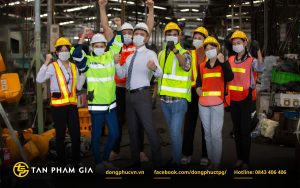
Logo Printing and Embroidery for Logistics Industry Uniforms
Common Logo Application Techniques for Logistics Industry Uniforms
Three common logo application techniques can be considered for logistics uniforms, depending on the garment, working environment, and branding requirements:
- Screen printing: Suitable for simple logo designs and large-volume production.
- Heat transfer printing: Suitable for multi-color logos and more detailed artwork.
- Computerized embroidery: Durable and suitable for uniforms exposed to frequent wear and washing.
>>> Learn more: Custom Corporate Uniform Logo Printing | Tan Pham Gia
Choosing the Right Logo Technique for Each Working Environment
For warehouse, operations, and delivery teams, businesses should prioritize durable logo applications that can withstand regular friction and frequent washing, such as computerized embroidery.
For office and customer-facing teams, businesses can place greater emphasis on logo appearance and detail, with either heat transfer printing or embroidery depending on the artwork and garment.
Logo Placement on Logistics Industry Uniforms
Logo placement should be determined according to the garment style and the intended purpose of employee identification.
- Left chest: The most common placement and suitable for most uniform styles.
- Sleeve: Often combined with a left-chest logo to increase brand visibility.
- Back or other designated areas: Suitable for field and delivery personnel who need stronger visibility from a distance.
Standardizing Logo Placement Across Multiple Branches
Businesses operating multiple warehouses or branches should standardize logo size, placement, and color across different departments and locations.
Applying consistent logo specifications across offices, warehouses, and operational sites helps maintain a unified corporate image throughout the organization.
Need quick guidance on logo placement and application techniques for different departments? Message Tan Pham Gia via Zalo for direct consultation.
Common Mistakes to Avoid When Implementing Logistics Industry Uniforms
Using One Uniform Design for Every Department
Applying the same garment style and fabric to every employee is a common mistake that can result in uniforms failing to meet actual working requirements.
Businesses should distinguish between office, warehouse, operations, and delivery teams when defining garment styles, fabrics, and functional details.
Failing to Standardize Size Charts and Color Codes
Without standardized size charts and color specifications, it can become difficult to place repeat orders for new employees, newly opened warehouses, or additional branches.
This issue is often overlooked during the initial uniform order but can create additional time and costs during subsequent production cycles.
Overlooking Safety Considerations for Operational Staff
Employees working outdoors, in warehouses, or during night shifts require careful consideration of visibility, fabric durability, and relevant safety-supporting details such as reflective elements.
These factors should be reviewed during the uniform design stage for teams working in environments with vehicle and equipment movement.
Lack of Brand Identity Standards
Inconsistent colors, logo sizes, or logo placement between departments and locations can weaken the overall consistency of the company’s visual identity.
This is particularly common when uniforms are ordered independently by different departments or branches without a shared uniform specification.
Failing to Plan for Repeat Orders and Business Expansion
Businesses should establish specifications for colors, fabrics, garment styles, and size charts from the initial order to simplify future uniform replenishment as the workforce grows or new warehouses and branches are added.
Maintaining these specifications helps reduce unnecessary redesign work and supports consistency across subsequent production batches.
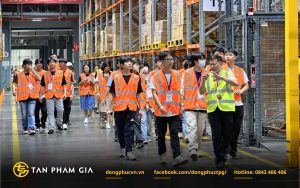
Want to avoid these common issues when implementing uniforms for your logistics operation? Submit your requirements through the contact form so the Tan Pham Gia team can review your workforce structure and uniform needs.
Factors Affecting Logistics Industry Uniform Costs
Fabric and Performance Requirements
Fabric type, fabric weight, technical characteristics, and requirements for durability, breathability, or stretch can all affect uniform costs.
Fabrics selected for durability in warehouse and operations environments may have different production costs from fabrics chosen primarily for comfort in office settings.
>>> Learn more: Fabric Collection – Corporate Uniform Materials | Tan Pham Gia
Uniform Order Quantity
The quantity of garments in each order and the company’s overall production schedule can influence manufacturing costs.
Larger production runs can generally allow production resources to be optimized more efficiently than multiple small orders placed separately.
Logo Printing, Embroidery, and Finishing
Costs may vary depending on the logo application method, such as screen printing, heat transfer, or computerized embroidery, as well as logo size, number of application locations, and finishing requirements.
Teams requiring highly durable logo applications may have different branding specifications from office teams where visual detail is the primary consideration.
Number of Departments and Uniform Configurations
Businesses with multiple employee groups-including office, warehouse, operations, and delivery teams-may require different garment styles or uniform configurations for each department.
The greater the number of uniform configurations, the more important it becomes to coordinate design, sampling, and production specifications carefully.
Project-Specific Logistics Uniform Quotations
The cost of logistics industry uniforms depends on the order quantity, employee groups, working environment, fabric, design, and branding requirements of each business.
Businesses can contact Tan Pham Gia with information about order quantity, employee groups, working environments, fabric preferences, and corporate branding requirements.
The consulting team can then recommend suitable uniform configurations and provide a project-specific quotation via Hotline: 0843 406 406 or the contact form on the website.
Logistics Industry Uniform Manufacturing Process at Tan Pham Gia
Tan Pham Gia follows a seven-step uniform development and manufacturing process designed to support businesses with multiple departments and operational locations.
- Step 1. Requirement Consultation: Review employee quantities by department-warehouse, operations, documentation, sales, and other teams – along with working environments and branding objectives.
- Step 2. Style and Fabric Selection: Recommend garment styles and fabrics according to the actual requirements of each employee group.
- Step 3. Design Development: Develop uniform designs based on the company’s corporate identity while maintaining consistency across departments.
- Step 4. Sample Approval: Provide samples for review and adjustment before moving into bulk production.
- Step 5. Bulk Production: Manufacture uniforms according to the approved specifications, using 3D pattern technology and mannequin-based fitting to support accurate garment proportions.
- Step 6. Quality Control: Conduct multi-stage quality checks before packing to maintain consistency across departments and production batches.
- Step 7. Delivery: Deliver according to the agreed schedule and retain approved specifications to facilitate future repeat orders.
Tan Pham Gia’s Logistics Industry Uniform Manufacturing Capabilities
Tan Pham Gia has more than 20 years of experience in fashion and garment manufacturing, supporting businesses with large-volume uniform production across different workforce groups.
With an approximately 2,000 m² production facility and production capacity of around 30,000 garments per month, Tan Pham Gia can support projects involving multiple departments, uniform configurations, and production requirements.
The company applies 3D pattern technology and mannequin-based garment development to refine uniform proportions and fit across different wearer profiles.
The consulting team works with businesses from the initial assessment of departmental requirements through design, sampling, production, and delivery. Uniform specifications-including color codes, size charts, approved samples, and logo placement-can be standardized to support future repeat orders as businesses expand or recruit additional employees.
>>> Learn more:
- Corporate Uniform Consultation & Design | Tan Pham Gia
- OEM/ODM Corporate Uniform Manufacturer | Tan Pham Gia
Frequently Asked Questions About Logistics Industry Uniform Solutions
Questions 1. How many departments should a logistics company order uniforms for?
There is no fixed number. Businesses should group employees according to their actual working conditions rather than relying solely on job titles.
In many cases, employees can be organized into two or three primary uniform groups, such as warehouse and operations, office and documentation, and sales and customer-facing teams. This can help reduce unnecessary design variations while still addressing different working requirements.
Questions 2. Do Logistics Industry Uniforms Need Reflective Details?
Reflective details may be appropriate for employees working outdoors, during night shifts, or in areas with significant vehicle movement.
Office and customer-facing employees typically do not require these features and can instead prioritize professional appearance and wearing comfort.
Questions 3. Can Uniforms Be Produced Separately for Different Logistics Warehouses or Branches?
Yes. Businesses can produce uniforms for individual warehouses or branches, but common specifications for color, fabric, and logo placement should ideally be established from the beginning.
Standardization helps maintain brand consistency even when orders are placed at different times or across different locations.
Questions 4. How Long Does Logistics Industry Uniform Production Take?
Production time depends on order quantity, the number of uniform configurations, and the fabrics selected for each department.
Businesses should contact Tan Pham Gia directly for a project-specific production timeline based on their actual requirements.
Questions 5. Can Businesses Order Additional Uniforms When Hiring New Employees?
Yes. If color codes, fabrics, garment specifications, and size charts are standardized during the initial order, future replenishment can be managed more efficiently while maintaining consistency with existing uniforms.
This is why businesses should retain approved samples and production specifications for future repeat orders.
Questions 6. Do All Logistics Departments Need to Use the Same Uniform Color?
Not necessarily. Uniform colors do not have to be identical across every department, but they should remain connected through a consistent corporate identity-for example, by using the same primary brand color family or standardized logo placement and sizing.
Different colors can also be used to distinguish departments or responsibilities while remaining within the company’s overall visual identity system.
An effective logistics industry uniform program should reflect the working conditions and responsibilities of each department-from warehouses, operations, and field delivery teams to documentation, customer service, sales, and management-rather than applying one uniform specification across the entire workforce.
Standardizing fabrics, colors, logo placement, garment styles, and size charts from the beginning also makes it easier for businesses to scale operations, open additional locations, recruit new employees, and place repeat orders without compromising uniform consistency.
Tan Pham Gia Uniform works with logistics businesses to develop, design, and manufacture logistics uniforms tailored to different departments and working environments.
Contact Tan Pham Gia at 0843 406 406 or submit your requirements through the contact form to discuss a suitable uniform solution for your logistics operation.