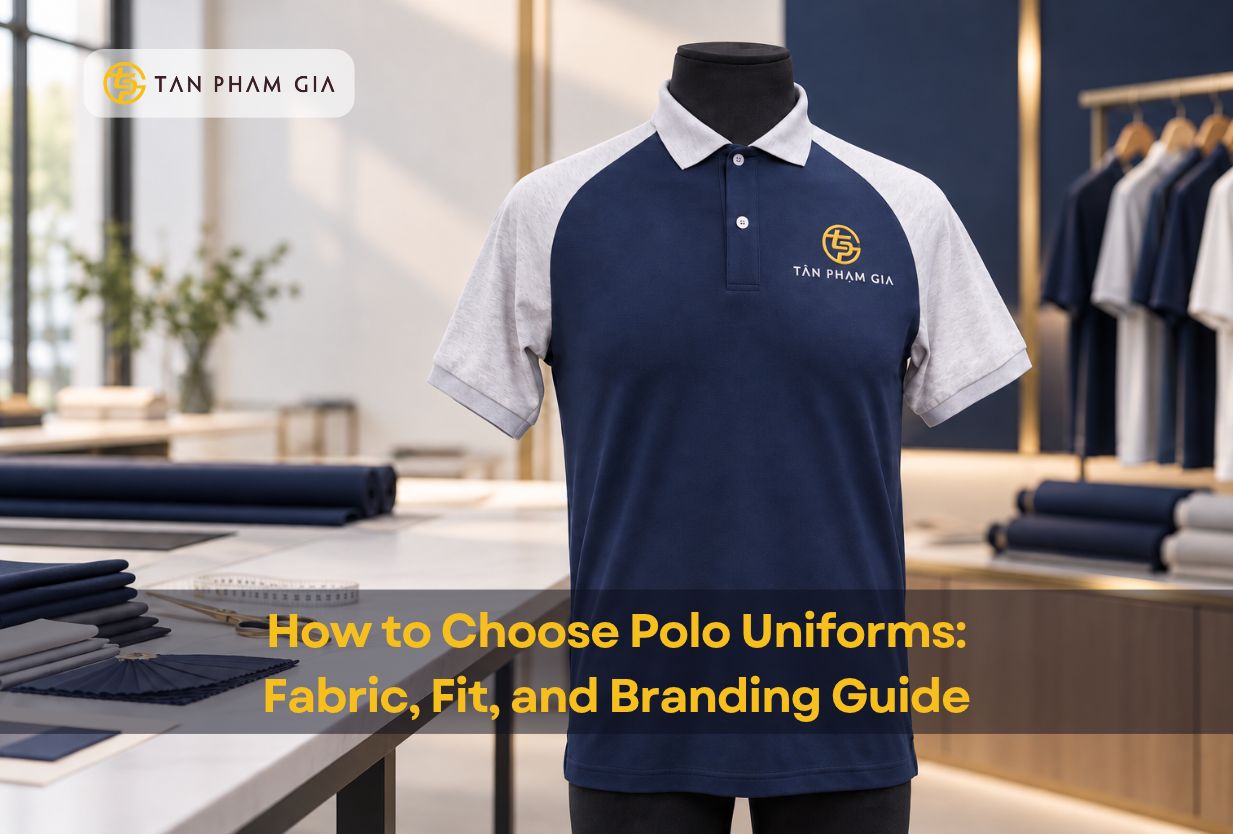
Uniform polo shirts are a popular choice for businesses looking to create a professional appearance while maintaining comfort throughout the working day. Compared with many other uniform styles, polo shirts offer a high degree of flexibility in terms of silhouette, color, fabric, branding details, and overall design direction.
For businesses with 100 or more employees, choosing a uniform is about more than finding an attractive shirt. A successful uniform program needs to address multiple requirements at the same time: suitability for the working environment, consistency across departments, alignment with brand identity, scalability for bulk production, and the ability to reorder the same product in the future.
Tan Pham Gia Uniform focuses on complete corporate uniform solutions, covering style consultation, fabric selection, design development, sampling, bulk manufacturing, and quality control. Through the TPG Fabric Collection™, production capabilities, and a fashion-driven product development approach, businesses can select uniform polo shirts based on their actual operational requirements rather than appearance alone.

Why Should Businesses Choose Polo Shirts for Uniforms?
Create a Professional Corporate Appearance
A polo shirt has a defined collar, sleeves, and structured body, giving it a more polished appearance than a standard crew-neck T-shirt.
This is why polo uniform shirts are commonly used across offices, showrooms, retail stores, F&B, hospitality, service businesses, and customer-facing environments. Businesses can control the overall appearance through shirt color, logo placement, collar design, sleeve cuffs, and color combinations.
For organizations with multiple departments, branches, or locations, a standardized polo uniform also helps create a consistent visual identity across the entire organization.
Comfortable for Extended Wear
Employees may wear uniforms for many hours each day, making comfort an important consideration in uniform development.
When selecting a uniform polo shirt, businesses should evaluate fabric composition, fabric weight, stretch, fit, and the actual working environment together. A well-developed uniform should allow employees to move comfortably while avoiding the feeling that the uniform is simply a mandatory garment.
For roles that involve frequent movement, such as sales, service, F&B, or field operations, fabric and fit should be selected according to the physical demands of the job.
Suitable for Different Industries and Work Environments
Polo uniforms are highly versatile. From offices and retail chains to restaurants, hotels, factories, logistics operations, and events, businesses can develop polo shirts around a consistent brand identity.
However, the same fabric and design formula should not automatically be applied to every industry.
An office uniform may prioritize softness, comfort, and a refined business-casual appearance, while service or operational environments may require greater flexibility, durability, and performance.
Strengthen Brand Recognition
A uniform is a direct brand touchpoint between a business, its employees, customers, and partners.
The logo does not necessarily need to be large. A consistent color system, correctly positioned logo, and well-designed collar and sleeve details can create strong brand recognition while maintaining a clean and professional appearance.
For companies with established brand guidelines, polo shirt uniforms can become part of a broader employee identity system rather than simply another garment.
Easy to Develop Around Corporate Brand Guidelines
Uniform polo shirts offer a wide range of options in terms of silhouette, collar, sleeve construction, color blocking, and finishing details.
Businesses can create a unified uniform system while differentiating garments for:
- Employees and management.
- Men and women.
- Office and operational teams.
- Permanent employees and event teams.
- Different branches or business units.
This approach is particularly useful for companies with multiple departments or locations.
Durable and More Efficient as a Long-Term Investment
Uniform costs should be considered from a total cost of ownership perspective rather than looking only at the initial unit price.
A uniform polo program can become more cost-efficient when businesses balance fabric selection, design complexity, order quantity, printing or embroidery requirements, and future reordering needs.
For corporate uniform programs, consistency between production batches is also important. Once a garment has been standardized and its production specifications have been documented, new employees can receive the same uniform without the business having to redevelop the product from scratch.
Support Employee Connection and Corporate Culture
A well-designed uniform can create a stronger sense of belonging within an organization.
For large businesses, consistent uniforms help create a unified appearance across departments and locations. This contributes to employee experience while reinforcing a shared corporate identity.
Flexible for Daily Work and Events
Polo uniforms can be used across a wide range of situations, including everyday work, conferences, internal events, customer programs, brand activations, and marketing campaigns.
This makes polo uniforms suitable for businesses looking to build a long-term uniform system rather than a garment intended for a single short-term event.
Need help selecting a uniform polo shirt style, fabric, and color scheme for your business?
Tan Pham Gia can provide recommendations based on your industry, usage requirements, order volume, and brand identity.

Popular Uniform Polo Shirt Styles for Businesses
There is no single polo uniform shirt style that works for every business. In practice, the silhouette should be selected according to the wearer, working environment, and desired brand image.
Slim-Fit Uniform Polo Shirts
Slim-fit polo shirts have a closer silhouette, creating a modern and fashion-forward appearance.
This style can work well for businesses looking to project a youthful, energetic image or for customer-facing teams such as sales staff, showroom teams, and premium service personnel.
However, for large uniform programs involving employees with different body types, slim-fit should not automatically be treated as the best option for everyone. Testing samples across representative body types remains important.

Regular-Fit Uniform Polo Shirts
Regular-fit polo shirts provide a balance between a clean appearance and freedom of movement.
They are a practical choice when a business needs a versatile uniform suitable for different employee groups and working environments.
For large-scale projects, regular fit is also worth considering when the goal is to establish a standardized silhouette that can be used consistently across the organization.

Classic-Fit Uniform Polo Shirts
Classic-fit polo shirts prioritize comfort and a less fitted silhouette.
This style can suit businesses looking for a more traditional and professional appearance, as well as employees who wear their uniforms for extended periods.

Traditional Ribbed-Collar Polo Shirts
This classic polo construction features a rib-knit collar, creating the familiar visual identity associated with polo shirts.
Businesses can match the collar color to the body or introduce a brand color as a visual accent.

Collarless Polo Shirts
A collarless polo design creates a cleaner and more contemporary appearance.
It can be suitable for brands pursuing a minimalist, contemporary, or modern business-casual direction.

V-Neck and Henley Polo Styles
V-neck and Henley-inspired designs provide an alternative to traditional polo collars.
These styles can work well for service brands, fashion-oriented businesses, hospitality teams, or uniform programs that require a younger and more flexible appearance.

Shirt-Collar Polo Shirts
A shirt-style collar brings the polo closer to a smart-casual aesthetic.
This option can be suitable for businesses that want employees to look professional without adopting a fully formal uniform.

Zip-Collar Polo Shirts
A zip-collar polo adds a modern design element and can create a more dynamic, performance-oriented appearance.
This style may be particularly suitable for employees who move frequently or for uniforms positioned between servicewear and sportswear.

Short-Sleeve Polo Shirts
Short sleeves are the most common choice for uniform polos in warm climates or environments where employees require greater freedom of movement.

Long-Sleeve Polo Shirts
Long-sleeve polo shirts can be suitable for office environments, more formal corporate settings, or roles where additional coverage is preferred.
Straight-Sleeve Polo Shirts
A straight sleeve provides a relaxed and versatile approach, particularly when comfort and freedom of movement are priorities.

Side-Slit Polo Shirts
Side slits can improve movement around the lower body and provide additional flexibility.
For large corporate projects, businesses should consider building a uniform polo shirt gallery around practical criteria such as fit, collar, sleeve construction, fabric, and industry rather than selecting garments based only on appearance.
Which Fabric Should You Choose for Uniform Polo Shirts?
For businesses, fabric selection should not be based solely on the fabric name or hand feel. Composition, GSM, performance characteristics, working environment, wearer experience, and brand positioning should all be evaluated together.
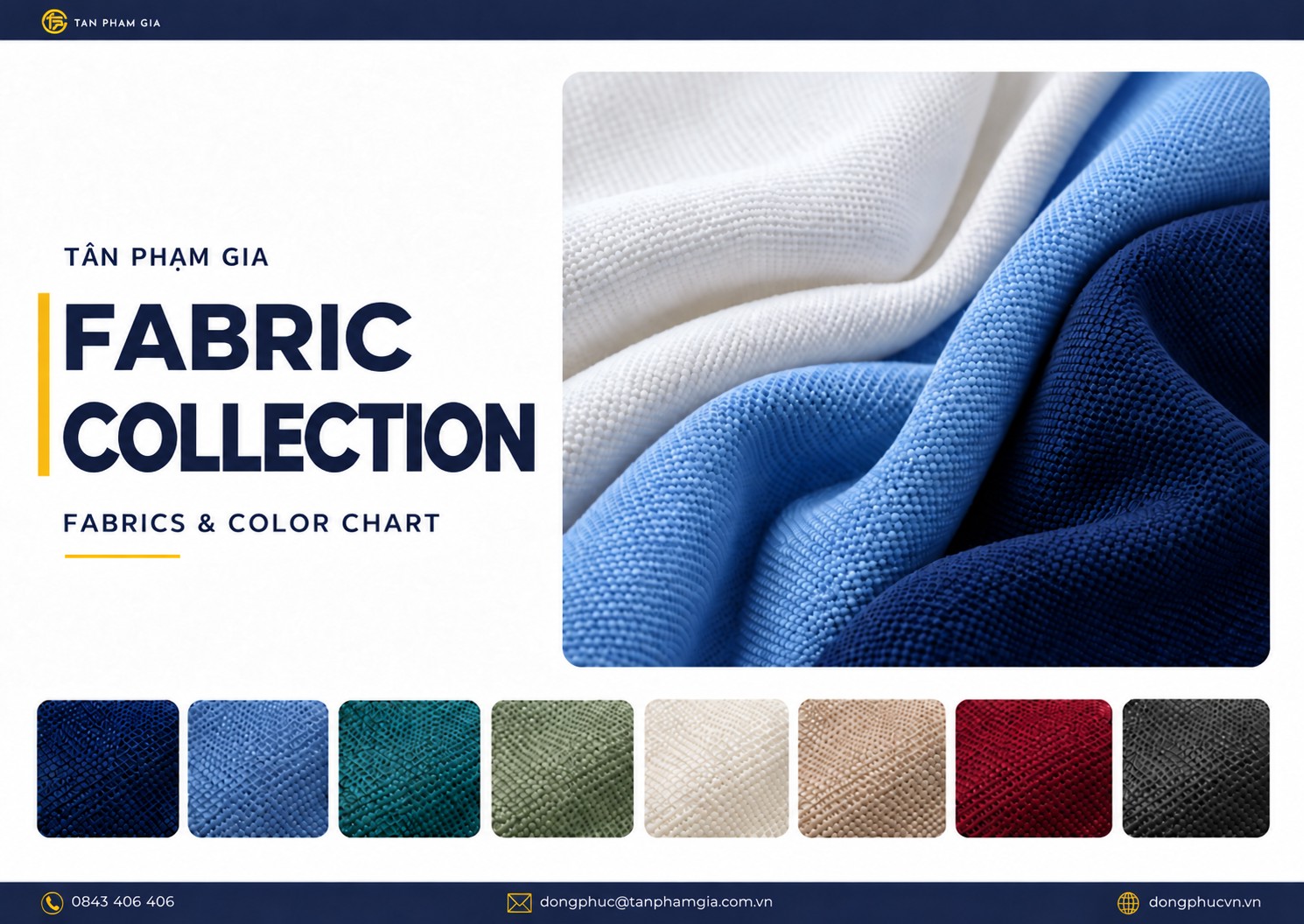
The following materials from the TPG Fabric Collection™ can be considered when developing uniform polo shirts for different business requirements.
Uniform Polo Shirt Fabric Comparison
| Collection | Signature Material™ | Composition | GSM | Recommended Applications | Positioning |
|---|---|---|---|---|---|
| TPG PRIME™ | Royal Pique™ | 100% Polyester | 270 | Corporate uniforms, offices, factories, logistics, F&B, retail | Performance |
| TPG PRIME™ | CoolDry Pique™ | 100% Polyester | 250 | Corporate uniforms requiring performance-oriented wear | Performance |
| TPG COTTONFLEX™ | Natural Cotton™ | 100% Cotton | 230 | Offices, education, healthcare, restaurants, service businesses | Natural Cotton |
| TPG COTTONFLEX™ | CottonFlex™ | 95% Cotton, 5% Spandex | 220 | Corporate and office environments requiring comfort and flexibility | Natural Cotton |
| TPG SIGNATURE™ | Soft Pique™ | 60% Cotton, 40% Polyester | 210 | Corporate Premium, business casual uniforms | Premium |
| TPG SIGNATURE™ | Elite Pique™ | 35% Cotton, 65% Polyester | 210 | Corporate Premium, business casual uniforms | Premium |
| TPG SIGNATURE™ | Silva Rayon™ | 62,8% Rayon, 31,7% Nylon, 5,5% Spandex | 200–220 | Corporate Premium, business casual uniforms | Premium |
| TPG SIGNATURE™ | Piqué Slub™ | 65% Cotton, 35% Polyester | 200–220 | Premium corporate uniforms | Premium |
Organizing fabrics by Collection → Signature Material™ allows businesses to evaluate materials based on their intended application rather than comparing fabric names alone.
For example, TPG PRIME™ focuses on performance-oriented applications, while TPG SIGNATURE™ is more suitable for corporate premium uniform programs.
Why Is Pique Fabric Suitable for Uniform Polo Shirts?
Pique is one of the most commonly used fabric constructions for polo shirts because its surface texture and structure naturally complement the characteristics of the garment.
For uniform polos, pique fabrics can offer several practical advantages:
- Support collar and cuff structure: The fabric construction can help the collar and sleeve cuffs maintain the intended shape.
- Create a professional appearance: The textured surface can contribute to a polished appearance suitable for environments ranging from offices to service operations.
- Suitable for regular wear: Pique fabrics within the TPG Fabric Collection™ are developed for different applications, from corporate uniforms to premium corporate programs.
- Works across different designs: Pique fabrics can be developed into different silhouettes, color combinations, and brand-led design directions.
However, “pique” should not be treated as a quality standard on its own. Pique fabrics can differ significantly in composition, GSM, hand feel, performance, and intended application.
For large uniform polo programs, businesses should therefore evaluate the specific Signature Material™ rather than simply requesting “pique fabric.”
How to Select Uniform Polo Fabric by Working Environment
There is no single fabric that works for every business. The right material should be evaluated based on the working environment, frequency of wear, level of movement, brand positioning, and project budget.
- Office environments: Natural Cotton™, CottonFlex™, or selected TPG SIGNATURE™ materials may be suitable for businesses seeking a business-casual or corporate-premium appearance.
- Factories and logistics: TPG PRIME™ materials can be considered, with Royal Pique™ and CoolDry Pique™ developed for uniform polos and business environments with higher practical performance requirements.
- Restaurants, F&B, and service businesses: Royal Pique™, Natural Cotton™, or other materials may be considered depending on the operating environment, brand image, and wearer requirements.
- Hotels, resorts, and premium businesses: TPG SIGNATURE™ materials such as Soft Pique™, Elite Pique™, Silva Rayon™, and Piqué Slub™ can be considered for Corporate Premium uniform programs.
- Sales, events, and active roles: Businesses should evaluate movement requirements and daily wear time before selecting the fabric rather than choosing based on appearance alone.
- Businesses with multiple employee groups: One fabric does not necessarily need to be used across the entire organization. Different materials can be assigned to different job functions while maintaining consistency in color, branding, and overall design language.
Need uniform polo shirts from 100 units?
Contact Tan Pham Gia for fabric recommendations based on your industry, working environment, and project requirements.
Designing Uniform Polo Shirts Around Your Brand Identity
An effective corporate uniform polo should not start with the question, “Which design looks best?” The starting point should be the company’s brand identity and practical requirements.
Select Colors Based on Corporate Brand Guidelines
Color has a direct impact on brand recognition.
Businesses can use their primary brand color as the dominant shirt color or develop a coordinated palette for different departments, management levels, or use cases.
For large uniform programs, color specifications should be standardized from design through production to minimize variation between production batches.
Logo Placement on Uniform Polo Shirts
Logo placement can be considered on the left chest, sleeve, or back depending on the design.
Placement should not be determined by logo size alone. The overall garment proportions, logo scale, clear space, seams, collar, and surrounding design elements should all be considered.
Select Collar and Sleeve Cuff Colors
The collar and sleeve cuffs are two strong visual areas for creating brand accents.
Businesses can:
- Match the collar and cuffs to the body color.
- Use corporate brand colors.
- Introduce contrasting colors.
- Develop specific collar and cuff combinations for management or different departments.
Balance Body, Collar, and Sleeve Colors
Color combinations should be evaluated from both a brand and production perspective.
For large businesses, repeatability is particularly important. When uniforms are reordered, the same specifications should allow future production batches to maintain a consistent appearance.
Select the Right Fit for Different Employee Groups
A single fit should not automatically be applied to every body type.
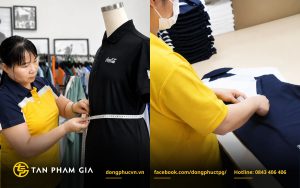
Tan Pham Gia can develop different fits for men, women, and specific user groups. A 3D pattern-development approach and mannequin-based garment development can help focus the process on body proportions and real-world wearability.
Men’s and Women’s Uniform Polo Shirts
Men’s and women’s polo shirts should be considered separately in terms of proportions, fit, and detail placement.
A well-standardized size system makes it easier for businesses to roll out uniforms consistently across large employee groups.
Uniform Polo Shirts for Management and Employees
Businesses can maintain one overall design language while creating differentiation through:
- Color.
- Collar and cuff combinations.
- Logo placement.
- Design details.
- Silhouette.
This creates visual hierarchy without compromising overall brand consistency.
Tan Pham Gia provides complimentary mockup development and physical samples before bulk production, allowing businesses to evaluate the actual garment before committing to a large-scale order.
What Factors Affect the Cost of Uniform Polo Shirts?
Tan Pham Gia does not apply one fixed price to every uniform project. The final quotation is developed according to the production requirements of each business.
- Fabric: Different materials have different compositions, GSM specifications, and intended applications, making fabric selection an important part of the quotation.
- Order quantity: Production volume affects manufacturing planning and unit economics. Tan Pham Gia accepts orders from 100 units and can support projects involving 1,000, 5,000, and 10,000+ garments depending on actual requirements.
- Design and construction complexity: A basic polo shirt will have different production requirements from a garment featuring multiple color panels, specialized collars, custom cuffs, or complex sewing details.
- Logo printing or embroidery: Logo size, number of positions, decoration method, and design complexity all need to be considered.
- Color and custom dyeing requirements: Brand-specific colors may require additional production considerations before the order is finalized.
- Delivery schedule: Lead time depends on quantity, design, fabric, sample approval, and production requirements.
What Order Quantity Is Most Suitable for Uniform Polo Shirts?
Rather than defining one fixed “optimal quantity,” businesses should first determine their actual uniform requirements.
- 100 – 300 units: Suitable for a department, office, or medium-sized business unit.
- 300 – 500 units: Suitable for multiple departments or a broader uniform rollout.
- 500+ units: Suitable for larger businesses, multi-location organizations, and chain operations.
For larger projects, production planning should consider total quantity, size distribution, product variations, and future reordering requirements.
Need uniform polo shirts from 100 units?
Send your quantity, design requirements, and industry information to Tan Pham Gia for a project-specific production plan and quotation.
Uniform Polo Shirt Manufacturing Process at Tan Pham Gia
Tan Pham Gia follows a structured process designed to reduce production risks for large-scale uniform polo programs.
Step 1 – Requirement Review and Consultation
Tan Pham Gia reviews key project information including order quantity, wearer groups, industry, working environment, brand identity, and specific requirements.
This information provides the basis for recommending the appropriate garment style, fabric, and design direction.
Step 2 – Complimentary Design Mockup
The design team develops a mockup based on the company’s brand identity and intended use.
This allows both parties to align on the product appearance before moving into physical sampling.
Step 3 – Quotation and Contract
Once the key specifications have been established, Tan Pham Gia prepares a project-specific quotation based on the agreed requirements.
Step 4 – Sampling and Approval
The physical sample is reviewed for:
- Fit and silhouette.
- Fabric.
- Color.
- Logo.
- Sewing details.
- Overall wearing experience.
The business approves the sample before bulk production begins.
Step 5 – Bulk Production
Once the sample is approved, bulk production proceeds according to the agreed specifications.
Tan Pham Gia operates a 2,000 m² factory with a production capacity of approximately 30,000 garments per month, supporting corporate uniform projects at scale.
Step 6 – Quality Control
Quality control is carried out throughout the production process: Raw Materials → Semi-Finished Garments → Finished Products
Key areas include fabric, color, garment construction, consistency, and finished-product quality.
Step 7 – Nationwide Delivery and After-Sales Support
Tan Pham Gia provides nationwide delivery and supports subsequent uniform requirements.
When businesses hire new employees or need additional garments, reordering against an approved sample helps maintain consistency in fabric, color, fit, and overall appearance.

Why Should Businesses Choose Tan Pham Gia for Uniform Polo Shirts?
Production Capability for Large-Scale Orders
Tan Pham Gia focuses on corporate uniform solutions, accepting orders from 100 units and supporting larger-scale projects.
Its 2,000 m² factory and production capacity of approximately 30,000 garments per month provide a foundation for projects requiring large-scale and consistent production.
TPG Fabric Collection™ – A Dedicated Fabric System
One of Tan Pham Gia’s key strengths is the TPG Fabric Collection™, featuring Signature Material™ fabrics developed for corporate uniform applications.
For uniform polo shirts, businesses can consider:
- TPG PRIME™: Royal Pique™, CoolDry Pique™.
- TPG COTTONFLEX™: Natural Cotton™, CottonFlex™.
- TPG SIGNATURE™: Soft Pique™, Elite Pique™, Silva Rayon™, Piqué Slub™.
The value is not simply in offering multiple fabrics. The focus is on selecting materials according to the working environment, wearer experience, brand image, and project requirements.
Complimentary Design Development
Tan Pham Gia does not only manufacture from existing designs. The team can also develop uniform concepts around a company’s brand identity.
This is particularly useful for businesses looking for a distinctive corporate uniform rather than a standard off-the-shelf polo.
Physical Sampling Before Bulk Production
Physical sampling helps reduce the risks associated with large uniform projects.
Businesses can evaluate the actual garment before approving bulk production.
Quality Control Throughout Production
Quality control is applied across the production process, from raw materials and semi-finished garments through to finished products, helping maintain consistency throughout manufacturing.
Project-Based Quotations
Quotations are developed according to the actual requirements of each project rather than applying one standard price list to every polo shirt.
Businesses can discuss quantity, fabric, design, branding, and production requirements to develop an appropriate manufacturing solution.
Nationwide Delivery
Businesses with multiple branches or locations can coordinate production and receive uniforms nationwide according to their rollout requirements.
Reordering Based on Approved Samples
Tan Pham Gia supports repeat orders based on previously approved samples.
This is particularly important for corporate uniform programs because uniforms are rarely a one-time requirement. Employee turnover, new branches, and business expansion can all create additional uniform requirements.
Common Mistakes to Avoid When Ordering Uniform Polo Shirts
- Choosing fabric based only on price: A lower unit price does not necessarily represent the most suitable solution. Businesses should consider fabric performance, working environment, wear frequency, brand image, and long-term requirements.
- Skipping the physical sample stage: This can create significant risks in large uniform projects. A design may look good on screen but differ in fit, color, logo appearance, or wearing experience when produced as a physical garment.
- Failing to verify actual colors: Screen colors should not be the only basis for approving production. Businesses should review physical color samples and establish the agreed color standard before bulk production.
- Using an inconsistent size chart: Sizing is an operational issue in corporate uniform programs. Businesses should establish standardized men’s and women’s size charts and define how employee measurements will be collected.
- Providing unsuitable logo artwork: Logo files should be prepared in the appropriate format for the selected printing or embroidery technique. Standardizing artwork early helps reduce revisions and production inconsistencies.
- Ordering too close to the required delivery date: Large uniform projects require time for design, sampling, approval, and production. Starting early gives the business more flexibility to address revisions if needed.
- Failing to define quality requirements: Product specifications should be agreed before production, including fabric, approved sample, colors, construction, sizing, and other relevant requirements.
- Not planning for future reorders: Businesses with large workforces should consider repeat orders from the beginning. Approved samples and production specifications should be documented so future garments remain consistent.
Frequently Asked Questions About Uniform Polo Shirts
Questions 1. What Is the Minimum Order Quantity for Uniform Polo Shirts?
Tan Pham Gia accepts orders from 100 units. Larger projects can also be developed for quantities of 1,000, 5,000, 10,000+, or more depending on actual requirements.
Questions 2. How Long Does It Take to Manufacture Uniform Polo Shirts?
Lead time depends on the design, fabric, order quantity, printing or embroidery requirements, sample approval, and production specifications.
Tan Pham Gia determines the production timeline according to the actual project rather than applying one fixed lead time to every order.
Questions 3. Can Businesses Get a Complimentary Uniform Polo Shirt Design?
Yes. Tan Pham Gia provides complimentary design mockups before physical sampling and bulk production.
Questions 4. Which Fabric Is Best for Uniform Polo Shirts?
There is no single fabric that is best for every business.
The selection should consider the working environment, brand image, level of activity, wearer experience, and project requirements.
Tan Pham Gia’s TPG Fabric Collection™ includes multiple fabric groups that can be evaluated according to different corporate uniform applications.
Questions 5. Should We Embroider or Print the Logo on Uniform Polo Shirts?
The appropriate decoration method depends on the logo design, fabric, placement, and desired visual effect.
Embroidery may be suitable when a raised, defined logo appearance is preferred, while printing may be more suitable for larger graphic areas or designs requiring more visual detail.
Businesses should review a physical sample before approving bulk production.
Questions 6. Can We Order Multiple Sizes in One Uniform Project?
Yes. Corporate uniform orders can include multiple sizes based on the actual employee population.
Businesses should establish standardized men’s and women’s size charts to improve sizing consistency across the project.
Questions 7. Can Uniform Polo Shirts Be Produced in Corporate Brand Colors?
Yes. Brand identity and specific color requirements can be incorporated into the design and production plan.
For distinctive corporate colors, businesses should review physical color samples before bulk production.
Questions 8. What Happens If There Is a Quality Issue With the Uniform Polo Shirts?
Quality requirements and product specifications should be agreed before production.
Tan Pham Gia applies quality control from raw materials through to finished garments and supports customers when issues related to the order arise.
Questions 9. Does Tan Pham Gia Deliver Uniform Polo Shirts Nationwide?
Yes. Tan Pham Gia provides nationwide delivery.
Questions 10. What Is Tan Pham Gia’s Minimum Order Quantity for Uniform Polo Shirts?
Tan Pham Gia’s MOQ starts from 100 units, making the service suitable for businesses, multi-location organizations, chain operations, and large-scale corporate uniform programs.
Custom Uniform Polo Shirts for Businesses
A successful uniform polo program should be treated as a complete corporate solution rather than simply a shirt design.
Businesses need to consider garment style, fabric, construction, color, logo placement, wearer experience, bulk production capability, quality control, and future reordering. These factors determine whether the uniform can maintain a consistent brand image across the organization over time.
Tan Pham Gia focuses on corporate uniform projects from 100 units, supported by a 2,000 m² factory, production capacity of approximately 30,000 garments per month, the TPG Fabric Collection™, complimentary design development, physical sampling before bulk production, quality control from raw materials through finished products, and nationwide delivery.
The dedicated fabric system also gives businesses more options for matching materials to wearer experience, brand positioning, working environment, and project requirements instead of applying one fabric to every uniform application.
Need custom uniform polo shirts from 100 units? Submit your requirements to Tan Pham Gia for advice on styles, fabrics, production processes, and a project-specific quotation.