Knowing how to choose polo uniforms involves more than selecting a shirt color and placing a logo on the left chest. Fabric, garment fit, brand presentation, sizing, and supply planning all affect wearer comfort, garment stability, and consistency across the workforce – particularly for businesses with multiple departments or branches.
Tan Pham Gia Uniform has compiled seven criteria businesses should establish before ordering, along with fabric recommendations by working environment, guidance on selecting fits for different body types, and an implementation process for larger orders. These considerations give procurement teams a clearer basis for decision-making and help reduce avoidable changes during bulk production.
7 Criteria to Define Before Choosing Polo Uniforms
Before choosing polo uniforms, a business should define the intended use, working environment, fabric, garment fit, brand colors, logo application, and supply plan. Each criterion answers a specific question the manufacturer needs to develop an appropriate proposal.
Preparing this information in advance also makes consultation, design, sample approval, and quotation more efficient.
Define the Intended Use and Wearer Groups
The intended use influences every subsequent decision about fabric, fit, quantities, and finishing. Polo shirts worn as daily uniforms have different requirements from shirts used only for events, customer receptions, or internal programs.
Businesses should identify:
- Which employee groups will wear the shirts.
- How many days per week they will be worn.
- The average daily wearing time.
- Whether employees work indoors, outdoors, or across several environments.
- Whether different departments require different garment configurations.
Employees wearing polo uniforms throughout the day and washing them several times a week generally require greater attention to fabric stability, care requirements, and garment construction than teams wearing them only occasionally.
Analyze the Working Environment and Job Requirements
The working environment determines whether the polo should prioritize a lightweight feel, garment structure, stretch, or ease of care. The same garment may perform differently in an air-conditioned office and an outdoor working environment.
Common priorities include:
- Air-conditioned offices: Soft hand feel, reduced wrinkling, and a polished appearance.
- Outdoor or mobile roles: Lighter weight, stretch, airflow, and appropriate drying performance.
- Factories and warehouses: Stable construction, frequent-use suitability, and compatibility with the expected laundry process.
- Customer-facing roles: Neat surface appearance, consistent fit, and brand presentation.
- Active events: Freedom of movement and a weight suited to the activity level.
Daily movement, continuous wearing time, workplace temperature, humidity, and actual washing practices should all be considered before fabric approval.
Select Fabric According to Actual Use
Fabric should be selected according to the intended application rather than price or initial hand feel alone. Two important starting points are fiber composition and GSM, which measures fabric weight in grams per square meter.
A higher GSM generally indicates a heavier fabric, but it does not automatically indicate better quality. Knit structure, finishing, fiber type, stretch, and the completed garment design also affect the wearing experience.
Polyester can support stability and easier care, cotton generally provides a softer and more natural feel, and spandex adds stretch. These are broad fiber characteristics rather than guarantees of a finished fabric’s performance. Businesses should review the specification and physical sample for the exact fabric code.
Choose a Fit for the Actual Workforce
Garment fit should reflect employee age groups, body types, gender distribution, movement requirements, and brand presentation. One fit is unlikely to suit every employee in a large workforce.
Businesses should decide early whether they need:
- Separate men’s and women’s patterns.
- More than one fit across job functions.
- Extended sizes.
- Representative fitting samples.
- A custom size breakdown based on actual workforce data.
This reduces the likelihood of widespread size exchanges after delivery.
Coordinate Colors with the Brand Identity
Polo colors should be selected from the company’s brand system rather than from an available sample alone. The business should provide reference color codes, such as Pantone or approved print values, for comparison during fabric development.
Screen colors and physical textile colors may differ. The dyed fabric or approved color sample should therefore be reviewed before production.
Businesses with multiple branches should retain the approved color code, physical swatch, and fabric code to support consistency in future orders.
Define Logo Position and Decoration Method
Logo position, dimensions, and application method should be established before sample approval because they affect both design and production.
Common positions include:
- Left chest.
- Sleeve.
- Back.
- Collar area.
Printing or embroidery should be selected according to the logo design, fabric surface, stretch, and intended appearance.
Heavier, low-stretch fabrics can generally accommodate printing or embroidery depending on logo placement. For lightweight, highly stretchable fabrics, printing may be preferred because dense embroidery can distort the fabric or affect the garment’s shape.
If the shirt includes department names, employee titles, or other variable information, the format should also be approved early. Later changes may require revised embroidery files or printing layouts.
Plan Quantities, Specifications, and Supply Requirements
The business should confirm quantities, product configurations, size ratios, and delivery requirements before production begins.
For example, a business ordering 100 polo sets for management, sales, and operational teams should identify:
- The quantity assigned to each group.
- The fabric and fit for each group.
- The complete size breakdown.
- Logo printing or embroidery requirements.
- Packaging and sorting requirements.
- Receiving locations.
- The required delivery date.
A reserve quantity may also be considered for new employees. The approved sample, fabric code, color reference, pattern, and logo specifications should be retained so future orders can be compared with the original production standard.

How to Choose Polo Fabric by Working Environment
Polo fabric should be selected according to the working environment. Offices may prioritize softness and appearance, mobile teams may need lighter and stretchable options, and retail or operational environments may require greater structural stability and manageable care requirements.
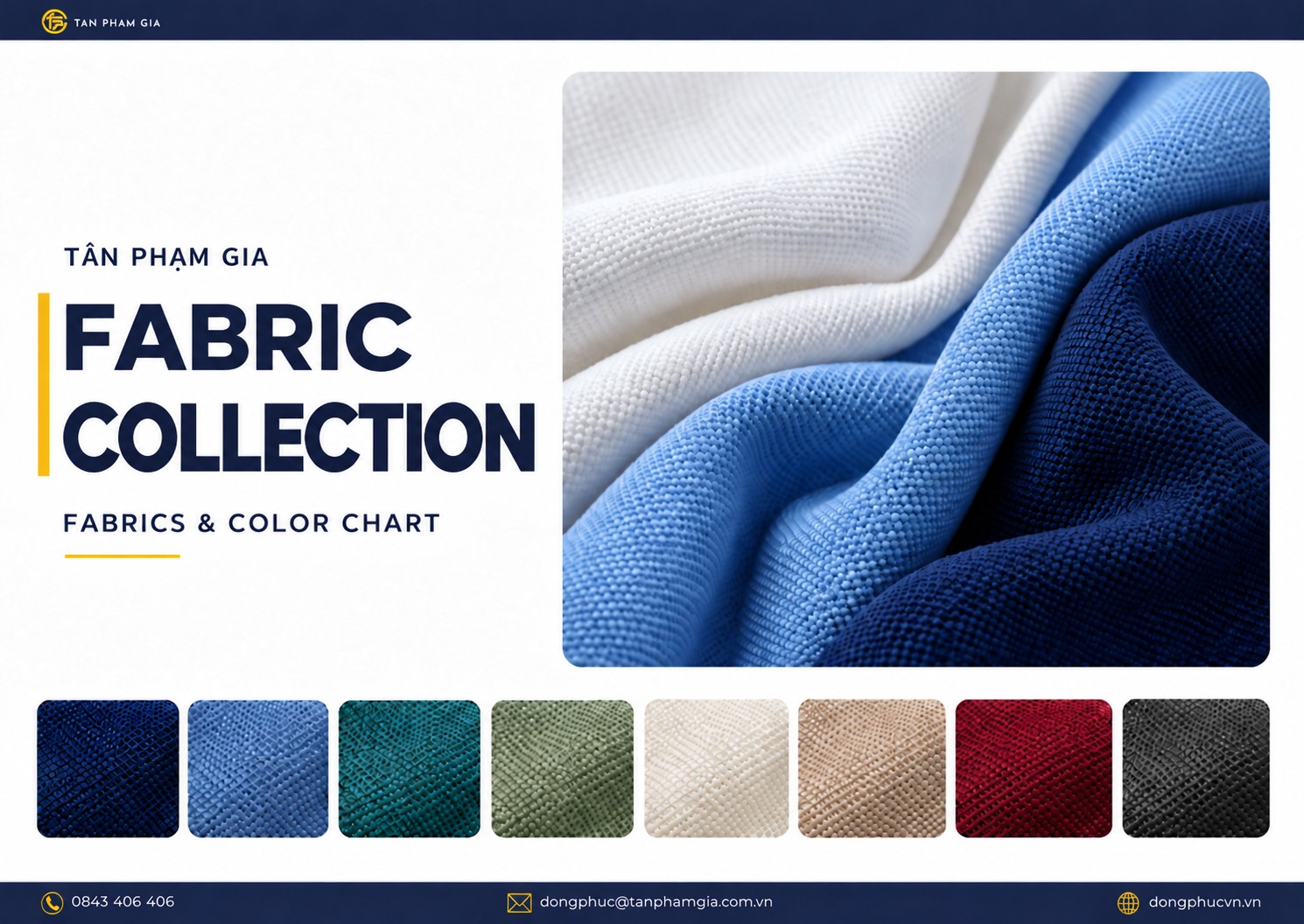
The following table summarizes the latest 13 fabrics in the curated Tan Pham Gia Uniform fabric system.
These specifications help businesses shortlist materials, but final approval should be based on the physical fabric and completed garment sample.
Polo Uniforms for Office Employees and Management
CoolDry Pique™ can be considered when a business wants a lighter polyester piqué option for extended indoor wear. CottonFlex™ balances a cotton component with the structural contribution of polyester, while Natural Cotton™ provides a softer, more natural character.
For management and leadership roles, businesses can compare Elite Pique™, Soft Pique™, Silva Rayon™, and other TPG Signature™ options. These fabrics offer different textures, drape characteristics, and levels of visual refinement.
Different fabrics may be used for office employees and management while maintaining the same colors, collar design, and logo placement.

Polo Uniforms for Sales and Field Teams
Sales and field employees often move between locations and may work outdoors. Their polo shirts should be evaluated for weight, stretch, movement, and wearer comfort.
AeroGrid™ and AirMax Tech™ are two TPG AirPique™ options designed for active applications. Micro Grid Air™ can also be considered when the business wants stretch with a less athletic surface.
The final choice should reflect the actual activity level, workplace temperature, daily wearing time, and approved garment sample.

Polo Uniforms for Retail Chains and Store Systems
Retail employees stand, move, and interact with customers throughout their shifts. The polo should maintain a neat appearance while remaining practical for regular use.
Royal Pique™ is one option when the business prioritizes a more substantial fabric and structured appearance. AirFlex™ and Micro Grid Air™ are lighter alternatives for showrooms, service counters, or warmer areas.
A retail system can assign different fabrics to different store roles while keeping the same brand colors, collar treatment, and logo position.

Polo Uniforms for Factories, Warehouses, and Operational Teams
Factory and warehouse employees may require uniforms suitable for frequent wear, repeated movement, and the organization’s actual laundry process.
Royal Pique™ has the highest fixed GSM in the table and may be considered when a more substantial garment body is required. However, GSM alone does not prove durability or suitability for industrial laundering.
For warmer areas or roles involving frequent movement, businesses should also compare CoolDry Pique™, AirFlex™, or Micro Grid Air™. Wash testing and wearer trials should be completed before approval.

Note: Verify the fabric composition, weight, and performance characteristics before approving the sample.
Each employee group has different working conditions and wearing frequency. Provide Tan Pham Gia Uniform with the workplace, movement requirements, and expected laundry frequency to receive fabric recommendations based on actual use.
How to Choose Polo Uniform Fits for a Workforce with Different Body Types
Polo uniform fits should be selected based on employees’ job requirements and actual body types rather than applying a single fit across every team. Choosing the right fit helps employees move comfortably while maintaining a consistent corporate appearance.
For a large workforce with diverse body types, fit is often one of the most common sources of dissatisfaction after delivery. Businesses should therefore conduct sample fittings and develop an accurate size chart before moving into bulk production.
Select the Fit Based on Job Requirements and Brand Image
Job requirements determine how fitted or relaxed a polo should be, while the desired brand image influences how polished and structured it needs to look. Businesses can use the comparison table below to select an appropriate fit for each employee group.
A business may use more than one fit as long as colors, collar treatment, logo placement, and other brand details remain consistent.
Build a Size Chart Around the Workforce
The size breakdown should be based on employee measurements or the sizes they currently wear rather than a generic size ratio.
A practical process includes:
- Collecting height, weight, body measurements, or current shirt sizes.
- Grouping employees by proposed size.
- Estimating quantities for each size.
- Identifying less common or extended sizes.
- Separating men’s and women’s patterns where appropriate.
- Including a controlled reserve for new employees.
Representative employees should try on sample garments before the final ratio is approved. This requires additional coordination but can substantially reduce size exchanges after production.
Test Fit and Movement with Physical Samples
Fit should be assessed while employees perform realistic movements rather than only while standing still. Check:
- Shoulders and chest: No excessive restriction when reaching or bending.
- Body length: The shirt should remain appropriately positioned during work.
- Sleeves and cuffs: No tightness that restricts movement.
- Collar: Maintains its intended appearance during extended wear.
- Placket: Lies correctly without pulling or distortion.
- Hem: Works with the company’s tucked or untucked wearing policy.
Tan Pham Gia Uniform can use Golden Ratio design principles, digital 3D patternmaking, and dress-form sample development to refine garment proportions and construction before bulk production. A physical sample and actual wearer trial remain necessary before final approval.
Standardize Measurements Across Production Batches
Technical measurements should be documented and stored with the approved reference sample. The specification generally includes:
- Garment length.
- Chest width.
- Shoulder width.
- Sleeve length.
- Collar and cuff dimensions.
- Measurement tolerances by size.
For repeat orders, the approved pattern and measurement chart provide a reference for comparing the new production batch with the original garment.
Choose Colors, Collars, and Logos from the Brand System
Colors, collar design, and logo placement should follow the company’s brand guidelines so the polo looks like a coordinated uniform rather than a generic shirt in a similar color.
Select Shirt Colors from Approved Brand References
Polo colors should be compared with the company’s approved brand references. The same color code can appear differently across different fibers, knit structures, and finishes.
Businesses should approve the physical color on the selected fabric before production. For multi-branch systems, the approved swatch and fabric code should be retained for future orders.
Choose a Collar and Cuff Design
The collar and sleeve cuffs create visual distinction in addition to the shirt color and logo.
Common options include:
- Classic polo collar: A versatile option for most employee groups.
- Band collar: A cleaner, more contemporary appearance.
- Contrast collar and cuffs: Adds brand-color accents.
- Striped rib collar or cuffs: Creates a more distinctive coordinated detail.
The selected design should be reviewed with the garment fit and wearer group.
Confirm Logo Dimensions and Position
The logo should be proportionate to the shirt and applied consistently throughout the order. An oversized logo can make the garment feel visually heavy, while an undersized logo may reduce visibility.
Embroidery often suits simpler logos requiring a raised finish. Printing may be more appropriate for multicolor logos, fine details, or highly stretchable fabrics.
The final method should be approved using the actual selected fabric rather than a digital mockup alone.
Approve a Completed Physical Sample
A physical sample helps identify variations in color, fabric, construction, and logo execution before bulk production.
Review:
- Shirt color against the approved reference.
- Fabric hand feel and appearance.
- Stitching and garment construction.
- Collar, placket, and sleeve cuffs.
- Logo dimensions, position, colors, and clarity.
- Fit and movement on representative employees.
- Packaging and identification requirements.
The approved garment should be retained as the reference sample for final inspection.
Is your business standardizing employee presentation across several departments or branches?
Provide the logo, brand colors, wearer groups, and intended use so Tan Pham Gia Uniform can recommend an appropriate polo design direction.
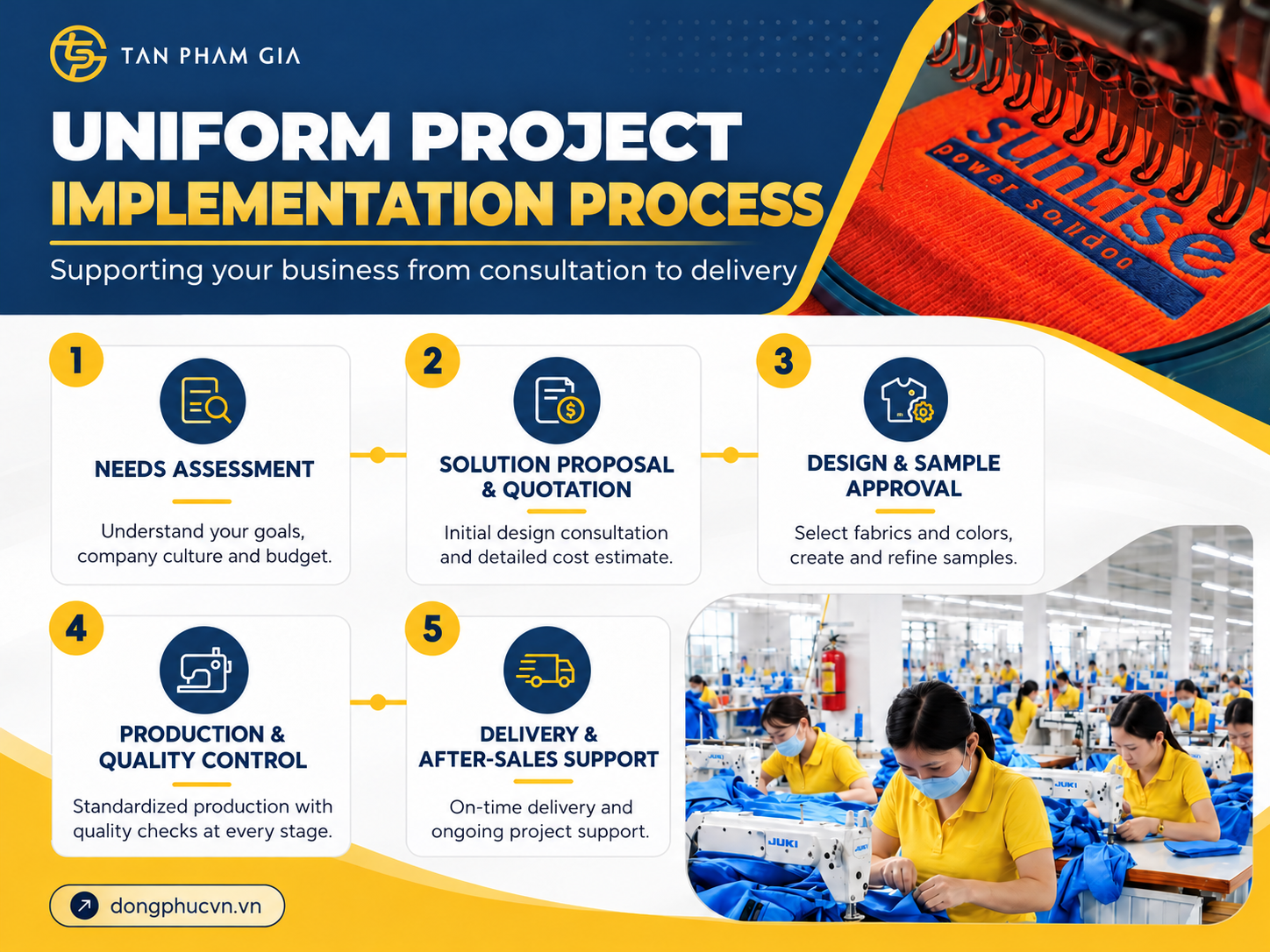
Five Steps for Selecting and Ordering Polo Uniforms
A structured ordering process gives each stage a clear output before the project moves forward.
Step 1: Consolidate Requirements and Employee Data
Confirm quantities, employee groups, working environments, wearing frequency, receiving locations, and intended use.
For larger organizations, prepare a list by department and branch, including any different fabric, fit, or branding requirements.
Step 2: Confirm Fabric, Design, and Technical Specifications
Compare fabric composition, GSM, garment fit, colors, collar construction, logo execution, and care requirements.
The output of this stage should be an approved design direction and technical specification.
Step 3: Develop and Approve the Sample
Produce the sample according to the agreed design. Representative employees should assess fit, movement, and wearer experience.
All revisions should be recorded, and the final sample should be signed off before production.
Step 4: Confirm Sizes, Packaging, and Delivery Allocation
Approve the size breakdown, packaging specifications, and quantities for each department or receiving point.
For multi-branch orders, provide a separate packing and delivery list for each location.
Step 5: Produce, Inspect, and Accept the Order
Production should include defined quality-control checkpoints. The business should inspect completed garments against the approved sample and specifications.
Inspection criteria may include:
- Correct fabric and color.
- Measurements and garment fit.
- Stitching and construction.
- Logo position, dimensions, colors, and clarity.
- Quantity by size and receiving location.
- Packaging and labeling.
To develop an appropriate production proposal, provide the expected quantity, employee groups, design requirements, and required delivery date. Tan Pham Gia Uniform can then discuss an implementation plan based on the approved scope.
8 Common Mistakes When Choosing Polo Uniforms
The following mistakes often occur when businesses choose polo uniforms from an available design or initial visual impression without first defining technical and operational requirements.
Selecting Fabric Without Considering the Workplace
A heavy fabric may feel uncomfortable in a warm or outdoor environment, while a lightweight fabric may not provide the structure required for some operational roles.
Start with the working environment and employee activity level before selecting a fabric group.
Evaluating Fabric Only by Initial Hand Feel
A fabric that feels soft as a swatch may not maintain the required shape or color after repeated use and washing.
Review its composition, GSM, care requirements, surface, completed garment sample, and wash-test results where relevant.
Using a Generic Size Breakdown
A default size ratio may leave a substantial portion of the workforce with garments that are too tight or too loose.
Collect employee data and use fitting samples before approving quantities by size.
Failing to Record Color and Measurement Standards
Color or sizing differences between production batches become visible when new garments are worn beside older ones.
Retain the approved color reference, fabric code, pattern, measurement chart, and tolerance specifications from the first order.
Creating a Design That Conflicts with the Brand Identity
Colors, collar details, and logo execution that do not follow the company’s brand standards create inconsistent employee presentation.
Review the design against the current brand guidelines before sample development.
Skipping Physical Sample Approval
Without a sample, fit, color, or logo issues may only become apparent after bulk production.
A completed sample should be reviewed by representatives from the relevant employee groups before production authorization.
Failing to Establish Final-Inspection Criteria
Without agreed criteria, the business and supplier may not have a shared basis for determining whether the order meets the requirements.
Document the acceptable construction, measurements, color, logo execution, appearance, quantity, and packaging before production.
Not Planning for New Employees and Repeat Orders
Unplanned replenishment orders may result in longer waiting periods or variations in color and fabric availability.
Retain production records and consider a controlled reserve quantity based on hiring and expansion plans.
How to Evaluate a Bulk Polo Uniform Supplier
A supplier for larger polo orders should be evaluated on production capability, fabric consultation, sample development, quality control, consistency management, delivery planning, and repeat-order support.
Capacity for Orders of 100 Sets or More
The supplier should explain how it handles the required order quantity and future expansion. Tan Pham Gia Uniform’s minimum order quantity is 100 sets, with each set configured according to the approved project scope.
Businesses should also ask how the supplier schedules capacity and coordinates larger or phased orders.
Fabric Consultation and Custom Sample Development
A suitable supplier should recommend fabric according to the working environment and develop a sample from the approved requirements rather than only offering available stock designs.
The quality of the supplier’s initial questions is often an indicator of whether the proposal is based on actual use.
Quality Control from Materials to Finished Garments
The quality-control process should cover incoming materials, in-process production, finishing, and completed products.
Businesses should ask which checkpoints are used and how the supplier compares garments with the approved sample.
Size, Color, and Specification Management
The supplier should maintain the approved size chart, fabric code, color reference, pattern, logo details, and technical specifications.
These records are important when the order is delivered in phases or repeated later.
Delivery Planning for Multiple Locations
The business should request a delivery plan covering sample approval, production milestones, sorting, packaging, and receiving locations.
For multi-branch orders, confirm quantities and package identification for each destination.
Repeat-Order Coordination
Discuss repeat-order requirements before the initial project is completed. This includes retained samples, minimum quantities, available fabrics, color matching, specification records, and the process for authorizing changes.
Businesses implementing uniforms across multiple branches should assess production capacity, quality control, and the supplier’s ability to preserve specifications across delivery phases.

Tan Pham Gia Uniform: Corporate Polo Solutions for Businesses
Tan Pham Gia Uniform focuses on larger B2B uniform orders and has more than 23 years of experience in the fashion and garment industry. The company has worked with more than 500 businesses and produced more than 1,000,000 uniform products.
Its consultative approach begins with the intended working environment, workforce structure, and brand identity rather than an available design alone.
A Curated Fabric System for Different Industries
Tan Pham Gia Uniform organizes polo fabrics into five curated collections:
- TPG Prime™.
- TPG Airsoft™.
- TPG CottonFlex™.
- TPG AirPique™.
- TPG Signature™.
Each collection supports different selection priorities, allowing businesses to shortlist fabrics according to actual working conditions rather than using one material across every employee group.
Samples Developed from the Company’s Brand Identity
Polo samples are developed around the approved colors, collar design, sleeve cuffs, logo position, and printing or embroidery method.
Tan Pham Gia Uniform uses Golden Ratio design principles, digital 3D patternmaking, and dress-form sample development to refine garment proportions, structure, and fit. Physical sample approval and wearer testing remain essential before bulk production.
Production and Multi-Stage Quality Control
Tan Pham Gia Uniform operates a 2,000-square-meter production facility with a stated capacity of approximately 30,000 products per month.
The implementation process covers requirements consultation, fabric and style selection, design, sample approval, production, quality inspection, and delivery. Quality is checked at multiple stages to compare the order with the approved requirements.
Supporting Multi-Department and Multi-Branch Programs
The approved garment sample, color reference, size chart, logo specifications, and other production records can support consistency across departments, delivery phases, and authorized repeat orders.
Fabric and color availability should still be reconfirmed whenever a new production batch is planned.
Is your business selecting polo uniforms for employees, retail stores, or a multi-branch system?
Provide the expected quantity, wearer groups, workplaces, logo, brand colors, and required date so Tan Pham Gia Uniform can recommend an appropriate fabric, design, and production plan.

Frequently Asked Questions About Choosing Polo Uniforms
Questions 1. What Criteria Should a Business Use to Choose Polo Uniforms?
Businesses should consider seven criteria: intended use, working environment, fabric, fit, brand colors, logo application, and supply planning. The workplace and fabric affect the wearing experience, while colors and logo placement determine brand consistency. These requirements should be defined before samples are reviewed.
Questions 2. Which Fabric Is Suitable for Corporate Polo Uniforms?
There is no single fabric for every employee group. Offices may prioritize softness and appearance, mobile employees may need lighter and stretchable options, and operational teams may require greater structure. Compare the exact fabric composition, GSM, surface, care requirements, and completed garment sample before approval.
Questions 3. How Should a Business Select Sizes for a Large Workforce?
Build the size breakdown from employee measurements or current shirt sizes rather than using a generic ratio. Provide fitting samples, revise the size chart, and confirm quantities by size. Separate men’s and women’s patterns where appropriate and include extended sizes when required.
Questions 4. What Information Should a Business Prepare Before Ordering?
Prepare the estimated quantity, employee groups, working environments, logo, approved brand colors, printing or embroidery requirements, receiving locations, and required delivery date. A preliminary size breakdown will also make consultation and quotation more efficient.
Questions 5. What Should Be Standardized for a Multi-Branch Polo Program?
Standardize the approved garment sample, fabric code, colors, measurement chart, logo specifications, packaging, and allocation method. Confirm quantities for each receiving location and appoint one internal contact to manage approvals. This helps maintain consistent colors and garment fit across branches and production batches.
Learning how to choose polo uniforms begins with defining how the garments will be used. Businesses should select fabric according to the working environment, choose fits based on the workforce, and coordinate colors and logos with the brand identity.
Physical sample approval, documented specifications, workforce-based sizing, quality-control criteria, and repeat-order planning help larger orders remain more consistent across production batches.
To discuss your requirements, contact Tan Pham Gia Uniform at +84 843 406 406. Provide the quantity, wearer groups, work environments, logo, brand colors, and required delivery date to receive a suitable recommendation.
Fabric options, designs, printing or embroidery methods, and service policies may change over time. Contact Tan Pham Gia Uniform to confirm the latest information before approving an order.