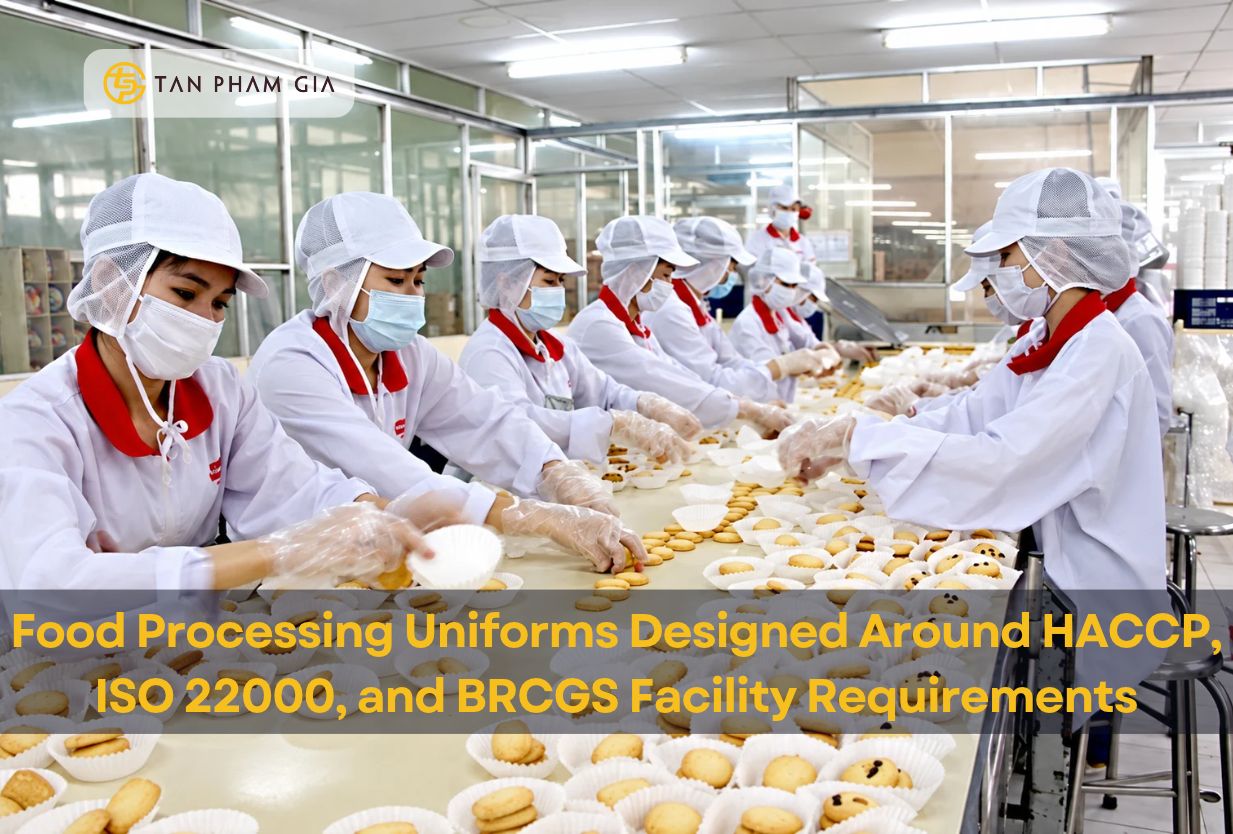
A food processing uniform is part of a facility’s hygiene-control system, not simply everyday work clothing. Production areas can differ in cross-contamination risk, moisture, temperature, movement, and cleaning procedures. One uniform design is therefore unlikely to suit an entire food-processing facility.
This guide from Tan Pham Gia Uniform examines operating conditions, garment-design requirements, fabric-selection criteria, and the relationship between uniforms and HACCP, ISO 22000, Codex, and BRCGS systems. It also outlines the practical information that quality assurance, human resources, operations, and procurement teams should prepare before ordering uniforms in bulk.
Uniforms themselves are not certified to HACCP, ISO 22000, or BRCGS. Their specifications should instead be developed around the facility’s hazard analysis, hygiene program, production zoning, customer requirements, applicable legislation, and internal approval process.
Food-Processing Operations and Their Uniform Requirements
Food-processing facilities need uniform specifications based on the risks and working conditions of each area. A single garment configuration should not automatically be applied across every production line.
Operating Conditions in Food-Processing Facilities
Employees may work in environments where microbiological contamination, cross-contamination, and foreign-material risks require continuous control. These considerations are particularly relevant to seafood, dairy, canned food, ready-to-eat food, and packaged-food operations.
Personal clothing can carry dust, fibers, hair, and microorganisms from outside the facility into production areas. A controlled workwear program can help the site manage this potential contamination pathway when combined with appropriate changing, storage, laundering, and hygiene procedures.
Depending on the products and processes, a facility operating under BRCGS requirements may identify low-risk, high-care, ambient high-care, or high-risk areas. The correct classification must be determined through the facility’s product and process assessment rather than assigned solely from the department name.
Working conditions may also include:
- Frequent contact with water and high humidity.
- Low temperatures in refrigerated or frozen-storage areas.
- Cleaning and sanitation chemicals.
- Extended standing and repetitive movement.
- Regular centralized or industrial laundering.
- Different access rules between production zones.
HACCP, ISO 22000, BRCGS, and Codex provide frameworks or principles for food-safety control. The specific clothing requirements still need to be defined by each facility according to its hazards, production areas, products, processes, legal obligations, and customer requirements.
Design Requirements for Food-Processing Worker Uniforms
A suitable uniform specification should reduce avoidable foreign-material risks, support hygiene control, and allow employees to be identified by production area.
Key design considerations may include:
- Foreign-Material Control
- Pockets and buttons: Where applicable under the facility’s BRCGS controls, garments should have no external pockets above the waist and no sewn-on buttons.
- Closures: Concealed zippers, covered plackets, hook-and-loop closures, or press studs may be considered according to the facility’s documented policy.
- Cuffs and openings: Elasticated cuffs or ankle openings may be used where the site requires additional coverage, but they should be assessed for comfort, movement, and laundering.
- Loose components: Trims, fasteners, labels, and decorations should be reviewed for foreign-material risk before approval.
- Hair and Beard Coverage: Production employees may require hair coverings that fully contain scalp hair. Beard and mustache snoods should be included where the facility’s risk assessment and hygiene rules require them.
- Fabric Selection: Fabric should be evaluated for:
- Surface smoothness and linting potential.
- Compatibility with the approved laundering process.
- Wearer comfort in the actual working temperature.
- Required garment structure and mobility.
- Shrinkage, colorfastness, pilling, and dimensional stability.
- Any site-specific protective performance supported by technical evidence.
- Color Coding: White, light blue, or other light colors can make visible contamination easier to identify. Different colors, trims, or identification marks may also help distinguish employees by production zone, department, or access authorization.
- Supporting Items: Depending on the facility’s hazard assessment, employees may also require masks, gloves, waterproof aprons, suitable footwear, hair coverings, or beard snoods. These items should be specified by the facility’s QA, food-safety, EHS, and operations teams.
- Centralized Laundering and Hygiene Control: For high-care or high-risk garments, the facility should use an approved in-house or contracted laundering process with defined and validated criteria. A single washing temperature should not be applied universally without considering the fabric, contamination risks, local requirements, and the facility’s validated laundry program. A laundering program should define:
- Who is authorized to launder the garments.
- How clean and used garments are separated.
- Cleaning and drying procedures.
- Verification criteria for laundering effectiveness.
- Garment storage and transportation.
- Replacement procedures for damaged or contaminated items.
- Rules preventing unauthorized home laundering where centralized control is required.
Not sure how to define uniforms for each production area?
Provide the working zones, temperature, humidity, activity level, laundry process, and applicable food-safety system. Tan Pham Gia Uniform can use this information to recommend garment configurations, color coding, and sample options for internal review.

Why Do Food-Processing Workers Need Specialized Uniforms?
Specialized uniforms give facilities a controllable element within their hygiene program. They can support contamination control, audit consistency, employee identification, and more structured uniform management.
Supporting Cross-Contamination and Foreign-Material Control
Standardized production clothing helps reduce reliance on employees’ personal garments inside controlled areas. Appropriate designs can also reduce avoidable risks associated with loose buttons, exposed pockets, hair, and lint.
The uniform remains only one element of the control system. Changing procedures, hand hygiene, access control, laundering, garment storage, behavior, and supervision are equally important.
Supporting Facility and Customer Audits
Uniform controls may be reviewed during HACCP, ISO 22000, BRCGS, customer, or retailer audits. Documented specifications by production area help the facility demonstrate that its hygiene rules are defined and implemented consistently.
The audit does not certify the uniform as an individual product. Auditors evaluate how the facility identifies hazards, establishes controls, maintains records, and applies its requirements in practice.
Identifying Employees by Production Area
Colors, trims, identification marks, or garment styles can help distinguish employees assigned to different production areas. This supports on-site checks by quality assurance and operations teams across shifts, departments, and facilities.
Color coding should be documented and consistently applied. It should not replace access controls, employee training, or supervision.
Supporting Wearer Compliance
Employees are more likely to follow clothing requirements consistently when the garments suit their work. Mobility, temperature, moisture, garment fit, and wearing duration should therefore be considered during sample approval.
Ordinary uniforms should not be described as chemical-resistant, waterproof, thermally protective, or antistatic unless the specific product has supporting technical documentation and has been approved for the identified hazard.
Standardizing Operations and Brand Presentation
A controlled uniform program creates consistent garment specifications, colors, sizing, and identification across production lines or multiple facilities. Branding elements may also support a professional company image when receiving customers or audit teams, provided logo placement does not conflict with hygiene controls.
Managing Long-Term Uniform Costs
Durability, care requirements, garment rotation, repair policies, and replacement frequency all affect total cost. Standardizing the approved fabric code, colors, pattern, size chart, and construction details can also make repeat orders easier to manage.
Claims about service life or resistance to repeated industrial laundering should be supported by sample testing or relevant technical data.
Food-Processing Uniform Solutions by Production Area
Each area requires a garment configuration based on its risk level and working conditions.
Concealed-Closure Workwear for Preliminary Processing
A two-piece uniform with a concealed front closure creates a cleaner surface and reduces exposed components. The garment specification should be assessed against water exposure, laundering frequency, movement, and the site’s foreign-material policy.
Elasticated sleeve cuffs or trouser hems may be considered where required. Their suitability should be confirmed through a physical sample and laundering test.

Coveralls for High-Care or Controlled Processing
A coverall reduces the opening between the shirt and trousers and can provide greater coverage in areas requiring tighter clothing controls.
The facility should review:
- The changing and removal procedure.
- Compatibility with hair and beard coverings.
- Ease of movement during actual tasks.
- Separation between clean and used garments.
- Identification of dedicated zone-specific clothing.
- Comfort throughout the expected shift.
A coverall should not automatically be described as certified protective clothing. Its protective status depends on the intended hazard and supporting technical evidence.

Work Coats for Quality Control and Packaging Teams
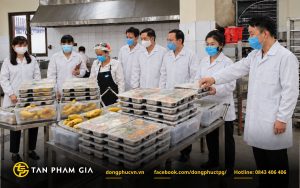
Work coats are often considered for quality-control, laboratory-support, inspection, or packaging employees because they are easy to identify and can present a clean appearance.
The facility should approve:
- The closure type.
- Pocket position and construction.
- Garment length.
- Sleeve design.
- Colors or identification marks.
- Laundering and replacement procedures.
The Vietnamese abbreviation “KCS” is rendered here as quality control (QC) to make the role clear to international readers.
Thermal Protective Clothing for Cold Storage and Freezer Areas
Refrigerated and frozen environments require a separate thermal-PPE assessment. Ordinary food-processing uniforms do not replace specialized cold-storage protection.
Selection should consider:
- Actual operating temperature.
- Duration and frequency of exposure.
- Air movement and contact with cold surfaces.
- Moisture and condensation.
- Required insulation and layering.
- Mobility and task demands.
- Foot, hand, head, and face protection.
- Applicable local regulations and EHS approval.
Physical samples should be tested in conditions representative of the actual workplace before implementation.
Hygiene and Protective Accessories
Depending on the facility’s requirements, supporting items may include:
- Hair coverings: Designed to contain hair and reduce contamination risk.
Beard and mustache snoods: Used where facial hair needs to be contained. - Masks: Selected according to the facility’s hygiene and occupational-risk assessment.
- Gloves: Specified according to the task, food-contact requirements, and identified hazards.
- Waterproof aprons: PU or other approved materials may be considered for wet-processing areas.
- PVC or other suitable boots: Selected according to water, slip, chemical, temperature, and hygiene requirements.
These items are site-specific accessories or PPE. Their inclusion in this guide does not mean every item is supplied or certified by Tan Pham Gia Uniform.
Fabric Options for Food-Processing Uniforms
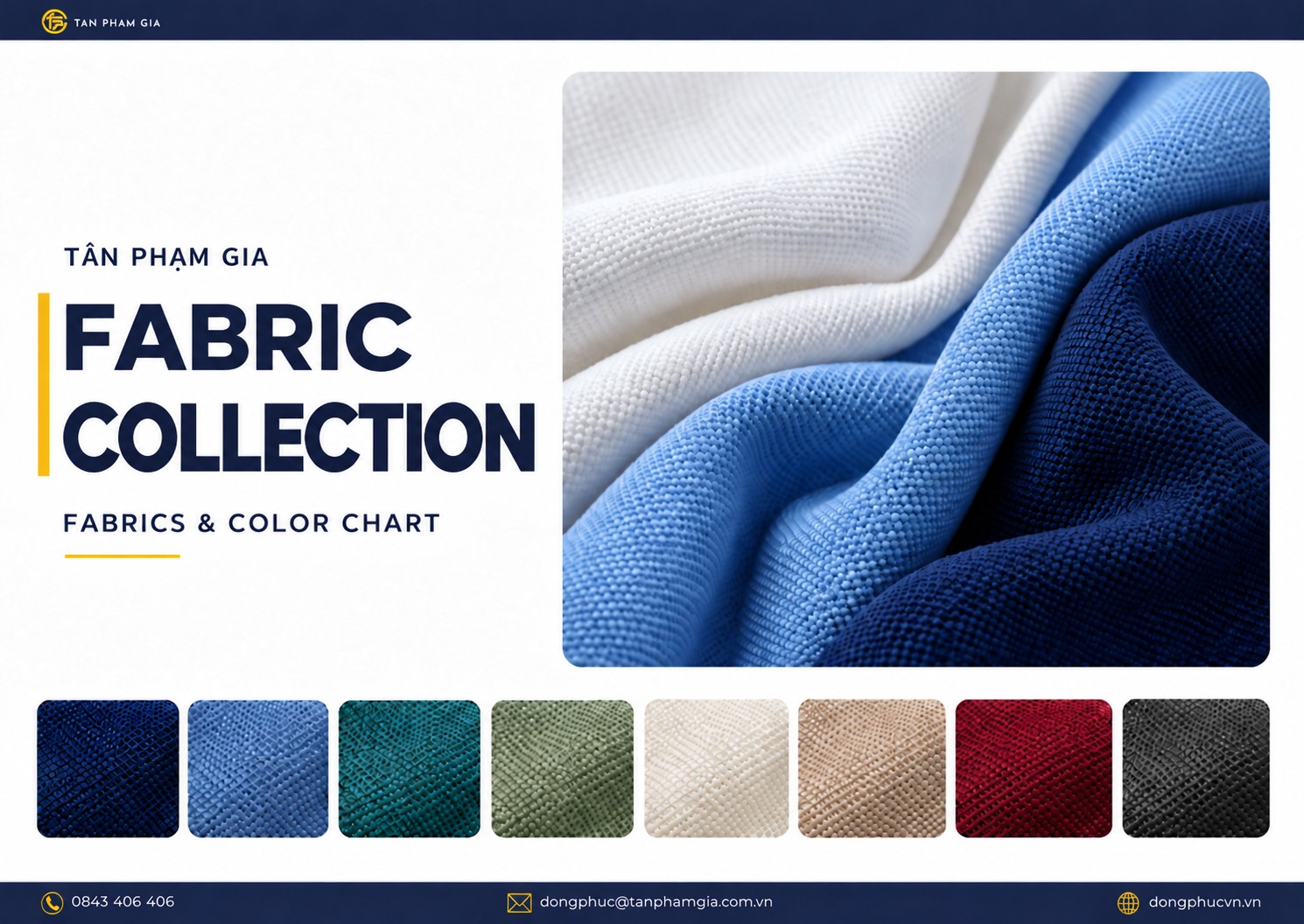
Fabric selection should balance compatibility with laundering, wearer comfort, surface behavior, garment structure, and the specific operating environment. Trade names alone do not prove composition or technical performance.
Kaki Ford for Preliminary-Processing Workwear
Kaki Ford is a Vietnamese trade name often considered for workwear requiring a more structured woven body. The actual composition, GSM, finishing, and performance can vary by supplier and fabric code.
Before approval, the business should verify:
- Fiber composition and fabric weight.
- Abrasion performance.
- Shrinkage and dimensional stability.
- Compatibility with the facility’s laundering process.
- Surface linting and colorfastness.
- Comfort in humid or wet working conditions.
Kate Silk for QC and Supervisory Employees
Kate Silk is a trade name used for fabrics with a relatively smooth and lightweight hand feel. Its fiber composition and technical performance should not be inferred from the name alone.
A completed sample should be checked for:
- Surface smoothness.
- Fabric opacity.
- Garment structure.
- Comfort during extended wear.
- Shrinkage and colorfastness.
- Performance under the approved laundering program.
Kaki 65/35 for General Worker Uniforms
Kaki 65/35 refers to a blended fabric, but the trade name alone does not establish which fiber accounts for 65% and which accounts for 35%. The exact composition should be confirmed from the selected fabric code.
Businesses should evaluate durability, wrinkling, care requirements, shrinkage, colorfastness, and garment structure using technical documentation and sample testing.
Pangrim Fabric for Factory Uniforms
Pangrim is an imported fabric line from South Korea that may be considered for factory uniforms. Because the range can include different products, claims about composition, color stability, structure, or laundering performance should be tied to the selected Pangrim code.
The approved specification should record:
- Product code.
- Fiber composition.
- GSM.
- Color reference.
- Care requirements.
- Test data where applicable.
- Supplier and batch information required for repeat orders.
100% Cotton for a Soft, Natural Wearing Experience
Cotton can provide a soft feel and natural moisture absorption, but it may also require closer attention to shrinkage, drying time, wrinkling, and dimensional stability.
Businesses should conduct wash testing using the facility’s actual laundry process before approving bulk production. Garment construction and fit allowances should reflect the verified fabric behavior.
Carbon-Fiber-Blend Antistatic Fabric for Specialized Areas
A fabric containing carbon fibers may be considered where the facility has a documented electrostatic-control requirement. Carbon content alone does not prove that the finished garment meets a required antistatic performance level.
Implementation should be based on:
- A documented hazard assessment.
- Product-specific technical data.
- An agreed test method and acceptance criteria.
- Appropriate garment construction.
- Compatibility with laundering.
- Approval from the facility’s EHS or other responsible department.
Select Fabric According to Actual Use and Laundering
Businesses can provide Tan Pham Gia Uniform with laundering frequency, wash conditions, workplace temperature, humidity, movement level, and required technical characteristics. This information helps identify which fabric samples should be evaluated.
HACCP, ISO 22000, Codex, and BRCGS Requirements Affecting Uniform Programs
HACCP, ISO 22000, Codex, and BRCGS address food hygiene through different frameworks. None of them automatically certifies an individual uniform product.
HACCP and Food-Processing Worker Uniforms
HACCP requires the facility to identify hazards and establish appropriate controls. The site should determine how clothing may contribute to microbiological, chemical, allergen, or physical contamination risks.
Uniform specifications should therefore be defined by production area and documented in the facility’s internal procedures. During an audit, the focus is generally on whether the approved controls are appropriate and implemented consistently.
A uniform should not be advertised as “HACCP-certified” unless a specific, legitimate product certification scheme exists and the supplier can provide supporting evidence.
ISO 22000 and Prerequisite Programs
ISO 22000 specifies requirements for a food-safety management system. Hygiene and operational controls are supported through prerequisite programs, including sector-relevant requirements such as those addressed in the ISO 22002 family.
The facility should maintain:
- Documented clothing requirements.
- Defined responsibilities.
- Laundry and replacement records where applicable.
- Rules for clean and used garment storage.
- Production-zone identification.
- Training and implementation controls.
- Evidence that procedures match actual practice.
ISO 22000 certification applies to the organization’s food-safety management system, not to an ordinary uniform as an individual garment.
BRCGS Food Safety Requirements for Protective Clothing
BRCGS Food Safety Issue 9 remains the current issue as of 2026, together with applicable position statements. Its protective-clothing requirements are more detailed than general descriptions such as “clean workwear.”
Where the relevant requirements apply, the facility should address:
- Sufficient clothing for each employee.
- Garment designs intended to prevent product contamination.
- No external pockets above the waist.
- No sewn-on buttons.
- Full containment of scalp hair.
- Beard and mustache snoods where required.
- Suitable protective footwear where required.
- Documented rules for employees, temporary personnel, contractors, and visitors.
- Controlled use of clothing inside and outside production areas.
- Approved in-house or contracted laundering with defined effectiveness criteria.
- Separation of clean and used garments.
- Dedicated clothing and changing controls for applicable production zones.
BRCGS production zoning may include low-risk areas and, where relevant, high-care, ambient high-care, or high-risk areas. The applicable classification depends on the product, processing steps, exposure to the environment, and contamination risk.
The facility should consult the current standard, applicable position statements, certification body, and internal QA team before finalizing clothing specifications.
Seven Considerations When Ordering Food-Processing Uniforms in Bulk
Bulk ordering should follow a controlled sequence: define specifications, test samples, standardize sizing, calculate garment rotation, retain approved references, and plan production and delivery.
- Confirm the Applicable Food-Safety Requirements: Identify whether the facility operates under HACCP, ISO 22000, BRCGS, customer requirements, retailer protocols, or other internal controls. QA or the responsible food-safety team should approve the uniform specification for each area.
- Develop and Test a Physical Sample: Employees should test the sample during representative tasks and working conditions. Review movement, comfort, moisture, temperature, garment coverage, fasteners, and compatibility with supporting PPE. The sample should also undergo the facility’s intended laundering process to evaluate shrinkage, color change, surface condition, linting, and dimensional stability.
- Standardize the Size Breakdown: Collect sizing information by employee group, department, and facility. Representative employees should test the proposed sizes before the final size ratio is approved. Include an appropriate reserve for unexpected size requirements, but avoid estimating without workforce data.
- Calculate Garment Rotation Requirements: The number of sets per employee should reflect the centralized laundry cycle, shift pattern, replacement policy, and clean-garment storage capacity. Additional quantities may be required for:
- New employees.
- Seasonal workforce increases.
- Damaged or contaminated garments.
- New production lines.
- Longer laundering cycles.
- Retain an Approved Reference Sample: Store the approved garment sample, fabric swatch, color reference, pattern data, logo position, zone markings, size chart, and construction specifications. For repeat orders, fabric and color availability should still be reconfirmed because batch conditions and available product codes may change.
- Plan Production and Phased Delivery: Agree on the milestones for requirements analysis, sample approval, production, inspection, and delivery. Orders can be delivered by production area, facility, shift, or implementation phase where appropriate. The implementation plan should also account for upcoming customer or certification audits without treating the uniform itself as certified.
- Evaluate the Uniform Supplier: A suitable supplier should be able to explain:
- Experience with larger corporate orders.
- Sample-development and approval procedures.
- Quality-control checkpoints.
- Change-management procedures.
- Repeat-order documentation.
- Capability to adjust specifications following an authorized review.
- Coordination from design through delivery.
Need a preliminary budget for factory uniforms?
Provide the number of employees, sets per employee, production areas, expected size breakdown, laundry requirements, and required delivery date. Tan Pham Gia Uniform can use the approved scope to recommend an implementation plan and prepare a quotation.
Food-Processing Uniform Implementation Process at Tan Pham Gia Uniform
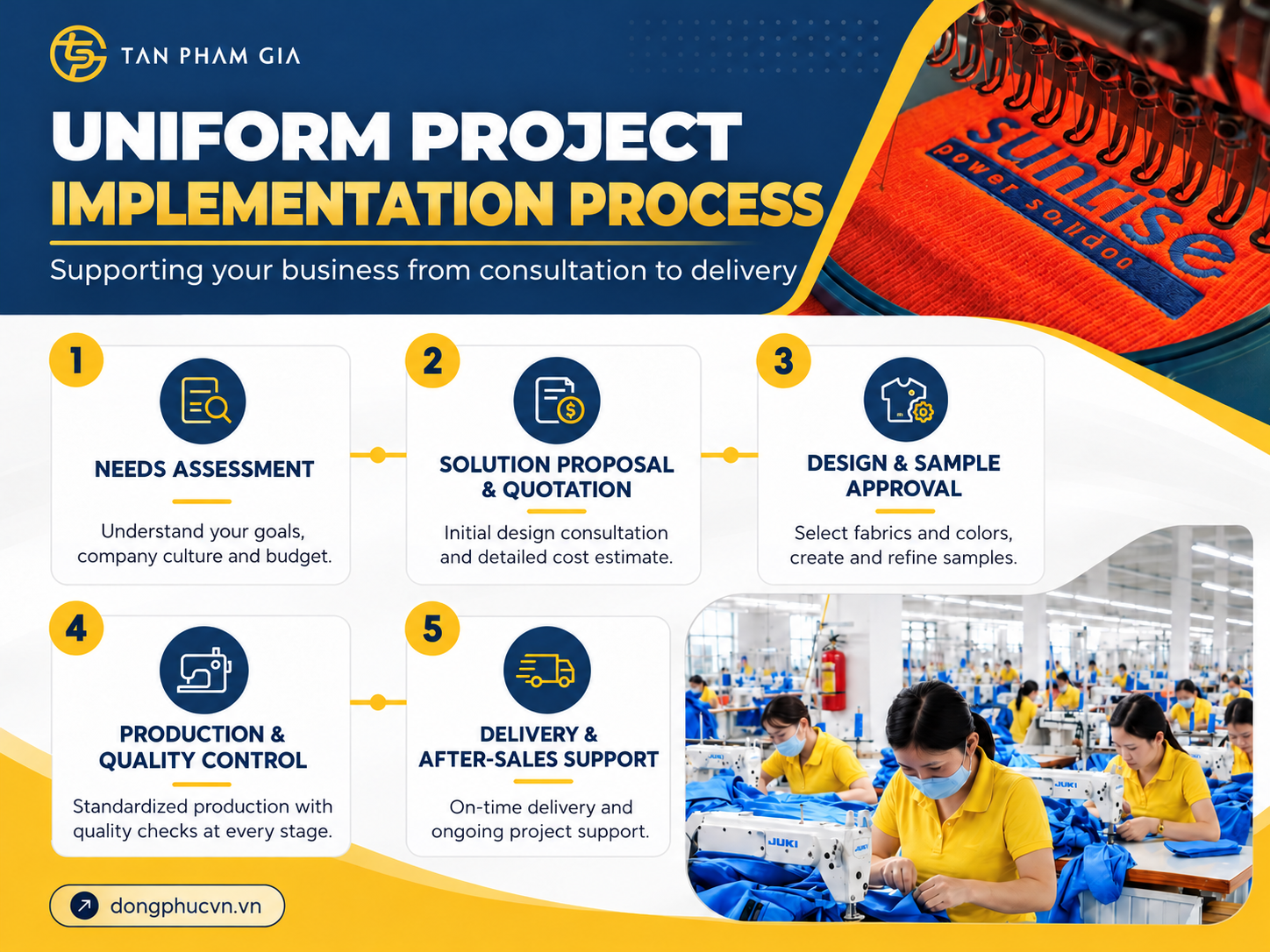
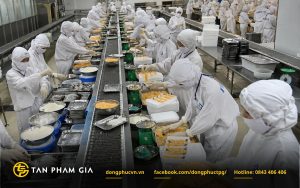
Tan Pham Gia Uniform uses a five-stage process to convert operating requirements into an approved garment specification before bulk production.
These timelines are estimates rather than guaranteed lead times. Actual timing depends on order quantity, garment complexity, sample revisions, fabric availability, technical requirements, and delivery scope.
The minimum order quantity for uniform orders is 100 sets. The composition of each set should be defined in the approved quotation.
- Step 1: Requirements Intake and Analysis: Tan Pham Gia Uniform reviews the intended users, production areas, applicable standards, budget, quantities, laundry process, PPE interfaces, and implementation plan.
- Step 2: Proposed Solution and Quotation: The proposed solution defines garment styles, fabrics, colors, zone identification, sizes, accessories, construction details, and the agreed commercial scope.
- Step 3: Design and Sample Approval: The design stage may use Golden Ratio design principles and digital 3D patternmaking to develop proportions, garment structure, fit, and movement. A physical sample is then produced for workplace testing and QA approval. Digital development does not replace physical sample testing in the actual working environment.
- Step 4: Production and Multi-Stage Quality Control: After approval, the order enters production. Inspections cover incoming materials, cutting, sewing, finishing, measurements, construction details, and completed garments against the approved sample.
- Step 5: Delivery and Post-Project Support: The order is sorted, packaged, and delivered according to the agreed plan. The production records can support authorized replenishment orders, subject to reconfirming fabric and color availability.
Tan Pham Gia Uniform: A Food-Processing Uniform Partner for Businesses
Tan Pham Gia Uniform provides consultative support from requirements assessment through design, sample approval, production, quality control, and delivery.
More Than 23 Years of Corporate Uniform Experience
With more than 23 years in corporate uniform manufacturing, Tan Pham Gia Uniform advises businesses according to operating conditions, workforce scale, hygiene-control requirements, and approved garment specifications.
Functional Uniform Design and Digital Development
Tan Pham Gia Uniform applies Golden Ratio design principles and digital 3D patternmaking to develop garment proportions, fit, and movement. Physical samples remain essential for confirming workplace suitability, laundering behavior, and interaction with required PPE.
Food-processing designs prioritize clean construction and the control of avoidable loose components. Final approval should come from the facility’s QA, food-safety, EHS, procurement, and operations teams as applicable.
Large-Scale Production Capacity
Tan Pham Gia Uniform operates a 2,000-square-meter production facility with a stated capacity of more than 30,000 garments per month. This supports larger orders for food-processing facilities, foreign-invested enterprises, and multi-location businesses.
Actual scheduling should still be confirmed according to the approved design, materials, quantities, quality requirements, and delivery plan.
Multi-Stage Quality Control
Quality control covers incoming materials, cutting, sewing, finishing, and final inspection. Measurements, stitching, sizing, colors, and design details are compared with the approved sample to support consistency across the order.
Frequently Asked Questions About Food-Processing Uniforms
Questions 1. Should a Food-Processing Facility Provide Technical Documents When Ordering Uniforms?
Yes. Useful documents include the facility’s hygiene rules, clothing requirements by production area, approved color coding, laundry procedures, PPE requirements, and other technical specifications. If these documents are incomplete, the supplier can help structure a garment-specification table, but the facility’s authorized team should approve it.
Questions 2. Can One Uniform Design Be Used Across Multiple Production Lines?
Yes, if the production lines have comparable hygiene controls, risks, temperatures, movement requirements, and identification needs. QA should assess whether one design conflicts with production zoning or cross-contamination controls before approval.
Questions 3. Should Metal Uniform Components Be Tested with the Facility’s Metal Detector?
This depends on the hazard analysis, foreign-material control system, equipment, and facility requirements. If detectability is required, the selected component should be evaluated under actual operating conditions. A metal component should not automatically be assumed to be detectable by every system.
Questions 4. Do Food-Processing Uniforms Need Fabric and Trim Traceability Records?
This depends on supplier-management and quality-control requirements. A business may request fabric-batch information, composition, supplier details, color codes, trim specifications, and relevant test documents to support traceability.
Questions 5. Can a Facility Change Its Uniform Design After a Certification Audit?
Yes, but the facility should assess how the change affects its hygiene program, documented controls, production zoning, and applicable requirements. QA should approve the change and update relevant procedures before the new design is implemented.
Questions 6. Do Visitor, Contractor, and Specialist Garments Need Similar Controls?
They need controls appropriate to the areas they are permitted to enter. Depending on the risk level and facility policy, visitors or contractors may require dedicated reusable garments, disposable clothing, footwear, hair coverings, or other site-specific items.
Questions 7. What Should a Business Do If a Uniform Batch Does Not Match the Approved Specification?
The batch should be isolated and compared with the approved reference sample and production records. The business and supplier should identify the extent of the deviation and agree on rework, replacement, rejection, or conditional acceptance by the authorized department. The decision and corrective action should be documented.
Questions 8. What Documents Can a Uniform Supplier Provide for Order Acceptance?
Documents may include the technical specification, approved reference sample, size chart, item list, material information, and quality-inspection records. Additional test documents may be provided when included in the agreement.
Product-quality records should not be presented as proof that the garment itself is certified to HACCP, ISO 22000, or BRCGS.
A food processing uniform should be specified by production area, verified through physical samples, and supported by consistent records. Before bulk production, businesses should confirm the applicable food-safety requirements, obtain approval from QA, assess any necessary PPE, and calculate garment rotation based on the laundry cycle.
Tan Pham Gia Uniform supports businesses from consultation and design through sample development, production, quality control, and delivery. To receive a suitable proposal, provide the number of employees, sets per employee, production zones, temperatures, humidity, laundry process, applicable standards, size requirements, and expected delivery date.
Specifications, fabrics, printing or embroidery methods, and service policies may change over time. Contact Tan Pham Gia Uniform at +84 843 406 406 to confirm current options and request a quotation.