>>> Explore More Articles on Uniform Solutions
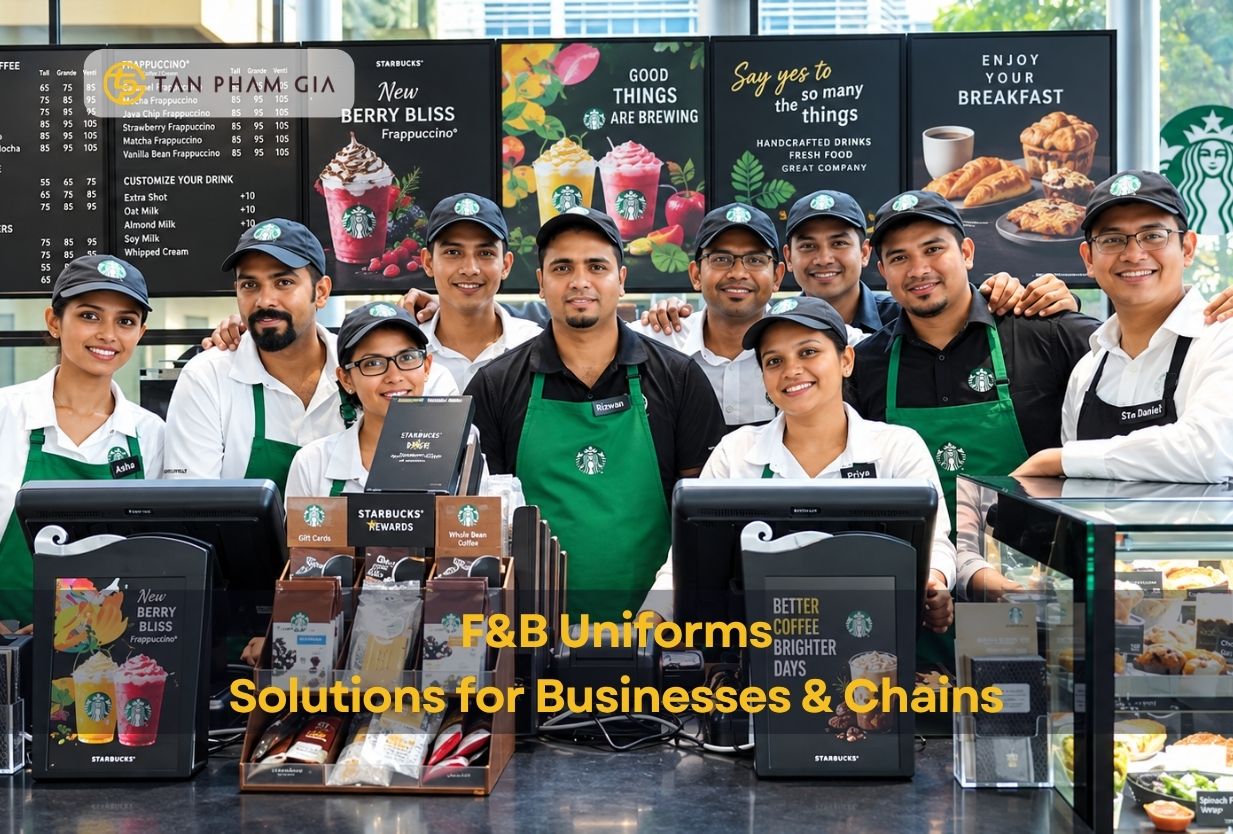
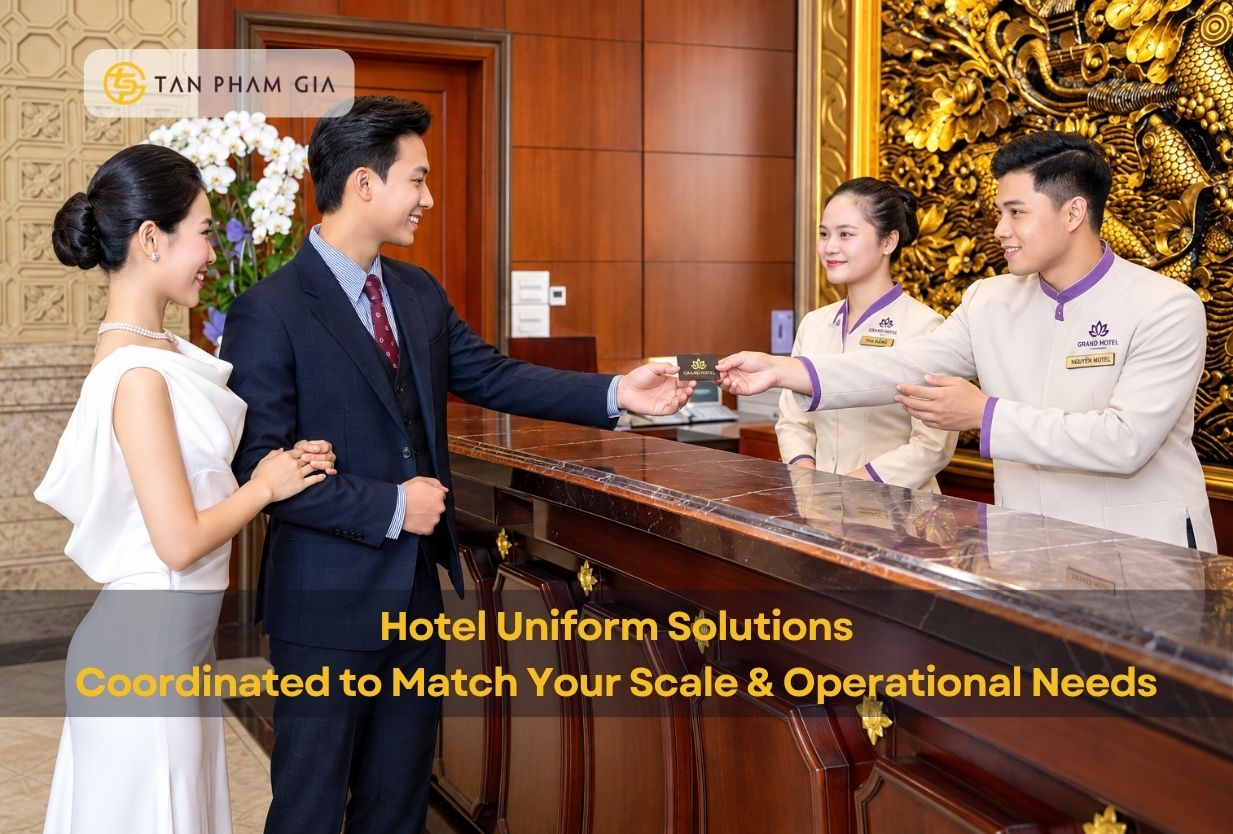
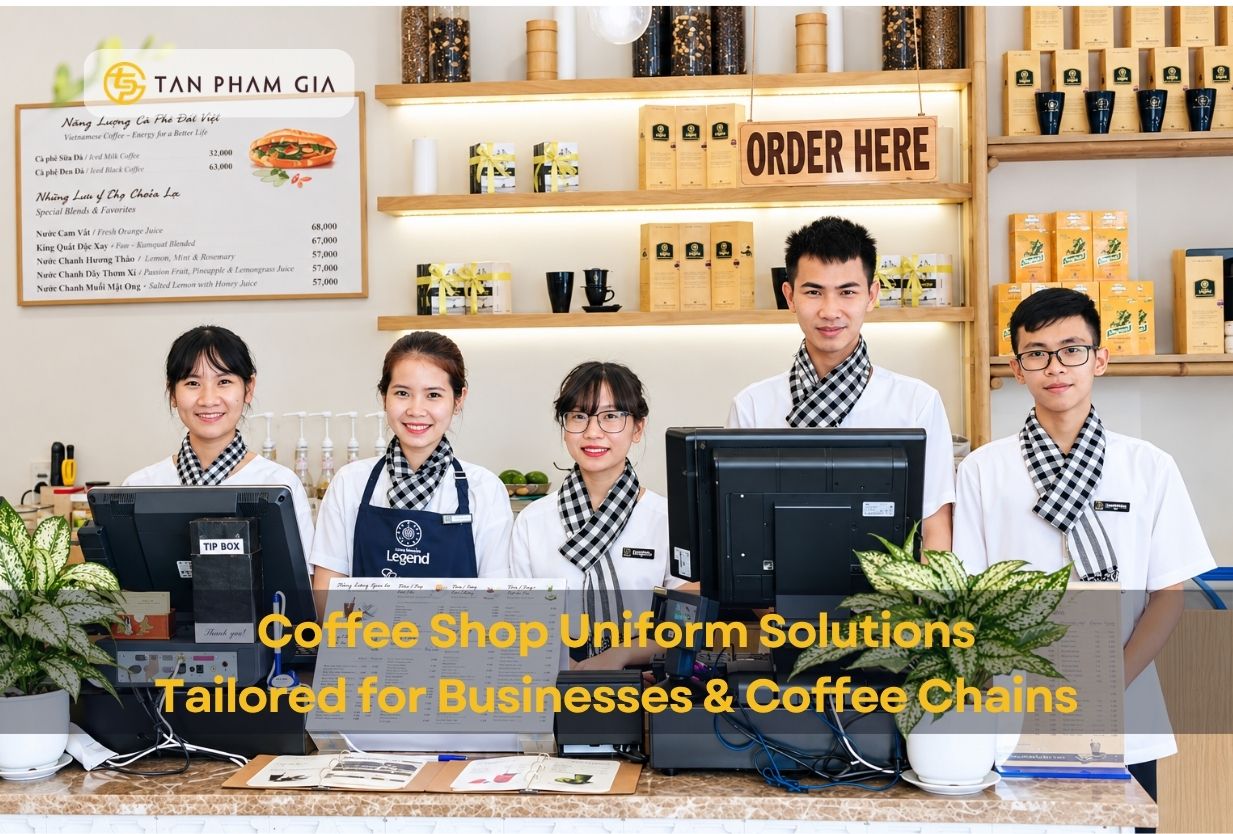
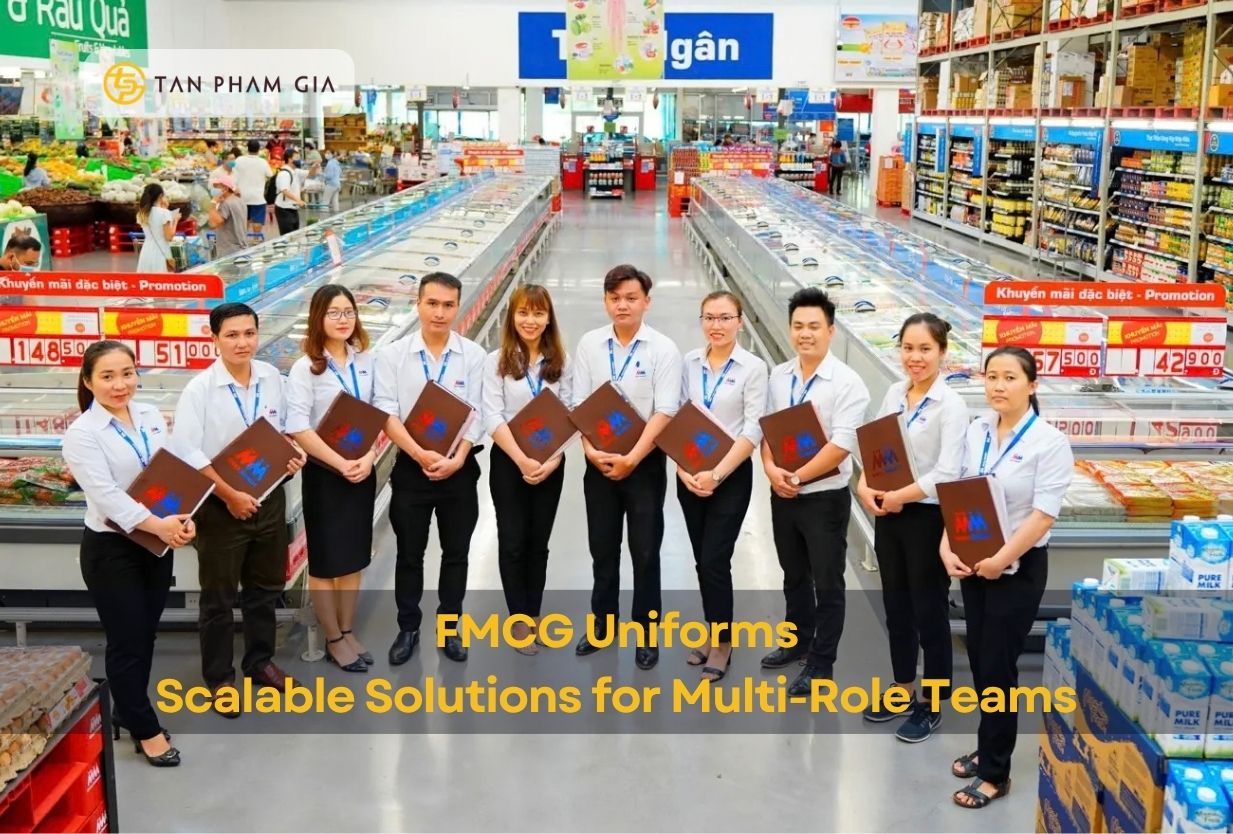
- Industrial Park, Factory, and Manufacturing Workwear Uniform Solutions
- #1 Office Uniform Solutions to Elevate Your Corporate Image
- Comprehensive Logistics Industry Uniforms Solutions for Businesses
- Medical Uniforms Solutions for Hospitals, Clinics, and Healthcare Facilities
Fast-moving consumer goods companies operate at speed and across a wide range of functions, from offices, warehouses, and manufacturing plants to retail locations and field sales territories. Because these teams work in different environments, an effective FMCG uniform program must account for job responsibilities, working conditions, and brand identity – not appearance alone.
This guide from Tan Pham Gia Uniform explains what businesses should consider when developing a coordinated uniform system for multiple employee groups and operating environments.
What Are FMCG Uniforms, and What Makes Them Different?
FMCG uniforms are garments developed for employees working across the fast-moving consumer goods value chain. Their design, fabric, branding, and allocation should reflect the industry’s fast sales cycles, diverse workforce, and broad operating footprint.
What Does FMCG Mean?
FMCG stands for fast-moving consumer goods: products that sell quickly and are purchased frequently. Common categories include food, beverages, household and personal care products, cosmetics, and other everyday essentials.
These products move continuously from manufacturing plants and distribution centers to large retail networks. As a result, many FMCG employees spend much of their workday moving between locations instead of remaining at a single fixed workplace.
The term CPG, or consumer packaged goods, is more common in the United States. CPG and FMCG cover many of the same product categories, but they are not exact synonyms: CPG emphasizes packaged consumer products, while FMCG emphasizes rapid turnover and frequent purchasing. For international B2B content, both FMCG uniforms and CPG uniforms can be used where contextually appropriate.
Which Employee Groups Typically Need FMCG Uniforms?
An FMCG organization may include several teams with distinctly different responsibilities:
- Office employees
- Sales and trade marketing teams
- Merchandisers
- Field sales representatives and route sales teams
- Warehouse and logistics employees
- Sales supervisors
- Manufacturing and plant employees, where the company operates its own production facilities
- Brand ambassadors, sampling teams, and promotional staff
Each group has a different level of mobility, customer contact, and exposure to environmental conditions. One garment style and one fabric specification will rarely meet every team’s needs.
What Should an FMCG Uniform System Deliver?
An effective uniform system should help a business:
- Make employees recognizable at retail locations, including from a reasonable distance
- Support comfort and mobility during active work
- Address both indoor and field-based working conditions
- Simplify routine care and cleaning
- Distinguish functions or departments through visible design cues
- Maintain consistency across large orders and repeat production runs
>>> See Also: Corporate Uniform Solutions for FMCG & Distribution Networks
Why Do FMCG Businesses Need an Integrated Uniform System?
FMCG businesses benefit from a planned uniform system rather than disconnected garments selected separately by each department. A coordinated program supports brand consistency, employee identification, and repeat-order control across a distributed workforce.
Consistent Branding Across Customer Touchpoints
FMCG products are often distributed through extensive retail networks, and employees represent the brand wherever they work. Without a consistent uniform standard, the brand may appear different across regions, distributors, retail locations, or production periods.
A documented uniform system establishes approved garment designs, colors, logo specifications, and sizing references that teams can follow across locations.
Faster Employee Identification at Retail Locations
In supermarkets, stores, and other points of sale, customers and business partners should be able to identify company representatives quickly among employees from competing brands.
Consistent field sales uniforms and merchandiser uniforms make identification easier during shelf management, product demonstrations, and other in-store interactions.
Clearer Distinction Between Roles and Departments
Warehouses, plants, and retail locations may have supervisors, sales employees, warehouse staff, and production employees working in the same area. Color blocking, trim, department labels, or role-specific garment types can help distinguish these functions and support day-to-day coordination.
Uniform design can contribute to role recognition, but it should not replace any workplace identification or safety system required by the organization.
Better Support for Mobile Employees
Sales representatives and merchandisers may visit several retail locations in one day. A restrictive fit or an unsuitable fabric can reduce comfort and make physical tasks more difficult over a long shift.
Fieldwear should therefore be evaluated for range of motion, garment weight, climate, care requirements, and the specific activities employees perform.
Greater Consistency Across Large and Repeat Orders
When hundreds or thousands of employees work across multiple regions, the business needs an approved design, size chart, fabric specification, and color reference from the beginning. Without these controls, replenishment orders may differ from the original production run.
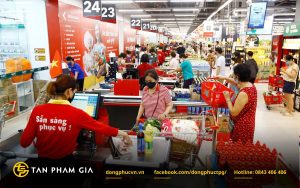
Businesses reviewing uniforms for multiple FMCG teams can contact Tan Pham Gia to discuss a program that reflects their workforce structure, operating environments, and order volume.
How Should Fabrics Be Selected for Different FMCG Work Environments?
FMCG uniform fabrics should be selected according to actual working conditions. Applying one fabric across every role may simplify initial ordering, but it can create performance or comfort gaps for individual teams.
Office Employees
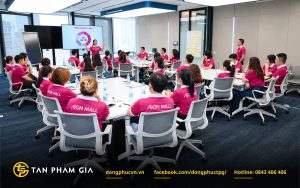
Office employees typically need all-day comfort, a presentable silhouette, and a professional appearance for meetings with customers or business partners.
CottonFlex™ from the TPG CottonFlex™ Natural Cotton Collection is a 270 GSM single-knit fabric made from 35% cotton and 65% polyester. According to the official fabric specification, the blend is designed to provide softness, breathability, and added durability for all-day office and school wear.
Sales, Merchandising, and Trade Marketing Teams
Field-based teams move frequently and may work outdoors or in non-air-conditioned environments. Lightweight construction, breathability, quick drying, and freedom of movement are therefore important selection criteria.
AeroGrid™ from the TPG AirPique™ Performance Sport Collection is a 180–200 GSM diamond-textured knit made from 95% polyester and 5% spandex. It is designed for breathability, quick drying, and high-movement outdoor activities, making it a practical option to evaluate for field sales and trade marketing teams.
For merchandisers working primarily indoors, AirFlex™ from the TPG Airsoft™ Comfort Fabric Collection may also be considered when softness, light stretch, and breathability are priorities. AirFlex™ is a 190–200 GSM polyester fabric.
Warehouse and Distribution Teams
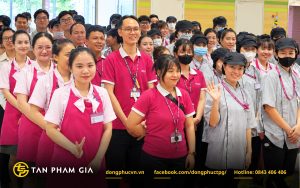
Warehouse and distribution work involves frequent movement, handling cartons or products, and repeated contact with work surfaces. Garment durability and ease of care are important, although the right specification should also reflect temperature and ventilation conditions.
Royal Pique™ from the TPG Prime™ Performance Fabric Collection is a structured 270 GSM piqué knit made from 100% polyester. The fabric is intended for demanding daily use in factories, logistics operations, food and beverage businesses, retail chains, and offices where a sturdy garment structure is preferred.
Manufacturing and Plant Employees
Plant uniforms should prioritize the demands of the production area, including movement, temperature, dust exposure, cleaning requirements, and any applicable occupational safety standards. Aesthetic considerations should remain secondary to the actual job and risk assessment.
Available trade-name options include Kaki Thành Công, Kaki 65 Poly–35 Cotton, Kaki Việt Nam, Kaki thun, Kate Silk, Kate Ford, and Microfiber. Because these names do not by themselves establish a complete technical specification, the final selection should be confirmed against composition, fabric weight, finish, and site-specific requirements before production.
Where a role requires certified protective clothing, flame resistance, chemical resistance, high visibility, or another regulated property, the employer should establish the applicable standard before approving the garment and fabric.
Suggested Fabric Framework
This framework is a general reference for common FMCG environments. Final recommendations should be adjusted to the employee’s role, working conditions, required garment type, and approved technical specification.
Businesses may also consult the TPG Fabric Collection for detailed composition and fabric-weight information before approving a material for each employee group.
Which Uniform Types Work Best for FMCG Employees?
Each team may need one or more garment types based on its responsibilities, mobility, customer contact, and working environment.
Uniform Polo Shirts
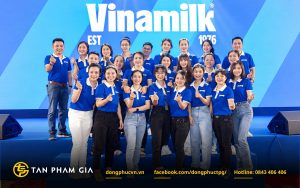
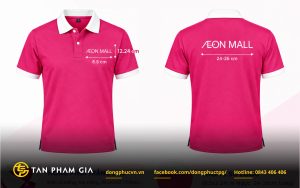
Uniform polo shirts are a common choice for sales representatives, merchandisers, sales supervisors, and trade marketing employees. They provide a clean business-casual appearance, allow greater movement than more formal garments, and can incorporate brand colors effectively.
Regular-fit, semi-fit, or slim-fit silhouettes can be used according to the approved design and workforce requirements. Collar options may include a conventional knit polo collar or a stand collar. Fabric choices can include cotton piqué, polyester piqué, or an approved performance knit from the TPG AirPique™ collection.
Uniform Button-Up Shirts
Uniform button-up shirts are appropriate for office employees, managers, and customer-facing positions that require a more formal appearance.
Fabric options may include Kate Silk, Kate Ford, or another approved shirting fabric selected for the required structure, comfort, and care routine. Long-sleeve and short-sleeve versions can be coordinated with blazers or suits for corporate events and conferences.
Because Kate is a trade name rather than a universal fiber specification, composition and performance should be confirmed before claims such as wrinkle resistance or easy care are included in the final product specification.

Promotional and Demonstration Aprons
Aprons may be used by employees arranging product displays, running product demonstrations or sampling programs, and working as brand ambassadors in food and beverage categories.
An apron protects the base garment and can be removed easily during shift changes. Its front panel also provides a visible area for an embroidered or printed logo at a retail display or demonstration counter.
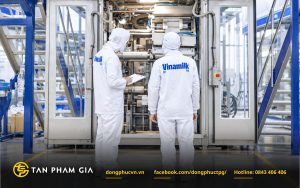
Factory Workwear and High-Visibility Vests
Warehouse, logistics, and plant teams may need garments that address operational and workplace safety requirements in addition to brand identification.
Work jackets, work pants, and high-visibility vests may include reflective tape and functional pockets where appropriate. The final design should be reviewed against the tasks, site layout, moving equipment, and safety requirements of the specific facility.
Reflective details alone do not establish compliance with a high-visibility safety standard. Any compliance requirement must be specified and verified separately.
Coordinated Uniform Accessories
Caps, face masks, name badges, and ID lanyards can be coordinated with the primary uniform, especially for employees working directly with customers at retail locations.
Consistent colors and logo placement across these items can reinforce brand recognition at close-contact areas such as display counters, sampling stations, and promotional booths.
How Should Brand Identity Be Applied to FMCG Uniforms?
FMCG uniform design should follow the company’s existing brand guidelines while establishing clear visual distinctions between employee groups.
Brand Colors
The uniform’s primary color should align with the approved brand palette and coordinate with product packaging and other branded materials.
Secondary colors can create visual interest or distinguish departments. Before bulk production, the color system should be tested across every planned garment type, including polo shirts, button-up shirts, factory workwear, and outerwear.
Logo Placement
Common logo positions include the left chest, sleeve, and back. Additional placements may be considered according to the garment construction, visibility requirement, and approved design.
Each position should have a documented size, color reference, and distance from relevant seams or garment edges so it can be repeated consistently.
Visual Hierarchy Between Employee Groups
Businesses can distinguish functions through:
- Primary or secondary garment colors
- Collar, cuff, piping, or trim details
- Role-specific design elements
- Printed or embroidered department names
- Different garment types within one coordinated design system
Uniform Programs for Multiple Brands or SKUs
Some FMCG companies manage several brands or product lines at the same time. Their uniforms may need to preserve a consistent corporate identity while giving each consumer brand a recognizable presence at the point of sale.
One practical approach is to retain a common silhouette and base color while changing the brand logo or a controlled secondary detail. This can reduce repeated sample development while maintaining a consistent framework across the organization.
Should FMCG Uniform Logos Be Printed or Embroidered?
The appropriate logo application method depends on the fabric, logo artwork, placement, size, and expected care conditions.
- When Is Embroidery Appropriate?
- Embroidery is often suitable for smaller logos that need a dimensional, professional appearance, such as a left-chest logo on a structured polo or workwear garment.
- Before approval, the supplier should test stitch density, backing, fabric distortion, and comfort against the selected fabric. A heavier fabric is not automatically suitable for every embroidery design.
- When Is Printing Appropriate?
- Printing may be a better option for logos with gradients, many small color details, or a large application area such as the back of a shirt. It can also suit lightweight or highly stretchable fabrics where dense embroidery may affect drape or garment shape.
- The exact printing process should be selected after reviewing the fabric and artwork. Screen printing, direct-to-film printing, sublimation, and other transfer processes are not interchangeable.
- Choosing a logo application method based on fabric and placement: Heavier, low-stretch fabrics-such as sturdy workwear fabrics, cotton fabrics, and piqué knits-can generally accommodate either printing or embroidery, depending on logo placement. For lightweight, highly stretchable fabrics, including four-way stretch and performance knits, printing is often preferred because dense embroidery may distort the fabric or affect the garment’s shape.
- What Should Be Checked Before Approval?
- Logo clarity after printing or embroidery
- Color accuracy against the approved brand reference
- Performance after the required wash and care cycle
- Suitability for commercial or industrial laundering, where applicable
- Consistency across separate production runs
>>> See Also:
- Custom Corporate Uniform Logo Printing | Tan Pham Gia
- Corporate Uniform Computerized Embroidery | Tan Pham Gia
What Should Businesses Prepare for a Large FMCG Uniform Order?
Large FMCG uniform orders require detailed preparation because changes become more expensive and time-consuming after bulk production has started.
- Confirm Quantities by Employee Group: Record the required quantity for each department, location, and garment type before placing the order. This reduces localized shortages and helps the supplier plan production and packing.
- Finalize the Size Chart Before Production: For a workforce of hundreds or thousands of employees, sizing data should be collected and approved before bulk production. The plan should also account for expected new hires, replacements, and regional allocation.
- Standardize Colors and Branding: Keep an approved Pantone reference, lab dip, or physical fabric swatch for future comparison. Store the approved logo artwork, placement measurements, and application method with the order record.
- Approve a Sample Before Bulk Production: The approval sample should be checked for fit, fabric, construction, color, and logo placement. Any deviation approved at this stage will be repeated across the order, so all stakeholders should sign off before production begins.
- Document the Fabric Specification: Record the fiber composition, fabric weight, construction, color, and any required finish. This specification provides a stable reference for replenishment orders and helps prevent uncontrolled material substitutions.
- Plan for New Employees and Replenishment: FMCG organizations often experience ongoing recruitment and employee turnover. Retaining the approved sample, color reference, logo file, and size chart makes it easier to plan additional orders without restarting the entire development process.
- Control Consistency Between Production Runs: Minor differences in color or fabric may occur between production lots. The supplier should compare a repeat order with the retained reference sample and communicate any material difference before production.
What Are the Most Common Risks in FMCG Uniform Programs?
Most large-order problems originate during specification and sample approval rather than sewing alone. Common risks include:
- Using one fabric for every role: The material may not suit outdoor fieldwork, warehouse activity, office use, and plant conditions equally well.
- Color differences from the brand standard: Screen colors are not a reliable production reference without a Pantone code, approved swatch, or physical sample.
- Unbalanced size quantities: An incomplete size survey can create shortages in some sizes and unused stock in others.
- Unsuitable logo application: The wrong print or embroidery specification may cause distortion, poor detail, peeling, or other performance issues.
- Differences between the approved sample and bulk production: Missing checkpoints can allow unapproved changes to continue through the order.
- Inconsistent quality between production runs: Repeat orders may differ if the original fabric, construction, and color references are not retained.
- No replenishment plan: New employees may have to wait for the correct uniform if reorder quantities and lead times have not been planned. Pre-production approval checklist
- Size chart approved for each employee group
- Fabric swatch and color reference retained
- Sample checked for fit, fabric, construction, and logo placement
- Technical specification confirmed with the uniform supplier
- Packaging and allocation requirements documented
- Replenishment plan established for new employees
What Determines the Price of FMCG Uniforms?
FMCG uniform pricing depends on several combined factors. There is no single price that applies to every order.
- Order quantity: Larger consolidated orders may reduce the production cost per garment, depending on the design and order structure.
- Garment type: Polo shirts, button-up shirts, plant uniforms, work jackets, and work pants require different materials and production processes.
- Fabric and GSM: Composition, construction, finish, and fabric weight all affect cost. A higher GSM does not automatically mean a better fabric; it should match the garment and work environment.
- Design complexity: Special patterns, multiple color panels, trims, and custom construction details increase development and production requirements.
- Printing and embroidery: The application method, number of positions, artwork complexity, and logo dimensions affect pricing.
- Packing and sorting: Individual packing by employee, size, department, or location adds handling compared with bulk packing.
- Delivery allocation: Distribution to several warehouses, branches, plants, or regional locations must be included in the logistics plan.
Tan Pham Gia’s minimum order quantity for FMCG uniforms is 100 sets. To develop an accurate quotation, the business should provide expected quantities, employee groups, garment types, brand requirements, and packing or delivery instructions
What Is the FMCG Uniform Development Process?
A structured process helps keep requirements consistent from consultation through final handover.
- Step 1: Needs Assessment – Review employee quantities by function, working conditions, required garment types, and brand identity requirements.
- Step 2: Garment and Fabric Selection – Develop garment and fabric recommendations for office, sales, merchandising, warehouse, logistics, and plant teams.
- Step 3: Design Development – Create designs based on the company’s brand guidelines and establish a clear visual hierarchy between employee groups.
- Step 4: Sample Development and Approval – Produce a sample so the business can review fit, fabric, construction, color, and logo placement. Where appropriate, Tan Pham Gia uses traditional draping and fit refinement on a dress form to evaluate garment balance and silhouette. This is a hands-on development technique, not digital 3D patternmaking software.
- Step 5: Bulk Production – Begin large-volume production according to the approved sample and confirmed technical specification.
- Step 6: Quality Control – Apply multi-stage quality checks before packing and compare production output with the approved reference to support consistency within and between production runs.
- Step 7: Handover and Reference Retention – Pack and allocate garments according to the approved requirements. Retain the reference sample, color information, logo specification, and size chart for future replenishment orders.
Large-Volume FMCG Uniform Solutions from Tan Pham Gia
Tan Pham Gia provides corporate uniform solutions for B2B customers placing large-volume orders. Its work focuses on brand consistency, practical garment specifications, and coordinated implementation across employee groups.
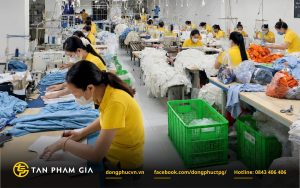
With more than 23 years of experience in fashion and apparel manufacturing, Tan Pham Gia has worked with more than 500 businesses and produced more than 1,000,000 uniform products. This experience includes projects for organizations with distributed teams and multiple operating functions, such as those found in the FMCG sector.
For FMCG programs, Tan Pham Gia can group fabric and garment recommendations by work environment, including offices, field sales, merchandising, warehousing, logistics, and manufacturing. Its multi-stage production and quality-control process is designed to support consistency across repeat orders and multiple locations.
Traditional dress-form draping and fit refinement may be used during development to evaluate proportions and garment balance before the approved design moves into bulk production.
Frequently Asked Questions About FMCG Uniforms
Questions 1: Do All FMCG Employee Groups Need to Wear the Same Uniform?
No. The system should maintain consistent core brand colors and identification standards, but garment types, fabrics, and fit can be adjusted for each work environment. A field sales representative and a plant employee may follow the same visual identity without wearing the same garment.
Questions 2: Which FMCG Positions Should Receive Uniforms First?
Businesses often prioritize employees with frequent customer or partner contact, such as field sales representatives, merchandisers, and sales supervisors. Office, warehouse, logistics, and plant teams can then be incorporated according to operational priorities and rollout plans.
Questions 3: Can One Fabric Be Used for Every FMCG Employee?
It is possible, but it is rarely the best option. Office, field, warehouse, and manufacturing teams face different levels of movement, heat, abrasion, and customer contact. Selecting fabric by environment generally produces a more practical uniform system.
Questions 4: How Long Does a Large FMCG Uniform Order Take to Produce?
The production timeline depends on order quantity, garment types, fabric availability, design complexity, logo application, and packing requirements. Contact Tan Pham Gia for a timeline based on the confirmed order specification.
Questions 5: Does Each Brand or SKU Need a Completely Different Uniform?
Not necessarily. A business can retain a common silhouette and base color while changing the logo or a controlled secondary detail for each consumer brand. This approach can maintain corporate consistency and reduce repeated design development.
Questions 6: Can Additional Uniforms Be Ordered for New Employees?
Yes. Retaining the approved sample, color reference, logo specification, and size chart provides the best basis for a consistent replenishment order. Minor material or color differences between production lots should still be reviewed before production.
Questions 7: Do FMCG Uniforms Need to Change by Season?
Not in every case. Businesses may select different seasonal options for employees who work outdoors, particularly field sales and merchandising teams. Climate, shift length, garment layering, and actual working conditions should guide the decision.
Questions 8: What Is the Minimum Order Quantity for FMCG Uniforms?
Tan Pham Gia’s minimum order quantity for FMCG uniforms is 100 sets. The final set configuration, garment types, colors, size allocation, and logo requirements should be confirmed for each project before quotation and sample development.
Building an effective FMCG uniform program starts with grouping employees by work environment, selecting suitable fabrics for each team, and standardizing the ordering and production process from the initial run to simplify future replenishment orders.
If your business needs a uniform solution for a multi-department workforce, Tan Pham Gia can provide guidance on garment styles, fabrics, printing and embroidery methods, implementation, and replenishment planning based on your actual requirements. Contact us at +84 843 406 406 or submit the form below for a consultation and the latest information on designs, fabrics, logo application methods, and service policies.