>>> Read more: F&B Uniforms: Solutions for Businesses & Chains
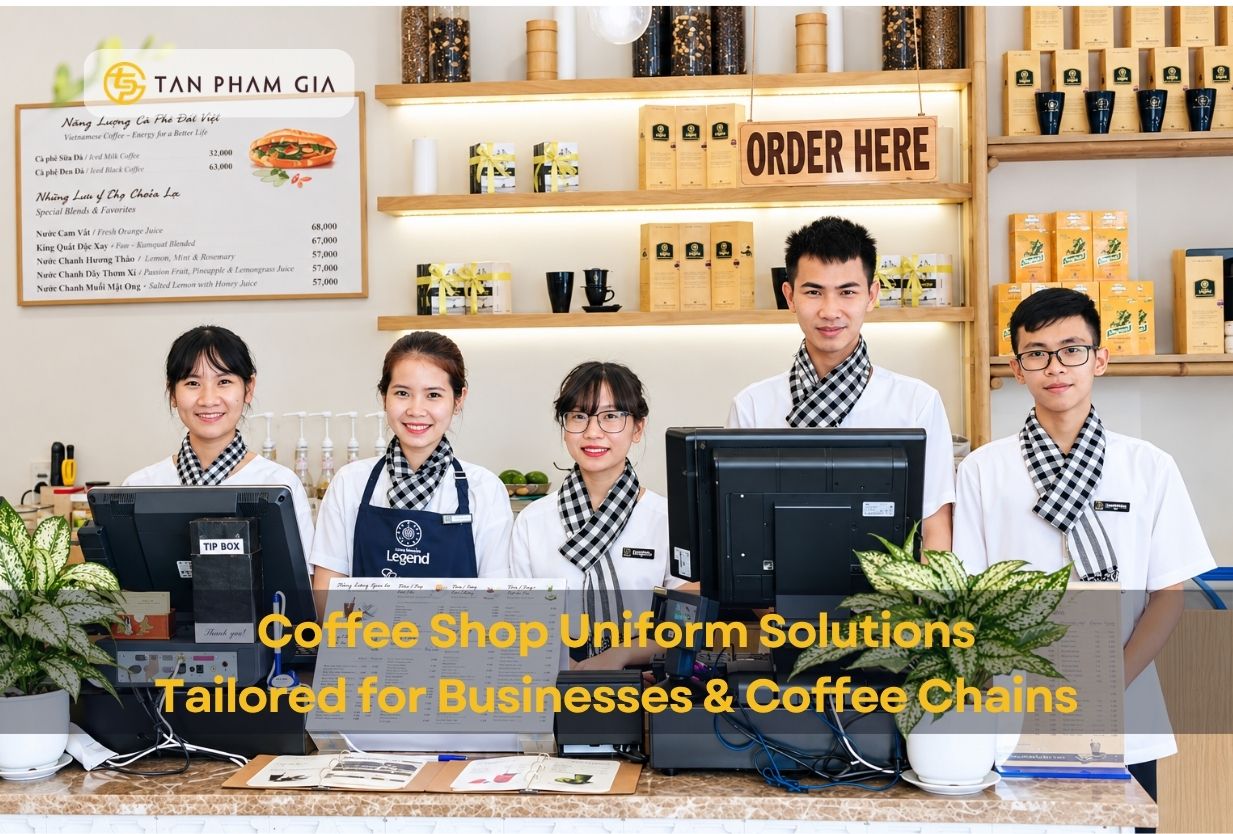
Coffee shop uniforms include more than T-shirts and polos. Aprons and coordinated accessories also help create a complete look, with different combinations suited to servers, baristas, cashiers, and managers.
Choosing the right styles, fabrics, colors, and logo applications helps align staff apparel with your brand while meeting the practical demands of each role.
In this guide, Tan Pham Gia Uniform explores popular coffee shop uniform styles, commonly used fabrics, key considerations for custom orders, and the bulk manufacturing process. For coffee chains, these decisions also provide a foundation for consistent uniforms across locations and future reorders.
Why Invest in Custom Coffee Shop Uniforms?
Custom coffee shop uniforms offer a straightforward way to create a cohesive team appearance and make your brand easier to recognize.
- Reinforce brand identity: Repeating your logo and brand colors across staff apparel helps customers recognize and remember your business.
- Create a professional team appearance: Coordinated uniforms help employees look polished across different roles.
- Make staff easy to identify: Customers can quickly find someone to help, even during busy periods.
- Support comfortable movement: Well-fitting garments allow employees to bend, reach, and carry trays throughout their shifts.
For coffee chains, a consistent uniform also helps customers recognize the same brand wherever they visit.
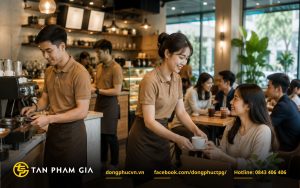
Popular Coffee Shop Uniform Styles
Coffee shop uniforms typically fall into seven categories: crew-neck T-shirts, polos, button-up shirts, bib aprons, waist aprons, coordinated shirt-and-apron sets, and uniforms with matching accessories.
Crew-Neck T-Shirts for a Youthful, Casual Look
Crew-neck T-shirts are a familiar choice for coffee shops with a youthful, relaxed atmosphere. Their simple design makes them easy to wear and coordinate with aprons.
They work well for servers and baristas who need freedom of movement. Logos are commonly printed or embroidered on the left chest or printed across the center chest.
When reviewing samples, check the neckline construction and fabric weight to help prevent stretching and loss of shape after repeated washing.
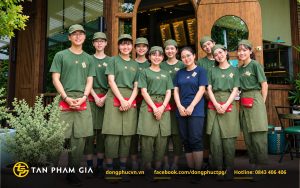
Polo Shirts for a Polished, Comfortable Appearance
Polo shirts suit coffee shops that want a professional appearance while keeping staff comfortable.
The collar adds structure to the overall look, making polos a practical option for cashiers, managers, and teams working in contemporary coffee shop settings.
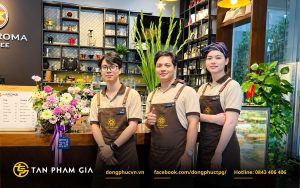
Button-Up Shirts for Coffee Shop Staff
Button-up shirts are often selected for vintage-inspired coffee shops, cafés featuring live acoustic music, and more upscale venues.
Choose fabrics that are easy to iron and resist wrinkling to help employees maintain a neat appearance throughout their shifts.
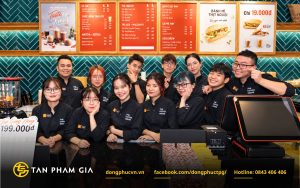
Full-Length Bib Aprons for Baristas
Bib aprons provide coverage across the front of the torso, helping protect the shirt underneath from everyday splashes and spills.
For barista uniforms, consider tool pockets and an adjustable neck strap to accommodate employees of different heights. Check the apron length during sample fitting to ensure comfortable movement behind the counter.
Short Waist Aprons for Servers
Short waist aprons are lightweight and allow servers to move easily between tables.
Front pockets provide convenient storage for order pads, pens, and other small essentials without adding unnecessary bulk.
Coordinated Shirt-and-Apron Sets
Combining shirts and aprons creates a complete uniform and allows subtle differences between staff roles.
Use complementary colors or a balanced contrast between the shirt and apron to keep the overall appearance cohesive.
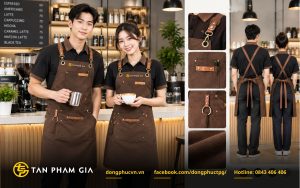
Coffee Shop Uniforms with Hats, Bow Ties, or Ties
Hats, bow ties, and ties can add a distinctive detail without changing the main garment style.
Coordinate these accessories with the colors or materials used in the shirts and aprons to maintain a consistent team appearance.
Coffee Shop Uniforms by Staff Role
Each role has different requirements for movement, customer interaction, and exposure to spills. A coordinated uniform program can accommodate those differences while maintaining a shared brand identity.
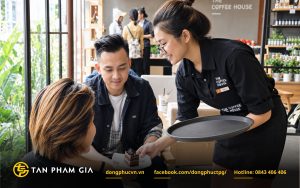
Server Uniforms
Servers typically wear T-shirts or polos with short waist aprons. Lightweight, breathable fabrics help support comfort during frequent movement.
Garments should allow employees to carry trays, reach across tables, and perform routine cleaning tasks without restricting movement.
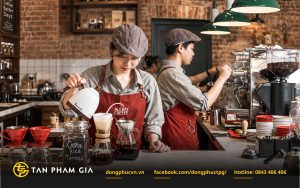
Barista Uniforms
Baristas commonly wear T-shirts or polos with full-length bib aprons and practical pockets.
Easy-care fabrics are useful for staff handling coffee, milk, and syrups. Sleeves should fit comfortably without excess fabric that could interfere with drink preparation.
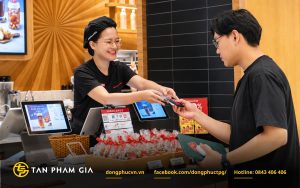
Cashier Uniforms
Cashiers often wear polos or button-up shirts. An apron may be optional when the role does not involve preparing drinks.
Because cashiers work at a prominent customer touchpoint, their uniforms should look neat and reflect the coffee shop’s overall identity.
Manager Uniforms
Managers often wear button-up shirts or polos, with a subtle difference in color or detailing to distinguish their role.
This helps customers and employees identify the person coordinating operations while preserving a cohesive team appearance.
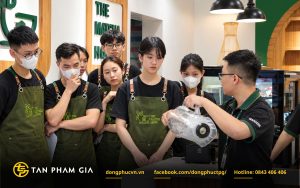
Fabrics for Coffee Shop Uniforms
Coffee shop uniform fabrics should balance comfort, easy care, and a neat appearance during daily wear.
Employees frequently handle beverages, milk, and cream while working near warm espresso equipment. In addition to breathability, consider:
- How readily the fabric absorbs spills and how easily they can be treated.
- Drying time after washing.
- Color retention through repeated laundering.
- Wrinkle resistance during wear.
- Shape retention and comfort during movement.
No fabric choice replaces prompt spill treatment. Review physical samples and care instructions before approving materials for bulk production.
>>> Explore: Fabric Collection – Corporate Uniform Fabrics | Tan Pham Gia
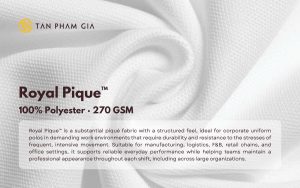
Royal Pique™: 100% Polyester for Durability and Shape Retention
Royal Pique™ is a 100% polyester piqué fabric in the TPG Prime™ range. It is an option for coffee shop uniform polos where durability and shape retention are priorities.
Polyester fibers generally absorb less water than cotton fibers, but finished-fabric performance also depends on the knit construction and any applied finishes. Check the actual sample for comfort, laundering performance, and ease of spill cleanup.
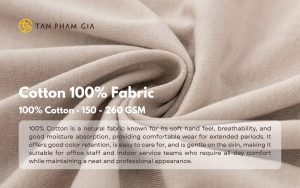
100% Cotton: Softness and Sweat Absorption
100% cotton offers a soft feel and absorbs perspiration, making it an option for employees working long shifts in warm environments.
It tends to wrinkle more readily, and beverage spills can soak into the fabric quickly. Treat stains as soon as they are noticed and follow the garment’s care instructions.
65/35 CVC Cotton-Polyester Blends
CVC cotton-polyester blends combine cotton’s comfort and absorbency with the durability of polyester.
These fabrics typically wrinkle less than 100% cotton and can be a practical choice for different staff roles and everyday care.
Stretch Knit Options: “Thun Thai” and “Thun Lanh”
Fabrics sold in Vietnam under the trade names “thun Thai” and “thun lanh” may offer stretch for bending and reaching during work.
These names do not define a standard fiber composition. Review the specific fabric sample, composition, and stretch recovery before selecting either material.
Choose sufficient fabric weight and opacity, and check whether the garment retains its shape after laundering.
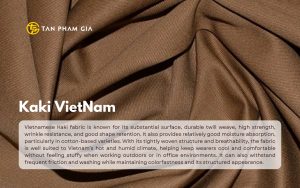
“Kaki” Fabric for Structured Aprons
The fabric referred to locally as “kaki” is commonly used for aprons where a more structured appearance is preferred.
Select a version with enough softness and flexibility for comfortable movement during drink preparation. Confirm the fiber composition and weave when reviewing samples.
“Kate” Fabric for Lightweight Shirts and Aprons
“Kate” is a local fabric trade name used for lightweight shirt and apron materials. Depending on the specific fabric, it may suit air-conditioned coffee shops or a more refined uniform style.
Review a physical sample to assess weight, opacity, wrinkle behavior, and suitability for the intended role.
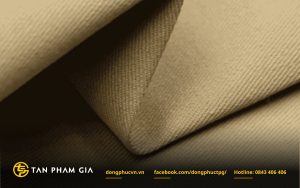
Need Help Choosing a Fabric?
Use the coffee shop uniform fabric guide to compare your options, or contact Tan Pham Gia for recommendations based on your working environment and staff requirements.
How to Choose Coffee Shop Uniform Colors That Match Your Brand
Start with your logo, brand guidelines, and interior design to create a consistent visual identity.
- Build the Palette Around Your Logo: Use your primary brand color as the starting point for shirts, aprons, and accessories. A secondary color can appear on aprons or small details to add interest without making the uniform look overly busy.
- Coordinate with the Coffee Shop Interior: Uniform colors should work with the interior finishes, lighting, and overall palette. In a space with muted colors, very bright uniforms may feel visually disconnected. Review fabric swatches in the actual coffee shop lighting before final approval.
- Use Brown, Cream, Navy, and Muted Gray for Vintage-Inspired Settings: Brown, cream, navy, and muted gray complement vintage-inspired interiors and cafés featuring acoustic music. These colors work well with wood, exposed brick, and warm lighting to support a relaxed atmosphere.
- Use Orange, Yellow, Green, and White for a Modern, Youthful Look: Orange, yellow, green, and white can suit contemporary coffee shops appealing to younger customers. Balance brighter shades with neutral colors to keep the uniform professional and easy to coordinate.
- Consider Darker Colors for Baristas: Navy, charcoal, and dark brown can make small marks less noticeable during drink preparation. Lighter colors may suit servers or cashiers who have less direct contact with ingredients. Regardless of color, uniforms should be cleaned and maintained regularly.
- Establish Color References for Future Orders: Keep an approved fabric swatch and the relevant color references from the first order. For coffee chains, these references help maintain consistency when replacing uniforms, hiring new employees, or opening additional locations.
How to Standardize Uniforms Across a Coffee Chain
A consistent uniform program starts with approved designs, color references, and sizing specifications.
- Define the Design and Sizing Standards Early: Create a shared specification covering garment styles, fabrics, colors, logo placement, logo dimensions, and size charts. This gives every location a common reference when ordering uniforms.
- Retain an Approved Reference Sample: Keep an approved sample alongside the fabric specifications, color references, and printing or embroidery details. Use it to review future production runs so new locations can adopt the same uniform without starting the design process again.
- Combine Orders Across Locations: Consolidating requirements from multiple locations can help improve unit costs and simplify order coordination.
Prepare quantities by size, style, color, and staff role before submitting the order. Tan Pham Gia accepts combined orders across styles, colors, and locations, with a minimum order of 100 uniform sets. Each set can be configured according to the customer’s requirements.
Explore Tan Pham Gia’s coffee chain uniform projects for ideas on creating a consistent appearance across your locations.
Common Mistakes When Ordering Coffee Shop Uniforms
Choosing uniforms based only on appearance can lead to problems once employees start wearing them.
Review the actual working conditions before production to reduce the need for adjustments or replacement orders.
Prioritizing Appearance Over Movement and Comfort
An attractive uniform still needs to support bending, reaching, and long shifts.
Have employees try the sample while preparing drinks, carrying trays, and cleaning. Check comfort, ventilation, and freedom of movement before approving the design.
Choosing Aprons Without Practical Pockets
Aprons without suitable pockets can make it harder to keep small essentials close at hand.
Plan pocket placement, size, and quantity around the tools employees actually use. Review whether stored items interfere with reaching, leaning, or moving behind the counter.
Ordering in Bulk Without a Standard Size Chart
Inconsistent sizing can result in poorly fitting uniforms and additional alterations or replacement costs.
Collect employee measurements, allow for future hires, and retain the approved size chart for reorders across all locations.
Skipping Sample Approval
Without a physical sample, fit, color, stitching, and logo issues may only become apparent after the full order has been produced.
A sample allows your team to review and finalize the specifications before bulk manufacturing begins.
Logo Printing and Embroidery for Coffee Shop Uniforms
Screen printing, direct-to-film printing, and machine embroidery are common options for applying logos to staff shirts and aprons.
The right method depends on the fabric, artwork, order quantity, and desired finish.
Screen Printing
Screen printing is often suitable for simple logos with a limited number of colors and larger production runs.
It can provide consistent results across bulk orders, making it an option for coffee chains outfitting multiple teams.
Direct-to-Film (DTF) Printing
DTF printing can reproduce multicolor artwork and fine details.
The design is printed onto a transfer film and applied to the garment with heat. Request a test on the selected fabric to assess the appearance, feel, adhesion, and performance after washing.
>>> Explore: Custom Logo Printing for Corporate Uniforms | Tan Pham Gia
Machine Embroidery
Computerized embroidery gives logos a raised, textured finish and works well on many polos, button-up shirts, and aprons.
Artwork with very small text or intricate details may need to be simplified and digitized for a clear embroidered result.
Compare Logo Application Methods
Approve the application method using the actual garment fabric before bulk production.
Choose Consistent Logo Placement and Dimensions
Common positions include the chest, sleeve, and front of the apron.
- Chest: Suitable for the primary logo.
- Sleeve: Useful for a secondary mark or compact brand symbol.
- Apron front: Provides a visible branding area, especially when an apron covers the shirt logo.
Choose dimensions that are easy to recognize without overwhelming the garment. Coffee chains should document the approved position and measurements so reorders match the original specification.
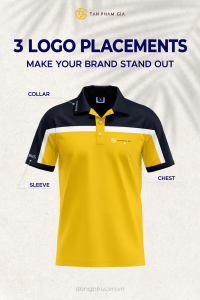
Need a Custom Logo Layout? Send your logo and uniform requirements to Tan Pham Gia for recommendations on printing, embroidery, and placement.
What Affects the Cost of Custom Coffee Shop Uniforms?
Pricing depends on the materials, quantities, garment construction, logo application, and accessories included in the order.
Key factors include:
- Selected fabrics.
- Total order quantity.
- Garment styles and construction details.
- Printing or embroidery requirements.
- Aprons and additional accessories.
Combining requirements from multiple coffee shop locations can offer opportunities to improve unit costs compared with placing separate orders.
For a quotation, provide your estimated quantities, preferred uniform combinations, design requirements, and delivery destination.
The Bulk Coffee Shop Uniform Ordering Process at Tan Pham Gia
Tan Pham Gia’s process includes seven steps, from the initial consultation to quality control and delivery.
- Step 1: Define Your Requirements: Discuss quantities, staff roles, coffee shop style, and operational needs. For chain orders, include requirements from each location and identify any shared or role-specific garments.
- Step 2: Select Styles and Fabrics: Review recommended garment styles and fabrics based on staff responsibilities and working conditions.
- Step 3: Develop the Uniform Design: Tan Pham Gia provides free uniform design development based on your logo, brand colors, and coffee shop identity.
- Step 4: Review Fabrics and the Physical Sample: Check the selected materials, colors, and sample garments before final approval.
- Step 5: Refine the Sample: Review the fit, construction details, and logo placement. Make any agreed adjustments before confirming the production specifications.
- Step 6: Begin Bulk Manufacturing: Production proceeds according to the approved sample and specifications.
- Step 7: Complete Quality Control and Delivery: Uniforms undergo quality checks before handover or shipment. For international orders, discuss the delivery destination and shipment arrangements during the quotation process.
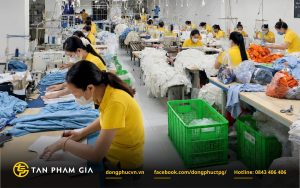
Tan Pham Gia: Custom Coffee Shop Uniform Design and Manufacturing
Tan Pham Gia provides corporate uniform solutions, supporting coffee businesses from consultation and design through production and delivery.
With more than 23 years of experience in fashion and apparel, the company has served over 500 corporate clients and manufactured more than 1,000,000 garments.
Designs Built Around Your Coffee Shop Brand
The design team develops uniforms around your logo, color palette, and coffee shop style.
The aim is to create a uniform that reflects your identity and supports your team’s daily work.
Guidance on Styles, Fabrics, Colors, and Fit
Recommendations are based on staff roles and the working environment.
Traditional draping on a dress form supports garment development by shaping and refining the design directly on the form. Sample fittings then allow the team to review fit and make adjustments before production.
Manufacturing Capacity for Coffee Chains
Tan Pham Gia operates a 2,000 m² factory with a production capacity of approximately 30,000 garments per month.
The TPG Fabric Collection and quality checks at multiple production stages support material selection and consistency across bulk orders and subsequent production runs.
Frequently Asked Questions About Coffee Shop Uniforms
Questions 1. Can a New Coffee Shop Place a Small Order?
Tan Pham Gia’s minimum order is 100 uniform sets, with each set configured according to your requirements.
You can combine different styles, colors, and requirements from multiple locations in one order. If your initial needs are below the minimum, contact the team to discuss your plans and allow for future hires or expansion.
Questions 2. Should Baristas and Servers Wear Different Uniforms?
Some differences are useful because the roles involve different tasks.
Baristas may benefit from full-length bib aprons, practical pockets, and easy-care fabrics. Servers often need lighter garments and shorter aprons for movement between tables.
Shared colors and branding help both groups remain visually consistent.
Questions 3. Can a Coffee Chain Combine Orders Across Multiple Locations?
Yes. Coffee chains can combine requirements from multiple locations into one order, including different styles and colors.
Before ordering, establish shared design specifications, color references, and size charts. These standards also make future reorders easier to coordinate.
Plan Coffee Shop Uniforms Around Your Brand and Your Team
Coffee shop uniforms help create a consistent team appearance, reinforce brand identity, and support comfortable daily work.
When planning your order, consider the requirements of each staff role, fabric care, brand colors, and logo application. For coffee chains, approved samples and standardized sizing provide a practical foundation for future orders.
Tan Pham Gia supports your project from consultation and design through manufacturing and delivery, helping you develop uniforms suited to your business.
Contact Tan Pham Gia for a consultation:
- Phone / Zalo: +84 843 406 406
- Email: dongphuc@tanphamgia.com.vn
- Contact form: Request a consultation
- Minimum order: 100 uniform sets, configured to your requirements.
Available styles, fabric options, printing and embroidery methods, and service policies may change over time. Contact Tan Pham Gia for current information and recommendations for your uniform project.