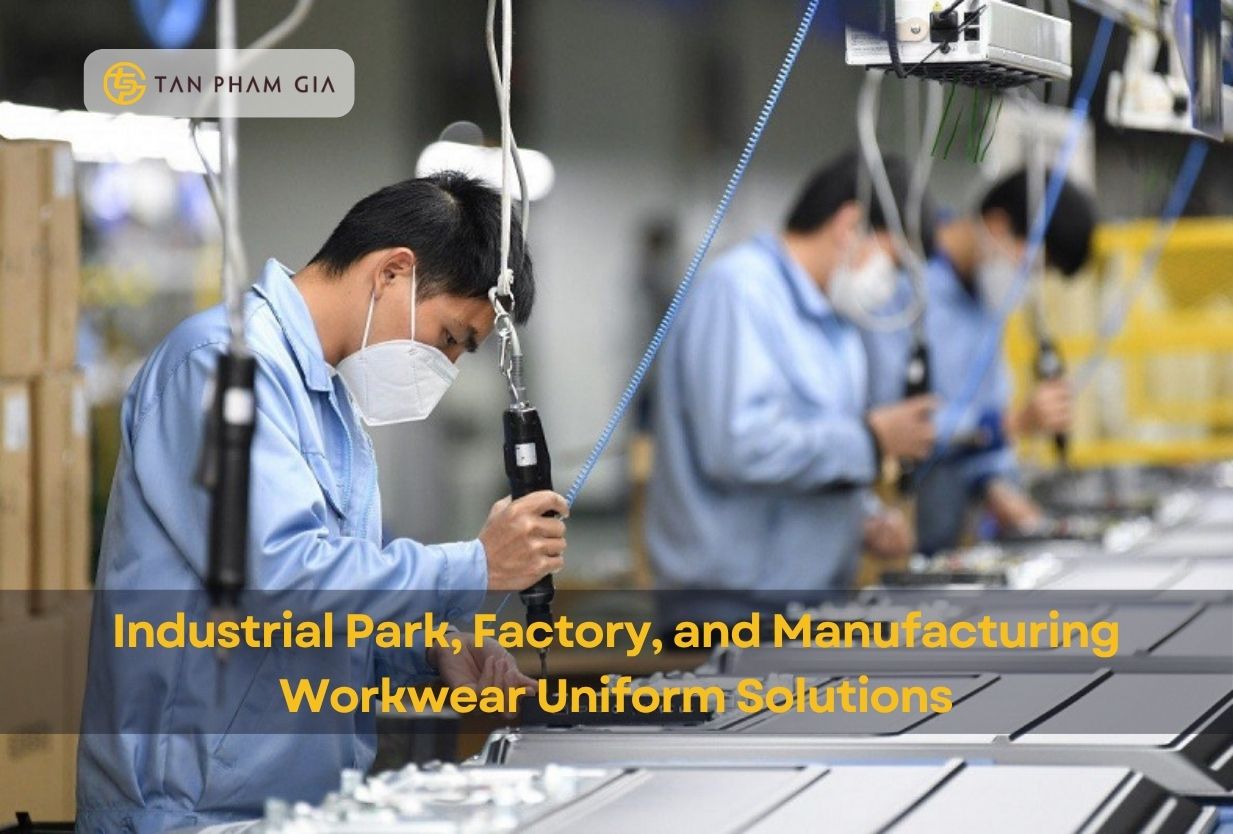
Factories, manufacturing facilities, and industrial parks each operate under different working conditions, from high temperatures and exposure to oil, dust, and chemicals to requirements for worker safety across hundreds or thousands of employees. Workwear uniforms therefore serve more than a branding function. They can support workplace safety, department identification, operational management, and a consistent professional image.
This guide outlines key considerations for selecting factory and manufacturing workwear uniforms based on working environments and employee roles, helping businesses establish clear specifications before placing bulk orders. Tan Pham Gia Uniform works with manufacturing businesses to develop workwear solutions suited to their actual operating conditions, workforce structure, and production requirements.
Why Are Workwear Uniforms Important for Industrial Parks and Factories?
Workwear uniforms play an important role in three key areas: supporting workplace safety, improving operational management, and maintaining a professional image across the factory. These factors can directly affect day-to-day operations and how a manufacturing business is presented to customers, partners, and visitors.
Supporting Workplace Safety for Production Workers
The right workwear design and fabric can help reduce workplace risks when matched appropriately to the working environment. Depending on the application, protective workwear may help limit direct exposure to heat, dust, dirt, chemicals, or rough working surfaces.
Reflective strips, comfortable fits, and functional garment details can also support safer movement during long shifts, particularly in areas with heavy machinery, forklifts, and other moving equipment.
Supporting Workforce Management and Department Identification
Workwear differentiated by color, design, department markings, or employee identification helps factory managers quickly distinguish between departments, job functions, and shifts.
This is particularly useful in large manufacturing facilities with multiple production areas and rotating shifts. Clear visual identification can also support operational supervision and help identify responsible personnel when an issue occurs in a specific production area.
Building a Professional Image for the Factory
Consistent, well-finished uniforms contribute to a professional appearance across the manufacturing facility. They also create a more organized impression when customers, business partners, or auditors visit the factory.
For FDI manufacturers and larger enterprises working with supplier evaluation or factory assessment processes, a consistent workforce appearance can form part of the overall presentation of the operation.
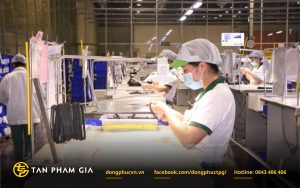
Workwear Uniform Solutions for Different Manufacturing Environments
Different areas within the same factory can have significantly different working conditions. Rather than applying one uniform specification to every employee, businesses should consider fabric, garment construction, and functional details according to each working environment.
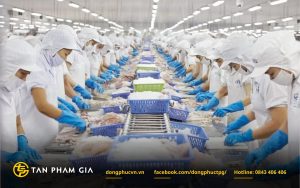
Hot and Humid Environments in Sewing, Packaging, Boiler, and Food Production Areas
High-temperature environments require workwear that prioritizes lightweight construction, breathability, and moisture management to improve comfort during extended shifts.
- Cotton or CVC fabrics can be considered where moisture absorption and wearer comfort are priorities.
- Relaxed or functional fits allow workers greater freedom of movement during repetitive tasks.
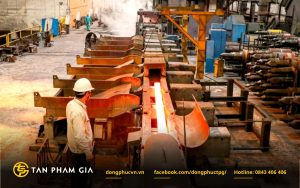
Environments Exposed to Oil, Grease, Dust, and Chemicals
Mechanical workshops, manufacturing areas, and fertilizer-related operations may require more durable workwear than standard corporate uniforms.
- Durable Kaki fabrics are suitable for applications involving frequent contact with machinery and rough materials.
- Darker shades such as navy or charcoal can help make visible dirt and stains less noticeable during daily operations.
Where chemical exposure is a significant workplace hazard, fabric selection and protective performance should be specified according to the actual chemical risks rather than relying solely on conventional workwear fabrics.
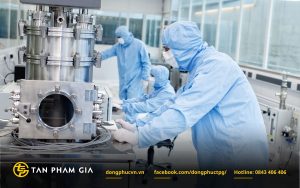
Cleanroom Environments With Strict ESD Requirements
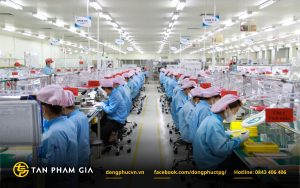
Electronics, pharmaceutical, and certain medical manufacturing facilities may require specialized cleanroom garments and electrostatic-control workwear.
- Conductive or carbon-fiber fabrics may be specified where electrostatic control is required.
- Depending on cleanroom requirements, garments may be used together with hoods, gloves, and other specialized equipment.
Cleanroom and ESD specifications should be determined according to the facility’s applicable technical requirements and operating standards.
Low-Light, Warehouse, Logistics, and Outdoor Working Environments
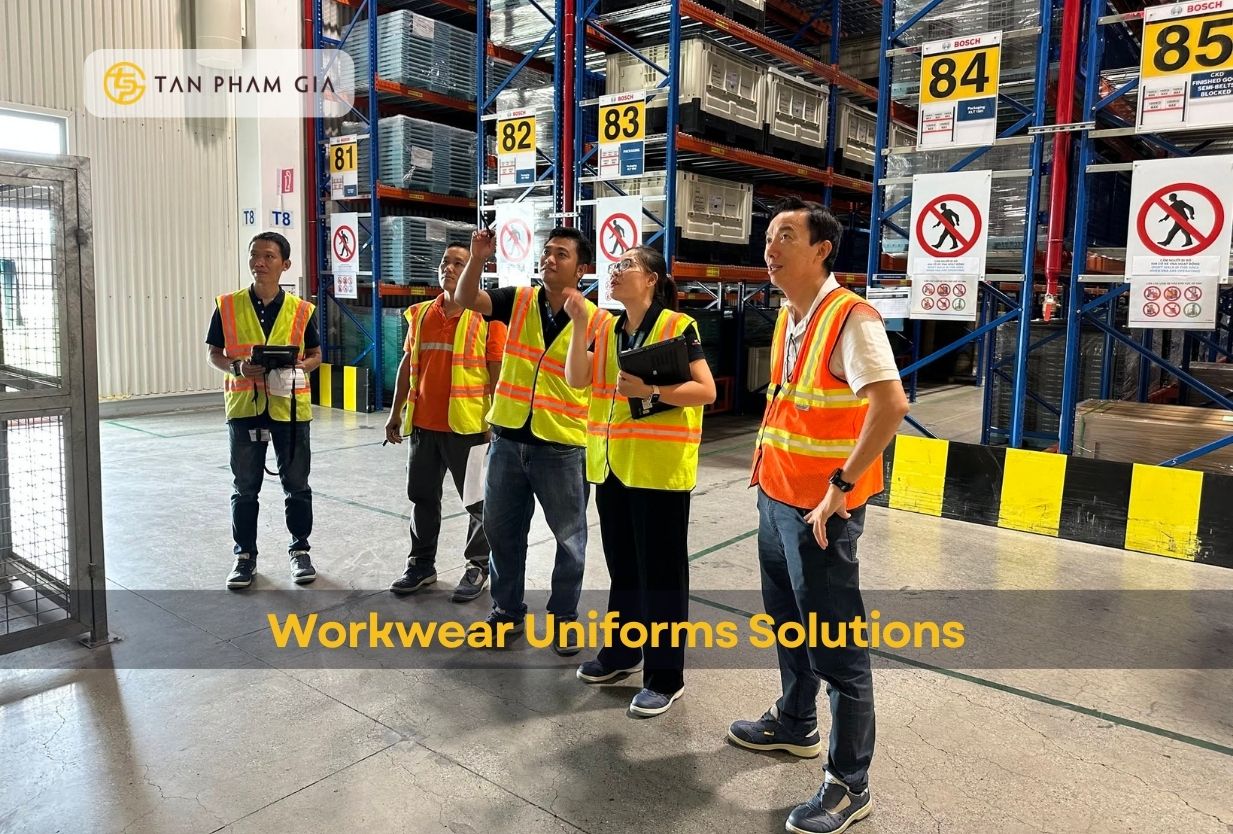
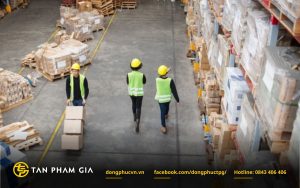
Employees working in low-light areas, warehouses, logistics zones, or outdoor environments may benefit from garments with reflective elements for improved visibility.
- Reflective tape can be incorporated directly into work shirts, jackets, or outerwear.
- Increased visibility can help workers remain more noticeable around forklifts, trucks, and other moving vehicles.
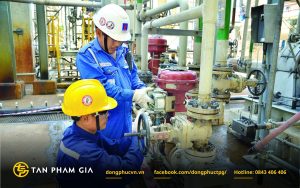
Mechanical-Risk, Welding, and Cold-Storage Environments
Welding areas and cold-storage facilities have very different working conditions and therefore require application-specific garments.
- Welding workwear may require heavier fabrics and appropriate flame-resistant or heat-resistant specifications, depending on the actual hazards.
- Cold-storage employees may require insulated work jackets designed for low-temperature environments, with water-resistant features where necessary.
The exact protective specifications should be established based on the workplace risk assessment and applicable requirements.
If your factory includes multiple working environments within the same production site, Tan Pham Gia can support your team in reviewing fabric and uniform specifications for different employee groups. Businesses can submit their requirements through the contact form for a more detailed consultation.
Key Specifications for Factory and Manufacturing Workwear
Well-designed factory uniforms should combine durable construction, functional design, and stable logo application to withstand frequent use and repeated industrial washing.
Durable Construction With Reinforced Stress Points
Reinforced stitching at high-stress areas such as underarms, trouser pockets, and garment hems can help reduce seam failure during repetitive movement throughout a shift.
These construction details should be checked carefully during sample approval before bulk production begins.
Functional Design With Practical Pockets and Smooth-Operating Zippers
Utility pockets and reliable zippers can make it easier for workers and technicians to carry essential tools during daily operations.
Pocket placement should be determined according to the tasks performed by each department rather than applying the same configuration across the entire workforce.
Durable Logo Printing and Embroidery for Industrial Washing
Factory uniforms are often washed frequently, sometimes using industrial laundry systems. Logo printing or embroidery therefore needs to be selected according to the fabric, logo design, placement, and washing conditions.
Embroidery can be suitable for durable, long-term branding applications, while printing may be more appropriate for detailed graphics or designs requiring multiple colors.
>>> Learn more:
- Custom Corporate Uniform Logo Printing | Tan Pham Gia
- Corporate Uniform Computerized Embroidery | Tan Pham Gia
Factory Uniforms by Job Function
Different employee groups within the same manufacturing facility may require different levels of functionality, comfort, and visual formality. Segmenting uniforms by job function allows businesses to maintain practical performance while keeping the overall brand identity consistent.
Workwear for Production Workers
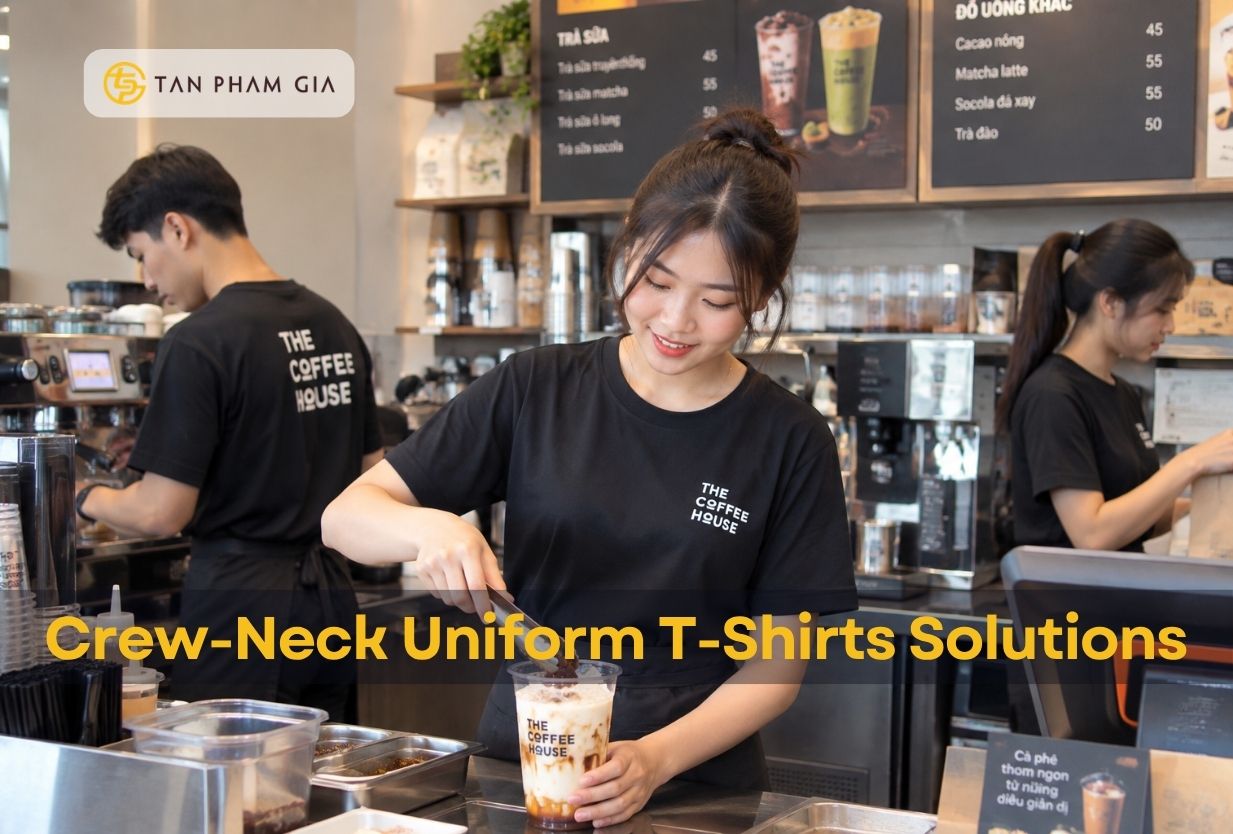
Production workers may wear T-shirts, polo shirts, or dedicated workwear depending on their tasks, working environment, and exposure to operational risks.
The uniform specification should prioritize comfort, mobility, durability, and ease of maintenance for employees working throughout extended shifts.
Uniforms for Engineers, Technicians, and Supervisors
Engineers, technicians, and supervisors often need uniforms that balance a professional appearance with freedom of movement across production areas.
The garment should maintain a neat appearance while allowing employees to move comfortably around machinery and technical workspaces. For supervisors and technical personnel who also attend meetings or interact with customers and partners, a more polished uniform design may be appropriate.

Uniforms for Warehouse and Logistics Teams
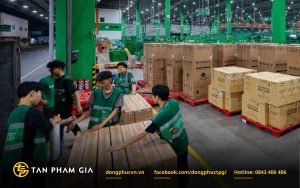
Warehouse and logistics personnel need uniforms that support frequent movement while remaining clearly identifiable within warehouse and loading areas.
Reflective elements or safety vests can be incorporated where appropriate, particularly for employees working around forklifts, trucks, and loading equipment.
Uniforms for Factory Office and Management Teams
Office employees and factory management typically require a more professional uniform style that remains consistent with the company’s overall brand identity.
Depending on the company’s dress code, options may include uniform shirts, polo shirts, or other corporate uniform styles suitable for office-based work within the factory complex.
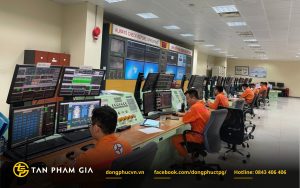
For factories with multiple employee groups, businesses can submit their design requirements to Tan Pham Gia for a uniform system that differentiates departments while maintaining a consistent corporate identity.
Choosing Workwear Fabrics for Different Manufacturing Environments
Fabric selection should not be based solely on unit cost. Businesses should consider the working environment, frequency of wear and washing, level of physical activity, durability requirements, and desired corporate image.
>>> Learn more: Fabric Collection – Corporate Uniform Materials | Tan Pham Gia
Kaki Fabrics – For Durable Factory and Technical Workwear
Kaki is a durable and structured fabric group commonly used for workwear and positions involving frequent contact with machinery, equipment, or rough surfaces.
Tan Pham Gia offers different Kaki fabric options with varying performance characteristics, from structured fabrics designed to maintain their shape to polyester-cotton blends that balance durability and breathability, as well as stretch Kaki options that provide greater mobility for technical and maintenance teams.
Polyester and Pique – For Frequently Worn Factory Uniforms
Polyester and pique fabrics are durable, easy to maintain, and suitable for polo shirts and T-shirts used regularly in production and warehouse environments.
Within the Tan Pham Gia fabric system, Royal Pique™, made from 100% polyester at 270 GSM, is a suitable option for applications requiring shape retention, durability, and reduced wrinkling through frequent washing.
Cotton and Cotton Blends – For Extended Wear Comfort
Cotton and cotton-blend fabrics are suitable for working environments where softness, breathability, and extended-wear comfort are priorities.
CottonFlex™ options with cotton or cotton-spandex compositions can be considered for employees who need comfortable uniforms throughout long working shifts.
Stretch Fabrics – For Employees Who Move Frequently
Stretch fabrics are suitable for technical, warehouse, maintenance, and other positions involving frequent walking, bending, reaching, or repetitive movement. Within the Tan Pham Gia fabric system, AirPique™ fabrics with spandex provide additional stretch and flexibility, helping reduce restriction during active work.
Does your business need advice on choosing suitable uniform fabrics for different positions in an industrial factory?
Each employee group in a factory may require a different fabric solution based on the working environment, level of physical activity, and frequency of use. Tan Pham Gia provides consultation on fabrics, styles, and uniform solutions tailored to your business scale and the specific requirements of each department.
Contact Tan Pham Gia via Zalo or complete the Contact Form to submit your requirements and receive consultation on a corporate uniform solution.
Factory and Manufacturing Workwear Pricing
The cost of industrial and factory uniforms is not fixed. It depends on factors such as order quantity, fabric selection, garment design, printing or embroidery techniques, size distribution, and finishing requirements.
For larger corporate orders, Tan Pham Gia can recommend fabric and design options based on the actual working environment, intended use, and workforce size before providing a project-specific quotation.
To receive an accurate quotation, businesses can provide:
- Estimated uniform quantity
- Type of uniforms required
- Actual working environment
- Fabric, design, and logo requirements
- Required delivery timeline
Businesses can contact Tan Pham Gia via Hotline / Zalo: 0843 406 406 or submit the contact form to discuss their requirements and receive a tailored quotation.
Practical Considerations When Ordering Workwear for Large Factories
Standardize Sizes and Quantity Allocation Before Production
Standardizing the size breakdown before production helps reduce shortages and excess inventory when uniforms are distributed to a large workforce.
For businesses with multiple departments, factories, or branches, consolidating size data from each unit before placing the production order can make manufacturing, packing, and delivery more efficient.
Select Printing or Embroidery Based on Fabric and Usage
The appropriate logo application method depends on garment placement, logo size, fabric composition, design complexity, and washing frequency.
Embroidery can be suitable for long-term branding and frequent machine washing, while printing can be considered for detailed graphics or multi-color designs.
Approve a Physical Sample Before Bulk Production
Approving a physical sample before mass production allows the business to verify garment fit, color, fabric, logo placement, stitching, and overall construction before committing to the full quantity.
This step is particularly important for large manufacturing projects where even small specification differences can affect a large number of garments.
Keep an Approved Reference Sample for Future Reorders
Keeping the approved sample helps maintain consistency in garment design, fabric, color, sizing, and brand identity across future production runs.
This is especially useful for businesses with ongoing recruitment or phased uniform replacement programs.
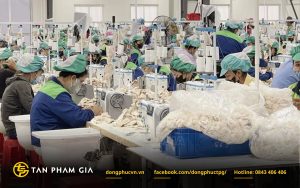
Tan Pham Gia – Workwear Manufacturing Partner for Industrial and Manufacturing Businesses
Large-scale uniform programs require more than garment production capacity. Businesses also need a manufacturing partner that can coordinate fabric selection, design development, sampling, bulk production, and quality control throughout the project.
Tan Pham Gia provides customized workwear and corporate uniform solutions for factories, manufacturing businesses, and organizations with multiple departments or operating locations.
Production Capacity for Large-Scale Corporate Uniform Orders
Tan Pham Gia operates a factory of approximately 2,000 m², with production capacity of around 30,000 garments per month, supporting large-scale corporate uniform orders according to business production schedules.
Direct Manufacturing and End-to-End Quality Control
Tan Pham Gia manages the production process from fabric consultation, design development, and sampling through to bulk manufacturing.
Quality is monitored throughout key stages, including raw materials, semi-finished garments, and finished products. Approved samples are used as production references to help maintain consistency across bulk orders.
Uniform Solutions Designed for Long-Term Use
Tan Pham Gia retains approved samples to support future reorders when businesses need additional uniforms for new employees or replacement programs.
Different uniform designs or fabric groups can also be developed for different departments within the same manufacturing project while maintaining a consistent corporate identity.
Fabric and Design Consultation by Job Function
Tan Pham Gia develops uniform specifications based on actual working environments and job functions, including production workers, technical teams, warehouse and logistics staff, management, and office employees.
The product development process incorporates 3D pattern technology and mannequin-based fitting, with 2D mockups and physical samples available for review before bulk production.
(FAQs) Frequently Asked Questions About Industrial Park, Factory, and Manufacturing Workwear Uniforms
Questions 1. Are Factory Workwear Uniforms Required by Vietnamese Law?
Vietnamese labor regulations require employers to provide appropriate personal protective equipment to employees working in environments involving dangerous or hazardous factors. Whether a specific garment is legally required depends on the actual workplace hazards, job duties, and applicable regulations.
Standard corporate uniforms used primarily for identification and branding are generally a separate matter and may depend on the company’s internal policies.
Questions 2. What Is the Minimum Order Quantity for Factory Uniforms?
Minimum order quantities depend on the manufacturer’s production policy and the specific product. There is no single minimum quantity that applies universally.
Businesses should discuss their workforce size, uniform requirements, and production plan directly with the manufacturer to determine a suitable order structure.
Questions 3. What Is the Difference Between Protective Workwear and Standard Uniforms?
Protective workwear is designed around specific workplace hazards and may require specialized fabrics, garment construction, or protective performance.
Standard workwear uniforms generally focus on durability, comfort, department identification, and corporate branding.
The two can be used together within the same factory, with different specifications assigned to different employee groups or working environments.
Questions 4. How Long Does Large-Volume Factory Uniform Production Take?
Production lead time depends on order quantity, design complexity, fabric availability, logo application, size distribution, and other production specifications.
Businesses should provide their required delivery date when contacting the manufacturer so the production schedule can be assessed based on the actual project.
Questions 5. Can Different Departments Have Different Uniforms Within the Same Factory?
Yes. Businesses can develop different uniform styles, fabrics, colors, or functional details for production workers, technical teams, warehouse and logistics staff, management, and office employees within the same project.
The overall uniform system can still maintain consistent brand colors, logo usage, and visual identity across the organization.
Questions 6. How Should Businesses Choose Fabrics for Specialized Working Environments?
Businesses should first identify the actual conditions in each working area, including temperature, chemical exposure, dust, electrostatic requirements, physical activity, washing frequency, and other relevant workplace factors.
Fabric selection should then be matched to the garment’s intended function and applicable safety requirements rather than chosen based solely on appearance or price.
For specialized environments, consultation with a qualified safety or technical professional may also be necessary to determine the required protective specifications.
Industrial park, factory, and manufacturing workwear uniforms should be selected based on the actual working environment, employee roles, operational requirements, and long-term uniform management needs rather than unit cost alone.
Fabric selection, garment construction, functional details, logo application, sampling, bulk production, and quality control all contribute to the usability and consistency of a large-scale uniform program.
Tan Pham Gia supports businesses in developing workwear uniform solutions for industrial parks, factories, and manufacturing facilities, with fabric and design recommendations tailored to different working environments and employee groups.
Businesses looking to order workwear uniforms for factories or manufacturing facilities can contact Hotline / Zalo: 0843 406 406 or submit a contact request to discuss their workforce requirements and receive a suitable uniform manufacturing solution.