>>> Explore Related Articles:
- Workwear Uniforms: Solutions for Factories, Production Facilities & Technical Teams
- Industrial Park, Factory, and Manufacturing Workwear Uniform Solutions
- Comprehensive Logistics Industry Uniforms Solutions for Businesses
- FMCG Uniforms: Scalable Solutions for Multi-Role Teams
Promotional merchandise consists of practical products customized with a company logo, campaign message, or other brand elements and distributed to customers, partners, or employees. Each item represents the business while giving recipients something they can use beyond the original event or promotion.
Businesses commonly use promotional products to reinforce brand recognition during sales promotions, events, product launches, employee programs, and customer-appreciation campaigns. Their effectiveness depends on selecting the right product for the intended recipient, using it at the right time, and planning the specifications carefully enough to maintain a consistent brand presentation.
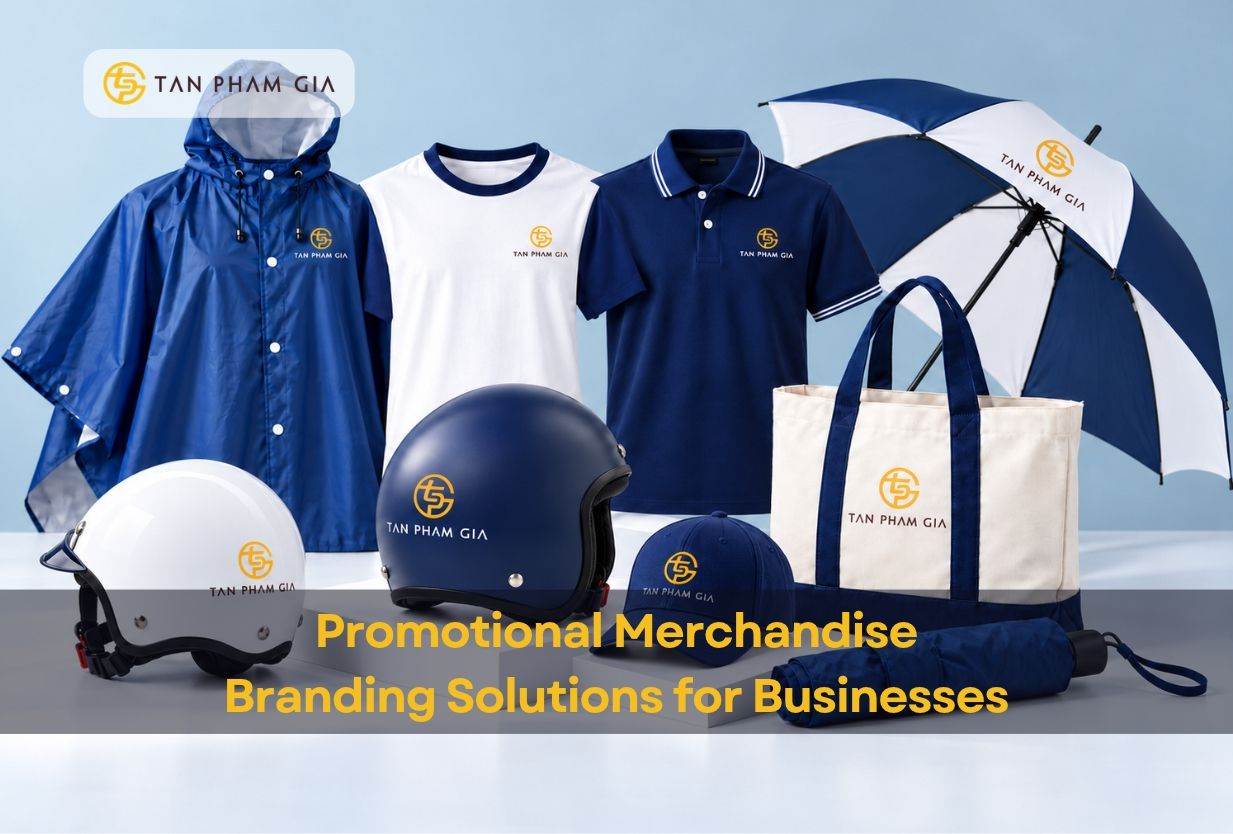
This guide focuses on four widely used categories: branded uniform T-shirts, branded raincoats, branded umbrellas, and custom-branded motorcycle helmets. Branded apparel is especially versatile because it can serve as both staff clothing and an event giveaway for attendees.
Tan Pham Gia Uniform explains how businesses can compare promotional merchandise according to recipients, campaign objectives, budget, branding requirements, and implementation schedules. This approach helps procurement and marketing teams build a more coordinated plan and manage repeat orders more effectively.
4 Popular Types of Promotional Merchandise for Customers, Partners, and Employees
Each category supports a different communication objective and recipient group. The following four promotional products are commonly considered for branded campaigns and bulk distribution.
Branded Uniform T-Shirts as Promotional Merchandise
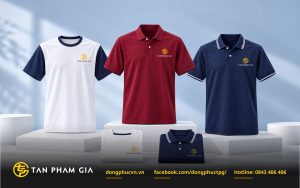
Logo-branded uniform T-shirts can function as both event uniforms and promotional merchandise. They create a coordinated appearance for employees, volunteers, distributors, and attendees during a campaign. Recipients can wear the shirts at the event and continue using them afterward, allowing the logo and campaign message to remain visible beyond the program itself.
This category is suitable for employees, collaborators, dealers, distributors, and event participants. When ordering branded uniform T-shirts in bulk, businesses should standardize the following details:
- Select a printing or embroidery technique that suits the fabric, logo artwork, placement, and intended brand presentation.
- Maintain consistent colors, garment fits, and construction details throughout the order.
- Approve and retain a master sample so future production runs can follow the same specifications.
The master sample should be finalized at the beginning of the campaign. It becomes the reference for color, fit, fabric, logo dimensions, and logo placement when the business needs additional garments later.
>>> Learn More: Uniform Polo Shirts Solutions | Corporate Uniforms
Branded Raincoats as Promotional Products
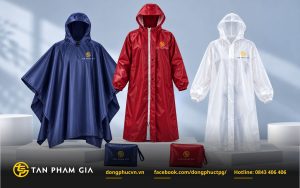
Branded raincoats are practical seasonal items for customer-appreciation programs, outdoor campaigns, and field-based teams. They are often considered when a business needs to distribute a useful product to many customers, event participants, or market-facing employees within a defined campaign period.
The logo area should be large and clear enough for the message to remain visible when the raincoat is worn outdoors. Compact packaging can also simplify storage, transportation, and high-volume distribution. Before ordering, businesses should confirm the raincoat construction, material, dimensions, logo technique, packing method, and expected conditions of use.
Branded Umbrellas as Corporate Merchandise
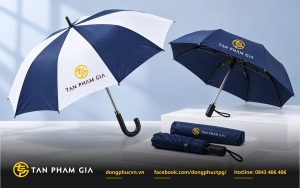
Branded umbrellas are useful corporate gifts that can keep a company visible in public settings. They may be appropriate for customers, partners, distributors, and dealers in appreciation programs, promotional campaigns, and channel-support activities.
An umbrella canopy provides a relatively large branding area for a logo or campaign message. Businesses should nevertheless review how the artwork appears when the umbrella is both open and closed. Canopy material, frame construction, handle design, logo size, print position, packaging, and delivery volume should be agreed upon before production.
Custom-Branded Motorcycle Helmets as Promotional Merchandise
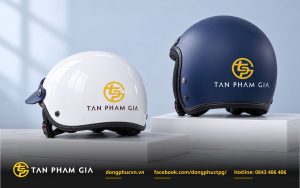
Custom-branded motorcycle helmets are connected to everyday mobility and can offer practical value to customers, employees, partners, and campaign participants. They may be considered for appreciation programs, internal initiatives, dealer campaigns, or promotions aimed at recipients who regularly travel by motorcycle.
Businesses should define the logo position, brand colors, helmet style, sizing, and intended recipient group before placing a bulk order. Safety requirements and certification can vary by product and destination market, so the buyer and supplier should confirm the applicable standards, supporting documentation, and quality requirements before production or distribution.
Quick Comparison of the 4 Promotional Merchandise Categories
6 Reasons Businesses Use Promotional Merchandise to Build Brand Visibility
Promotional merchandise gives businesses a physical way to extend brand identity to customers, partners, and employees. When products are selected and implemented carefully, they can support both short-term campaigns and longer-term relationship programs.
Increase Brand Recognition and Differentiation
A useful item carrying a company logo or campaign message places the brand within the recipient’s everyday environment. When competing businesses offer similar products or services, well-planned branded merchandise can create a more distinctive and memorable brand experience.
Maintain Brand Touchpoints With Customers and Partners
Products that recipients use repeatedly allow a brand to remain visible between transactions, meetings, or campaigns. This ongoing physical presence can supplement digital communication and direct sales contact without requiring the company to launch a new promotion each time.
Support Long-Term Business Relationships
A gift that is appropriate for the recipient and presented professionally demonstrates recognition of customers, dealers, distributors, and strategic partners. Product quality, usefulness, timing, and presentation all influence how the gesture is perceived.
Standardize Brand Presentation Across Large Programs
Consistent design, colors, logo dimensions, and logo placement help the business present one coordinated identity across locations and distribution rounds. This is especially important for organizations with multiple branches or campaigns that run in several phases.
Support Marketing Campaigns, Events, and Sales Programs
Promotional products can be incorporated into product launches, customer conferences, store openings, dealer programs, and sales promotions. The merchandise should be planned as part of the campaign rather than treated as a separate last-minute purchase. This makes quantities, recipient groups, distribution, and brand specifications easier to control.
Plan Communication Budgets More Efficiently
Items that recipients use more than once may continue generating brand exposure after the original campaign ends. Estimating the total required quantity early also helps procurement teams compare specifications, coordinate production, and avoid unnecessary variations between separate small orders.
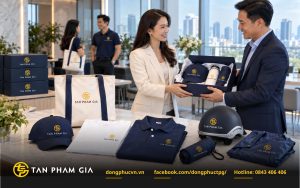
4 Occasions When Businesses Can Use Promotional Merchandise Effectively
Promotional merchandise is most useful when the product, recipient, and timing are aligned with a clear campaign objective. The following four occasions are common starting points for planning.
Events, Customer Conferences, and Grand Openings
Branded products can create a coordinated presence at the venue and give guests or partners a practical reminder of the event. Businesses may prepare different items for different attendee roles so distribution remains organized and appropriate.
- Typical recipients: Guests, partners, dealers, and distributors.
- Suggested products: Logo-branded T-shirts for staff or attendees, branded umbrellas, and branded raincoats.
Promotions and Product or Service Launches
An accompanying promotional item can help attract attention to a new campaign while supporting sales teams and distribution channels during implementation. The product and message should connect directly to the offer rather than functioning as an unrelated giveaway.
- Typical recipients: Target customers, distributors, and dealers.
- Suggested products: Branded raincoats, umbrellas, or motorcycle helmets in quantities planned for each campaign phase.
Customer and Partner Appreciation, Holidays, and Company Anniversaries
Branded merchandise can recognize long-term customers and strategic partners during important points in the business calendar. For higher-value relationships, businesses may segment products by recipient level while maintaining a common visual identity across the full program.
- Typical recipients: Loyal customers, strategic partners, and high-value accounts.
- Suggested products: Useful products customized to the brand identity, with quality and presentation appropriate for the relationship.
Internal Activities and Employee Engagement
Merchandise for team-building programs, company anniversaries, onboarding, or internal events can reinforce company culture and create a coordinated team appearance.
- Typical recipients: Employees, collaborators, and new hires.
- Suggested products: Logo-branded uniform T-shirts, branded raincoats, or custom-branded helmets selected according to employee needs.
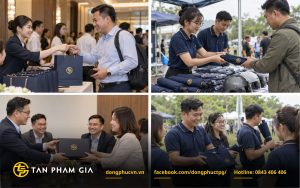
3 Ways to Personalize Promotional Merchandise Around a Corporate Identity
Personalization helps promotional merchandise express the company’s identity consistently across campaigns. For large-volume programs, businesses should standardize more than the logo alone.
Customize the Logo and Brand Placement
The logo should be reproduced at the correct proportions, in an appropriate position, and with a technique suited to the product material. Businesses should standardize:
- Logo dimensions and placement for each item, including T-shirts, raincoats, umbrellas, and helmets.
- Printing, embroidery, or other application methods according to the product surface.
- A repeatable placement specification so separate production runs remain consistent.
For apparel, the logo method should also account for fabric thickness, stretch, surface texture, and garment construction. Printing is generally better suited to highly elastic or lightweight performance fabrics when dense embroidery could affect drape or shape. More stable cotton, piqué, or woven fabrics may support either printing or embroidery depending on logo size and placement.
Coordinate Colors and Design Style With the Brand Guidelines
Product colors, graphic elements, and layout should follow the existing brand system so the merchandise becomes part of the company’s broader communication program. Key considerations include:
- Use approved brand color references consistently.
- Coordinate product colors with artwork and campaign messaging.
- Record approved color codes and specifications for future orders.
Physical materials can reproduce color differently from screens, paper, or other products. A physical sample or approved production reference is therefore important when color accuracy is critical.
Adapt the Message to Each Campaign
Different campaigns may require different slogans, program names, contact details, or QR codes. Businesses can segment the message for customers, partners, dealers, and employees while preserving common logo, color, and layout rules across the program.
QR codes and small text should be tested at the intended production size. The buyer should confirm that the code remains scannable and the message remains legible on the actual product surface.
>>> Learn More:
- Logo Printing Services for Corporate Promotional Merchandise | Tan Pham Gia Uniform
- Computerized Logo Embroidery Services for Corporate Uniform T-Shirts | Tan Pham Gia Uniform
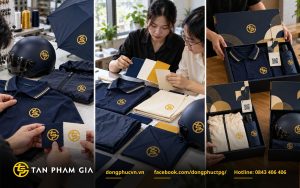
5 Criteria for Selecting Promotional Merchandise for a Business Campaign
Promotional products create more value when they match both the campaign objective and the needs of the recipient. Businesses should evaluate the following criteria before committing to bulk production.
Align the Product With the Campaign Objective and Message
The product should support a defined communication goal, such as brand awareness, partner appreciation, employee engagement, or sales-program support. Establishing the goal first makes it easier to compare products and ensure that the message on the merchandise is consistent with the campaign.
Select Products for the Intended Recipients
Customers, partners, dealers, distributors, and employees do not always have the same usage needs. Consider age range, occupation, location, daily habits, and the importance of the business relationship when segmenting merchandise.
Balance Budget and Deployment Quantity
Budget and quantity should be planned together. In addition to the total number of recipients, businesses should identify the variables that affect cost, including material, product construction, printing or embroidery, the number of logo positions, packaging, and production schedule.
Prioritize Practicality and Product Durability
Recipients are more likely to continue using a product that fits their actual needs. Buyers should review material quality, color durability, logo durability, construction, care requirements, and the conditions in which the product will be used.
Evaluate Brand Consistency and Reorder Requirements
For campaigns delivered in several rounds, the supplier should be able to work from an approved sample and documented specifications. Businesses should retain product references, color codes, artwork files, logo dimensions, packaging requirements, and acceptance criteria. Availability and reorder conditions should still be reconfirmed for each product category.
Summary of the 5 Selection Criteria
Send a design request: If your business already has brand guidelines, provide the logo files, campaign objective, product category, quantity, recipient group, and required delivery date. Tan Pham Gia Uniform can review the brief and recommend an appropriate branding approach.
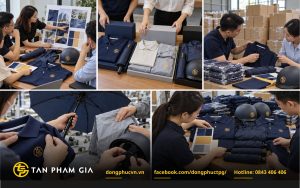
5 Factors That Affect the Cost of Promotional Merchandise
Promotional merchandise costs depend on the campaign, product specifications, production quantity, and delivery requirements. Understanding the following variables helps businesses prepare a realistic budget and request comparable quotations.
Product Category and Material
Uniform T-shirts, raincoats, umbrellas, and motorcycle helmets have different materials, components, manufacturing methods, and quality requirements. Buyers should define the level of quality appropriate for the campaign and recipient group instead of comparing products only by unit price.
Production Quantity
Quantity affects production planning, material purchasing, setup, and cost allocation. Businesses should estimate the full campaign requirement before dividing the project into separate orders. Minimum order quantities and price breaks should be confirmed for each product category rather than assumed to be identical.
Logo Technique and Number of Branding Positions
The branding method must be compatible with the product material and the desired appearance. Cost variables may include printing or embroidery technique, number of colors, artwork complexity, logo dimensions, and number of placement positions.
Design and Customization Requirements
A fully customized product may require more development and approval steps than an existing model with adjusted colors or branding. Buyers should account for concept development, revisions, color matching, campaign-specific messages, physical samples, and any custom packaging.
Production Schedule and Delivery Requirements
The required completion date should be established around the event or campaign schedule. Businesses should also confirm whether the order will be delivered in one shipment or several phases, how many receiving locations are involved, and whether sorting or recipient-specific packing is required.
Final pricing is based on the actual project brief. Send the product category, quantity, logo files, recipient group, delivery locations, and required date through the contact form or call +84 843 406 406 for a project-specific consultation.
Why Businesses Choose Tan Pham Gia Uniform for Promotional Merchandise Projects
Tan Pham Gia Uniform supports brand-aligned promotional merchandise programs, with its strongest established capabilities in custom uniform T-shirts and other corporate apparel. The following points are particularly relevant when a campaign includes branded apparel produced in bulk.
Experience With Brand-Aligned Corporate Apparel
More than 23 years in fashion and apparel give Tan Pham Gia Uniform a foundation in garment construction, color, fit, logo placement, and corporate identity requirements. The company reports experience with more than 500 corporate clients and over 30,000 products manufactured per month.
Businesses can review completed work on the Featured Projects and Clients page
Standardized Logo and Color Specifications
Large promotional programs require every item to follow the approved brand presentation. For apparel projects, Tan Pham Gia Uniform standardizes color references, logo dimensions, placement, garment specifications, and the approved sample before bulk production.
Quality checks are carried out through the production process to support consistency between the approved reference and the finished garments, including projects distributed in several delivery rounds.
Capacity for Bulk Apparel and Repeat Orders
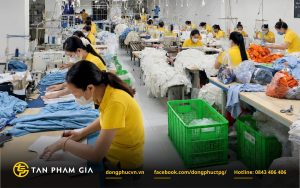
Tan Pham Gia Uniform operates an approximately 2,000 m² manufacturing facility with a stated production capacity of around 30,000 garments per month. This production foundation supports medium and large corporate apparel programs and supplementary orders planned around an approved specification.
The approved sample, fabric information, color reference, artwork, and technical specifications can be retained as the basis for future apparel orders. Product availability and lead time should still be reconfirmed when a new production run is scheduled.
Uniform T-Shirt Fit and Fabric Options
A promotional T-shirt creates value only when recipients are willing to wear it. Fabric selection, garment proportions, sizing, and fit therefore influence both wearer experience and long-term brand visibility.
Tan Pham Gia Uniform uses traditional draping and fit refinement on a dress form as part of garment development. This is a hands-on apparel development method, not digital 3D patternmaking.
The TPG Fabric Collection™ gives businesses options according to the intended use, working environment, wearer experience, and desired brand image. For example, AirFlex™ from the TPG AIRSOFT™ range can be considered for lightweight service and event uniforms. Other piqué or performance-knit options can be evaluated for team-building and corporate sports according to the actual activity and design requirements.
Businesses can also explore Tan Pham Gia Uniform’s custom uniform T-shirt solutions to find the right option for their intended use and brand identity goals.
Consultation From Campaign Brief to Delivery
Businesses can provide the product category, recipient group, branding requirements, quantity, budget range, and required delivery date for review. For uniform apparel, the process may include requirement assessment, fabric and style consultation, design development, physical sample approval, bulk production, quality control, packing, and delivery according to the agreed plan.
For raincoats, umbrellas, and motorcycle helmets, product-specific specifications, minimum order quantity, lead time, safety requirements, and delivery scope should be confirmed in the project quotation.
Frequently Asked Questions About Promotional Merchandise for Business
Questions 1. What Is the Minimum Order Quantity for Promotional Merchandise?
For custom uniform T-shirts, Tan Pham Gia Uniform accepts corporate orders from 100 units. Minimum order quantities for raincoats, umbrellas, motorcycle helmets, packaging, and other promotional products depend on the selected product and customization requirements. Confirm the applicable MOQ in the project quotation.
Questions 2. How Long Does a Promotional Merchandise Order Take?
For custom uniform apparel, planning may include approximately 10 days for sample development and 20–25 days for bulk production after approval. The actual schedule depends on garment style, fabric, quantity, revisions, and delivery requirements. Raincoats, umbrellas, and helmets require category-specific lead-time confirmation.
Questions 3. Can a Business Approve the Design and Sample Before Bulk Production?
Yes. For custom uniform apparel, the business can review the design and physical sample before bulk manufacturing. Sample approval helps standardize color, fit, fabric, construction, logo dimensions, and logo placement. The approval process for other promotional products should be defined with the supplier in advance.
Questions 4. How Should a Business Prepare the Size Breakdown for Promotional T-Shirts?
Prepare the required quantity by size and, when relevant, by men’s, women’s, or unisex fit. Recipient height and weight information can also support size planning. Tan Pham Gia Uniform can review the recipient profile and garment fit before the final size breakdown is approved.
Questions 5. Can Promotional Merchandise Be Packed and Delivered to Multiple Locations?
Packing and multi-location delivery can be planned according to the project. Provide the number of locations, quantity required at each location, packing method, labeling rules, recipient grouping, and delivery deadlines when requesting a quotation.
Questions 6. Does the Quotation Include Logo Application, Shipping, and VAT?
The quotation should clearly specify logo application, packaging, shipping, VAT, and any other project charges. Because delivery destinations and customization requirements vary, businesses should confirm each included item in the final quotation rather than assume one standard scope for every product category.
Questions 7. Can a Business Reorder Promotional Merchandise Using a Previous Design?
For uniform apparel, the approved sample and technical specifications can serve as references for repeat orders, helping maintain consistency in fabric, color, fit, construction, and logo placement. For other promotional products, the supplier should reconfirm material, model, component, and color availability before reproducing a previous order.
Promotional merchandise creates more value when the business selects the right product for the recipient and controls the brand specifications throughout production. Branded uniform T-shirts, raincoats, umbrellas, and motorcycle helmets each support different campaign objectives and require different technical and commercial considerations.
For apparel-led programs, Tan Pham Gia Uniform combines bulk garment manufacturing, sample approval, documented specifications, and quality control to support consistent brand presentation. Product-specific terms for other merchandise categories should be confirmed according to the actual campaign brief.
Plan Coordinated Promotional Merchandise for Your Business
Product models, materials, printing or embroidery techniques, minimum quantities, and service policies may change over time or vary by product category. Contact Tan Pham Gia Uniform at +84 843 406 406 or submit the contact form. Include the product category, quantity, recipient group, logo files, brand guidelines, delivery locations, and required date so the team can recommend an appropriate design, production, and delivery plan.