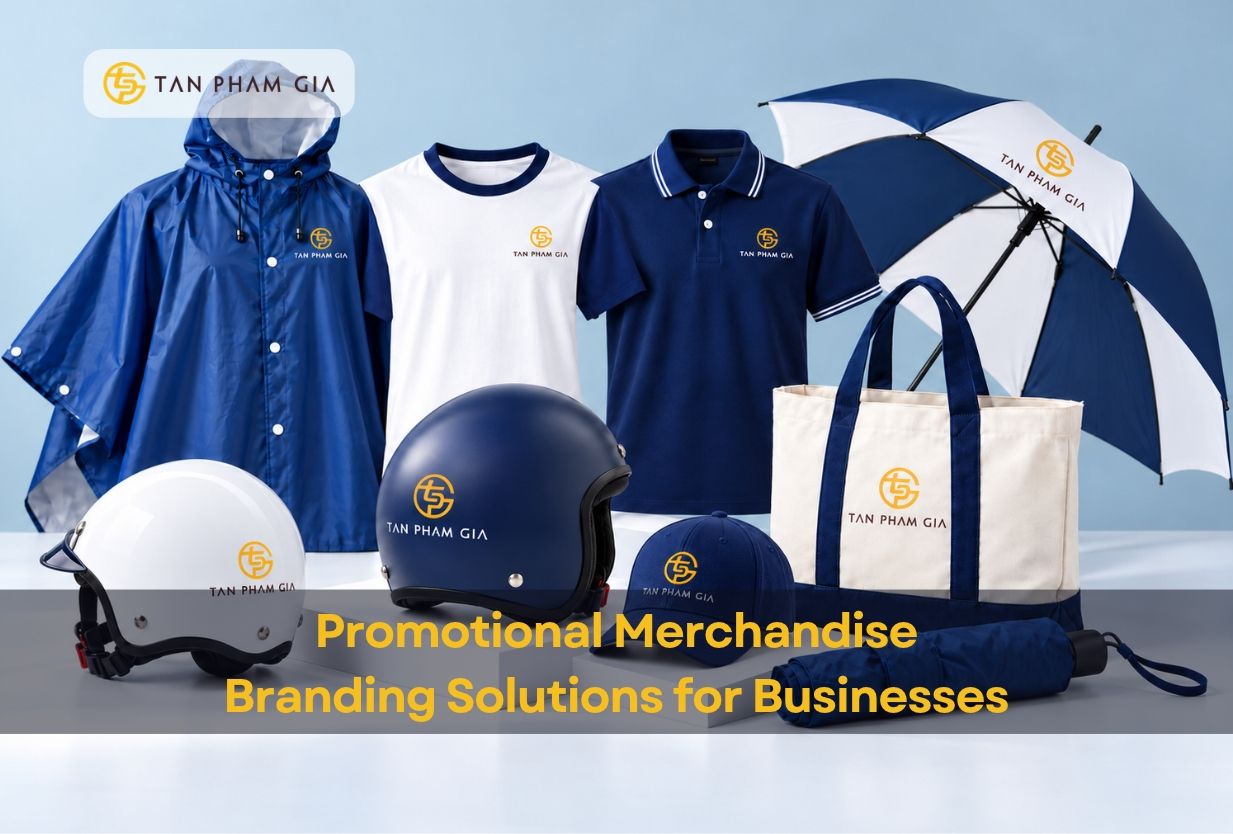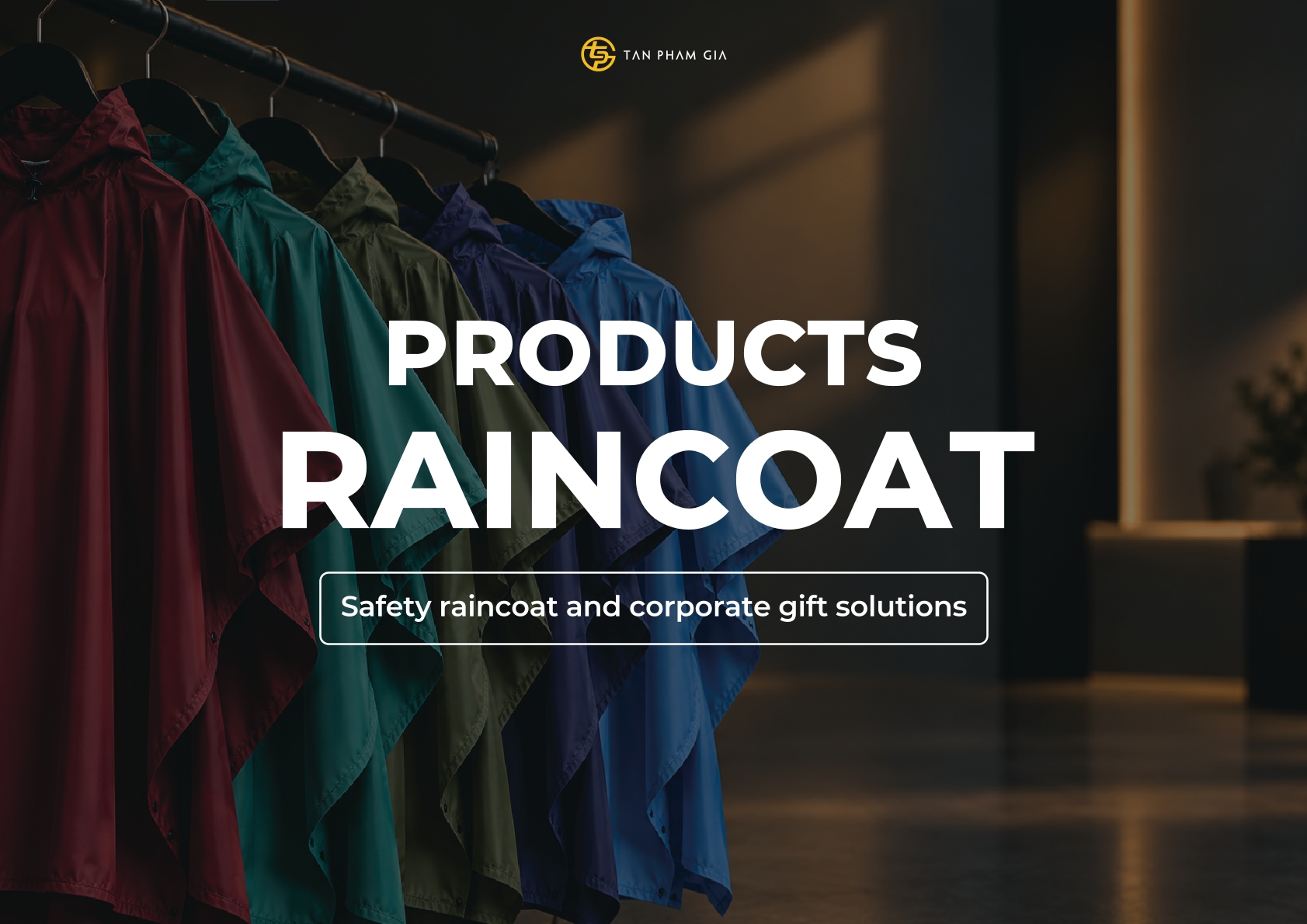
A promotional raincoat is a practical branded merchandise option for businesses looking to maintain brand visibility in customers’ daily lives, as well as among partners and employees. Unlike gifts designed for a single occasion, raincoats can be used repeatedly when traveling or working outdoors, particularly in regions with frequent rainfall.
By selecting suitable styles, colors, materials and logo placements, businesses can turn raincoats into useful products that reinforce brand recognition. However, an effective promotional raincoat project requires careful consideration of the intended use, recipient groups, waterproofing requirements, printing methods and production volume from the outset.
Tan Pham Gia Uniform focuses on advising businesses on promotional product solutions based on their actual requirements, from material and style selection to logo presentation and production planning for bulk orders.
Why Should Businesses Choose Raincoats as Promotional Gifts?
Raincoats do more than protect users from rain. They can also serve as practical brand communication products. When designed consistently and distributed to the right audiences, they combine everyday functionality with opportunities to increase brand exposure.
Increase Brand Visibility in Everyday Activities
Raincoats are commonly used in public spaces, on roads, in parking areas and during outdoor activities. When a logo and brand colors are positioned appropriately, the company’s identity can be displayed in various real-life situations.
To improve brand visibility, businesses should consider:
- Using colors that align with their corporate visual identity.
- Placing the logo in visible areas, such as the chest, back or main body.
- Selecting a logo size that is proportionate to the raincoat surface.
- Avoiding excessive information that may make the design look cluttered.
- Ensuring sufficient contrast between the printed design and the raincoat’s background color.v
A Practical Gift with Everyday Use
Compared with decorative souvenirs, raincoats can be used directly in daily activities and at work. This makes them a practical option for businesses selecting promotional gifts for customers, partners or employees as part of customer engagement programs.
A product that offers practical value is more likely to be used regularly, creating additional opportunities for recipients to recognize the brand.
Suitable for Various Marketing Campaigns and Events
Promotional raincoats can be used in a wide range of business activities:
- Corporate events: Gifts for attendees at conferences, seminars, exhibitions and grand-opening events.
- Customer appreciation programs: Gifts for anniversaries, customer care activities and relationship-building campaigns.
- Brand promotion campaigns: Branded merchandise featuring company logos, colors and corporate messages.
- Dealer and distribution networks: Consistent gifts for customers at retail locations or during brand activation programs.
- Internal activities: Rainwear for employees who frequently travel, work outdoors or participate in corporate events.
Easy to Standardize Across Large Organizations
For businesses with multiple branches, dealers or employee groups, raincoats can be produced according to a standardized design. Key specifications, including colors, logos, styles and packaging, can be agreed upon in advance to support consistent production and distribution.
Standardizing specifications from the beginning also helps businesses maintain consistency across production batches and reduce differences in color, dimensions and logo placement.
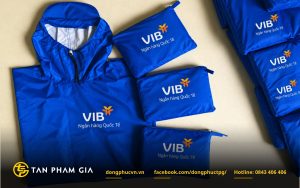
Popular Promotional Raincoat Styles for Businesses
Raincoat style directly affects user experience, available logo placement areas and production methods. Businesses should select a design based on the intended recipients, usage environment and project requirements.
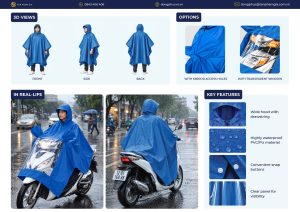
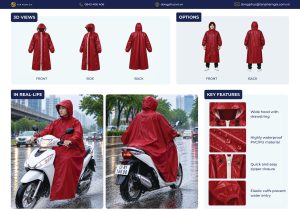
Poncho Raincoats
Poncho raincoats feature a loose-fitting design that covers the body and may provide additional coverage for part of a vehicle when worn. This is a common promotional raincoat style because of its relatively simple construction and suitability for bulk distribution.
Key characteristics:
- Loose-fitting design that is easy to put on and take off.
- Suitable for a wide range of users.
- Provides body-surface areas for displaying logos or brand messages.
- Can be made from PVC or waterproof fabric, depending on the product concept.
Poncho raincoats are suitable for event giveaways, mass promotional campaigns and programs that require broad product distribution.
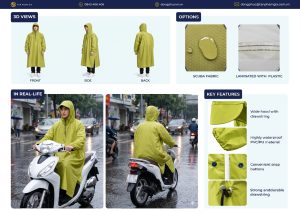
Pullover Long Raincoats
Pullover long raincoats feature an extended coat-style design that users put on through the neck opening. Compared with ponchos, this style offers a more fitted appearance and can be adjusted in terms of body length, width and hood design.
Key characteristics:
- A relatively streamlined design for outdoor movement.
- Front and back panels can be used to display logos.
- Requires careful consideration of neck width, sleeve dimensions and overall length.
- Can be made from PVC or waterproof fabric, depending on the construction.
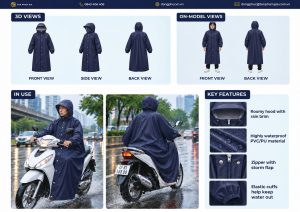
Zip-Up Long Raincoats
Zip-up long raincoats use a front zipper instead of a pullover opening. This design makes the garment more convenient to put on and take off.
Key characteristics:
- Similar in appearance to a long raincoat or outerwear jacket.
- Convenient to wear and remove.
- Can incorporate pockets, hoods and adjustable details.
- Suitable for promotional programs targeting customers or employees who need to use rainwear regularly.
When selecting this style, businesses should check zipper quality, stitching and waterproof seam treatment to help prevent water from entering the garment.
Manteau Raincoats
Manteau raincoats have a more complex construction and may include details such as pockets, belts and coat-style panels.
This style can be considered when businesses want a customized promotional product with more elaborate design features. However, its more complex construction requires careful planning of materials, sewing techniques and waterproofing solutions.
Materials to Consider for Promotional Raincoats
Material selection affects waterproof performance, durability, weight and wearing comfort. Businesses should not compare materials based only on thickness or appearance. Instead, they should evaluate the characteristics of each material group against the intended application.
PVC Film
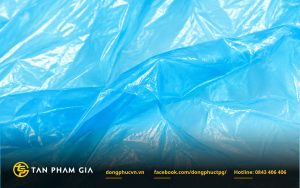
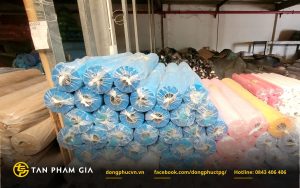
PVC (Polyvinyl Chloride) is a common material used in raincoat manufacturing. PVC film is available in different thicknesses, colors and surface finishes.
The following specifications were recorded during a material survey:
A commonly recorded PVC film width is approximately 1,37 m. In addition to thickness, businesses should consider color, surface finish and flexibility.
Common PVC surface types:
- Translucent film: Offers a semi-transparent appearance and is used in certain products such as sleeves and aprons.
- Smooth film: Has a simple surface finish and is suitable for designs that do not require embossed patterns.
- Embossed film: Can feature patterns such as stripes or honeycomb textures created using patterned rollers.
Another technical factor is PVC flexibility, which is related to the amount of plasticizer in the material. During the survey, P values were commonly discussed in the range of 30–40, while higher-quality materials may have values above 50. These figures should be interpreted according to the supplier’s specifications and should not be used as the sole criteria for evaluating raincoat quality.
When should businesses choose PVC?
PVC can be considered when a business needs raincoats with a construction suitable for high-frequency welding and designs compatible with this material. However, the appropriate film thickness and quality should be determined according to actual usage requirements. A thicker film is not automatically the most suitable option for every project.
Nylon or Polyester Fabric Coated with PVC
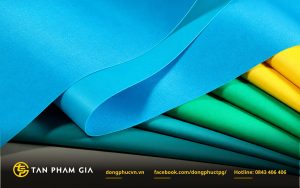
Waterproof fabric is commonly made from Nylon or Polyester fibers and may be coated with PVC to improve water resistance.
Unlike PVC film, fabric raincoats require cutting and sewing. This material group can therefore be considered when businesses need coat-style designs, multiple construction details or greater flexibility in product design.
Fabric groups recorded during the material survey:
Ripstop fabric features a distinctive grid-like woven structure. According to the survey information, it is lighter than standard waterproof fabric and has a higher raw-material cost. Actual specifications should be confirmed against physical samples and the supplier’s information at the time of ordering.
When should businesses choose waterproof fabric?
- The business needs long-coat or zip-up raincoat designs.
- The product requires multiple cut-and-sew components.
- Weight, fabric construction and style need to be considered together.
- The design requires multiple areas for displaying brand identity.
EVA Material
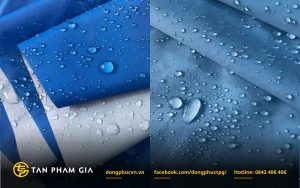
EVA is a material group known for its flexibility and elasticity. During the material survey, EVA was recorded as more flexible than PVC and generally more expensive.
It can be considered for certain product lines that require softness and flexibility, including rainwear and waterproof protective products. However, its suitability should be determined through actual samples, material thickness and intended usage requirements.
PE Material
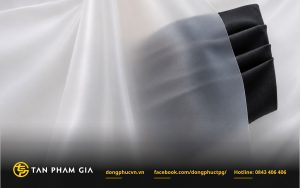
PE is a type of plastic that can be used in certain protective or waterproof products. However, according to the survey information, PE was not among the commonly used materials for the bulk raincoat production applications discussed during the meeting.
Businesses should request samples and detailed specifications from suppliers before making a selection, rather than evaluating the material based solely on its name.
Comparison of Common Raincoat Materials
This table provides general selection guidance. Material specifications and suitability should be verified using actual samples before the production plan is finalized.
Logo Printing Methods for Promotional Raincoats
Logo printing is an important step in turning raincoats into branded promotional products. However, not every printing method is suitable for every material. Businesses should identify the base material, order quantity, print colors and design complexity before selecting a printing technology.
PET Printing
PET printing uses a transfer film to apply an image to the product surface through a heat-transfer process. It may be considered when the design needs to reproduce detailed logos, text or graphics.
When applying PET printing to raincoats, compatibility between the transfer film, surface coating and heat-pressing conditions must be checked for each material. A single type of PET transfer film should not automatically be assumed to work with both PVC and PVC-coated fabric.
PET printing may be considered when:
- The logo contains multiple details.
- The design requires clear color reproduction.
- A printed sample can be checked before bulk production.
Screen Printing
Screen printing uses a prepared mesh screen to transfer ink onto the product surface. It can be considered for simple designs, limited color schemes and clearly defined print locations.
In the production process recorded during the material survey, screen printing could be performed on cut semi-finished components. This method may be suitable for certain lower-volume orders or designs that are not overly complex.
Potential advantages for production:
- Suitable for logos or designs with a limited number of colors.
- Can be applied to specific areas of the product.
- Allows businesses to inspect a printed sample before mass production.
Heat Transfer Printing
Heat transfer printing uses heat and pressure to transfer an image onto the material surface. According to the survey information, this method is used on raincoat fabric and can reproduce detailed graphics.
However, the results depend on the material type, surface coating and technical settings. Businesses should request a direct test on the actual fabric or PVC film intended for production.
How to Select the Right Printing Method
Important: The printing method must be selected based on actual material samples. Businesses should test adhesion, peeling, cracking and surface changes after folding or use before approving bulk production.
Promotional Raincoat Dimensions and How to Select Them
Raincoat dimensions directly affect coverage and wearing convenience. For corporate promotional orders, sizing should be determined according to the intended users, product style and usage requirements.
Unlike uniforms, which commonly use body-measurement size charts, raincoats are often designed based on overall product dimensions, such as body length, body width, sleeve length and hood dimensions.
Key Dimensions to Define
Selecting Dimensions by Raincoat Style:
- Poncho raincoats: Consider body length and width, as well as coverage when the user is sitting on a motorbike.
- Pullover long raincoats: Pay attention to body width, neck opening, sleeve dimensions and overall length.
- Zip-up long raincoats: Check body width, sleeve length, zipper position and fastening details.
- Manteau raincoats: Additional dimensions may be needed for pockets, belts and other construction details.
Why Should Businesses Approve a Sample Before Bulk Production?
Sample approval allows businesses to evaluate the actual width, length, coverage and wearing experience. It is also an opportunity to check logo placement, colors, materials and finishing details.
For orders distributed to multiple user groups, businesses should define the product dimensions or specifications in advance to reduce inconsistencies during distribution.
Promotional Raincoat Manufacturing Process
The manufacturing process differs between PVC-film raincoats and waterproof fabric raincoats. Businesses should understand these differences to assess technical requirements and establish appropriate quality-control procedures.
PVC Raincoat Manufacturing Process
PVC raincoats commonly use high-frequency welding to join material components. According to the material survey, the joining points are welded together rather than stitched with thread.
The basic process includes:
- PVC material selection: Define film thickness, color, surface finish and flexibility.
- Material cutting: Use cutting dies to create components according to the approved design.
- High-frequency welding: Join the material components at the required connection points.
- Logo printing: Apply the printing method that has been tested and approved on the sample.
- Finished-product inspection: Check welding points, surface condition, logo quality and waterproof performance.
- Packaging: Sort and pack products according to the order specifications.
Waterproof Fabric Raincoat Manufacturing Process
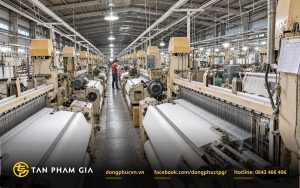
Waterproof fabric raincoats follow a different process because the material needs to be cut, sewn and treated at the seams to maintain waterproof performance.
The basic process includes:
- Fabric selection: Determine the Nylon or Polyester group, thickness, construction and coating.
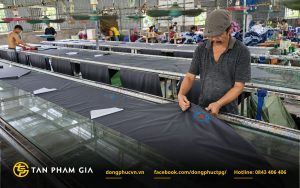
- Fabric spreading and cutting: Create components according to the pattern and product dimensions.
- Sewing and assembly: Join the body, sleeves, hood and other components.
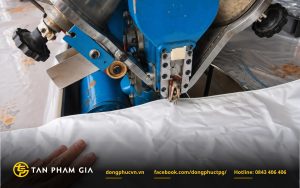
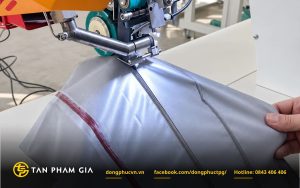
- Seam sealing: Apply specialized seam-sealing tape using suitable equipment to treat the stitched areas.
- Logo printing: Apply the printing technology approved during sample testing.
- Finished-product inspection: Check stitching, seam-sealing areas, logo quality and waterproof performance.
- Packaging: Complete the products according to the agreed delivery and packaging requirements.
Why Do Waterproof Fabric Raincoats Require Seam Sealing?
During sewing, the needle creates small holes in the fabric. If these areas are not treated, water may penetrate through the stitching. Therefore, waterproof fabric raincoats require specialized seam-sealing tape to help maintain waterproof performance.
PVC raincoats, on the other hand, use high-frequency welding at their joining points and do not follow the same seam-sealing process as fabric raincoats.
This is an important technical difference that businesses should check when evaluating raincoat samples. Even if the material surface is waterproof, untreated seams may still allow water to enter during use.
Quality Control Criteria for Corporate Promotional Raincoats
For bulk orders, quality should not be evaluated based on a single sample alone. It needs to be controlled throughout the process, from incoming materials to finished products.
Businesses should agree on inspection criteria before production begins.
Incoming Material Inspection
- Confirm that the material is the approved PVC or waterproof fabric type.
- Verify material thickness and specifications.
- Check color consistency between batches.
- Ensure that the surface has no defects affecting appearance or functionality.
- Compare actual materials against the agreed specifications and approved samples.
Logo and Print Inspection
- Confirm that the logo uses the correct version of the corporate identity.
- Check that the print position matches the approved sample.
- Verify that colors and image proportions are appropriate.
- Ensure that the printed surface has no smudges, misalignment or missing details.
- Check print adhesion after folding and handling the product.
Welding and Stitching Inspection
For PVC raincoats, inspect high-frequency welding points, particularly the body connections, hood and other structural joining areas.
For waterproof fabric raincoats, inspect stitching and seam-sealing areas. Sections such as the neck, hood, sleeves and sleeve-to-body connections require particular attention because they can affect waterproof performance.
Finished-Product and Packaging Inspection
- Confirm that the product style matches the approved sample.
- Check dimensional consistency against the agreed specifications.
- Ensure that zippers, buttons and accessories function properly, where applicable.
- Check that the product surface has no defects affecting usability.
- Confirm that packaging follows the required quantity and distribution specifications.
How to Choose Promotional Raincoats for Different Business Purposes
Not every promotional campaign requires the same type of raincoat. Identifying the intended purpose helps businesses select suitable materials, styles and branding methods.
Promotional Raincoats for Events
For conferences, exhibitions, grand openings and community programs, businesses often need products that can be distributed to many recipients within a short period.
Recommended considerations:
- Select styles that are easy to wear and suitable for a wide range of users.
- Choose colors that reflect the corporate brand identity.
- Ensure that the logo is large enough to be easily recognized.
- Use packaging that makes gift distribution convenient.
Promotional Raincoats for Customers and Business Partners
For customers and business partners, businesses should pay greater attention to material selection, finishing quality and the overall user experience.
In addition to the logo, companies can consider brand-color combinations, packaging design or product labels to create a more consistent presentation.
Promotional Raincoats for Dealer Networks
For businesses with dealer networks or multiple retail locations, raincoats can support local promotional activities.
Businesses should define quantities by region, primary colors, logo placement and distribution specifications in advance to avoid inconsistencies between production batches.
Information Businesses Should Prepare When Ordering Promotional Raincoats
To make consultation and order implementation more efficient, businesses should prepare the following information:
If technical specifications are not yet available, businesses can start by providing the intended use, estimated quantity and preferred product references. These details provide a basis for recommending suitable materials and design options.
Criteria for Selecting a Promotional Raincoat Supplier for Bulk Orders
For corporate orders, supplier selection should not be based solely on product images or quotations. Businesses should evaluate technical capabilities, consistency and the ability to manage the entire order.
- Ability to advise on materials based on actual requirements: Suppliers should be able to explain the differences between PVC film, PVC-coated waterproof fabric and other material groups. Recommendations should reflect the intended use, product style and waterproofing requirements rather than relying on a single material option.
- Availability of physical samples and clear specifications: Businesses should request samples to inspect:
- Material thickness and surface finish.
- Actual colors.
- Product style and dimensions.
- Welding or stitching quality.
- Logo placement and print quality.
- Suitable printing solutions for each material: An experienced supplier should determine the printing method based on the material surface, logo complexity and order quantity. Sample testing before mass production helps reduce risks related to print adhesion and quality.
- A defined quality-control process: Businesses should agree on acceptance criteria before production. These may include material, dimensions, colors, logo, welding or seam-sealing quality and packaging specifications.
- A clear production and delivery plan: For orders intended for events or marketing campaigns, delivery timing is an important factor. The supplier should confirm the schedule for sample approval, production, inspection and delivery.
Tan Pham Gia – Corporate Promotional Product Solutions
A corporate promotional product should combine practical functionality, brand presentation and actual implementation requirements. Therefore, the selection of style, material and printing method should be considered as a complete solution rather than as separate items.
Tan Pham Gia focuses on advising businesses on promotional product solutions based on specific project requirements, including:
- Intended use: Identify recipient groups and the purpose of the campaign.
- Order scale: Confirm total quantities, quantities by group and production batches.
- Design direction: Define colors, logos and corporate identity requirements.
- Material requirements: Select materials based on functionality, product style and finishing expectations.
- Supply planning: Confirm required delivery dates, destinations and packaging specifications.
For promotional raincoats with custom logos, businesses should provide product references or corporate identity files to make the consultation process more specific. Material specifications, printing technologies and production capabilities should be confirmed with the implementing supplier before the order is finalized.
Frequently Asked Questions About Promotional Raincoats
Questions 1. Should Businesses Choose PVC or Waterproof Fabric for Promotional Raincoats?
PVC is commonly considered for raincoat styles that are compatible with high-frequency welding. PVC-coated waterproof fabric is suitable for designs requiring cutting, sewing and seam sealing. Businesses should make their selection based on product style, intended use and actual samples.
Questions 2. Is 0.17 mm PVC Considered a Heavy-Duty Raincoat Material?
During the material survey, 0.17 mm PVC was recorded as a standard thickness for the heavy-duty raincoat line discussed. However, actual durability also depends on film quality, flexibility, welding techniques and usage conditions.
Questions 3. Why Do Waterproof Fabric Raincoats Require Seam Sealing?
The sewing process creates needle holes in the fabric. If these areas are not treated with specialized seam-sealing tape, water may penetrate through the stitching. Businesses should therefore inspect body connections, neck openings, hoods and sleeves.
Questions 4. Can Company Logos Be Printed on Raincoats?
Yes. Company logos can be placed on raincoats according to the design and material requirements. The printing method should be selected based on whether the surface is PVC or PVC-coated fabric. Businesses should approve a printed sample before proceeding with bulk production.
Questions 5. Should Businesses Choose Poncho or Long Raincoats as Promotional Gifts?
Poncho raincoats have a loose design, are easy to wear and are suitable for many distribution programs. Long raincoats feature a coat-style design and may be more suitable when businesses want a streamlined appearance or additional details such as a zipper. The decision should be based on the intended recipients and usage requirements.
Questions 6. What Information Is Required to Order Custom Printed Raincoats?
Businesses should prepare the estimated quantity, product style, preferred material, colors, logo file, printing positions, required delivery date and delivery location. If technical specifications are not available, they can provide product references for consultation.
Contact Tan Pham Gia for Corporate Promotional Raincoat Solutions
A suitable promotional raincoat solution should be developed by considering the intended use, recipient groups, material, product style and brand presentation. Confirming these specifications before implementation helps businesses manage product quality and supply planning more effectively.
Tan Pham Gia is ready to discuss your requirements and provide consultation on corporate promotional product solutions based on your project scale.
Businesses can prepare the following information before contacting us:
- Estimated raincoat quantity.
- Intended recipient groups.
- Preferred styles and materials.
- Logo or corporate identity guidelines.
- Required delivery date and location.
Contact Tan Pham Gia to discuss your corporate promotional product requirements
- Hotline / Zalo: 0843 406 406
- Email: dongphuc@tanphamgia.com.vn
- Contact Form: HERE