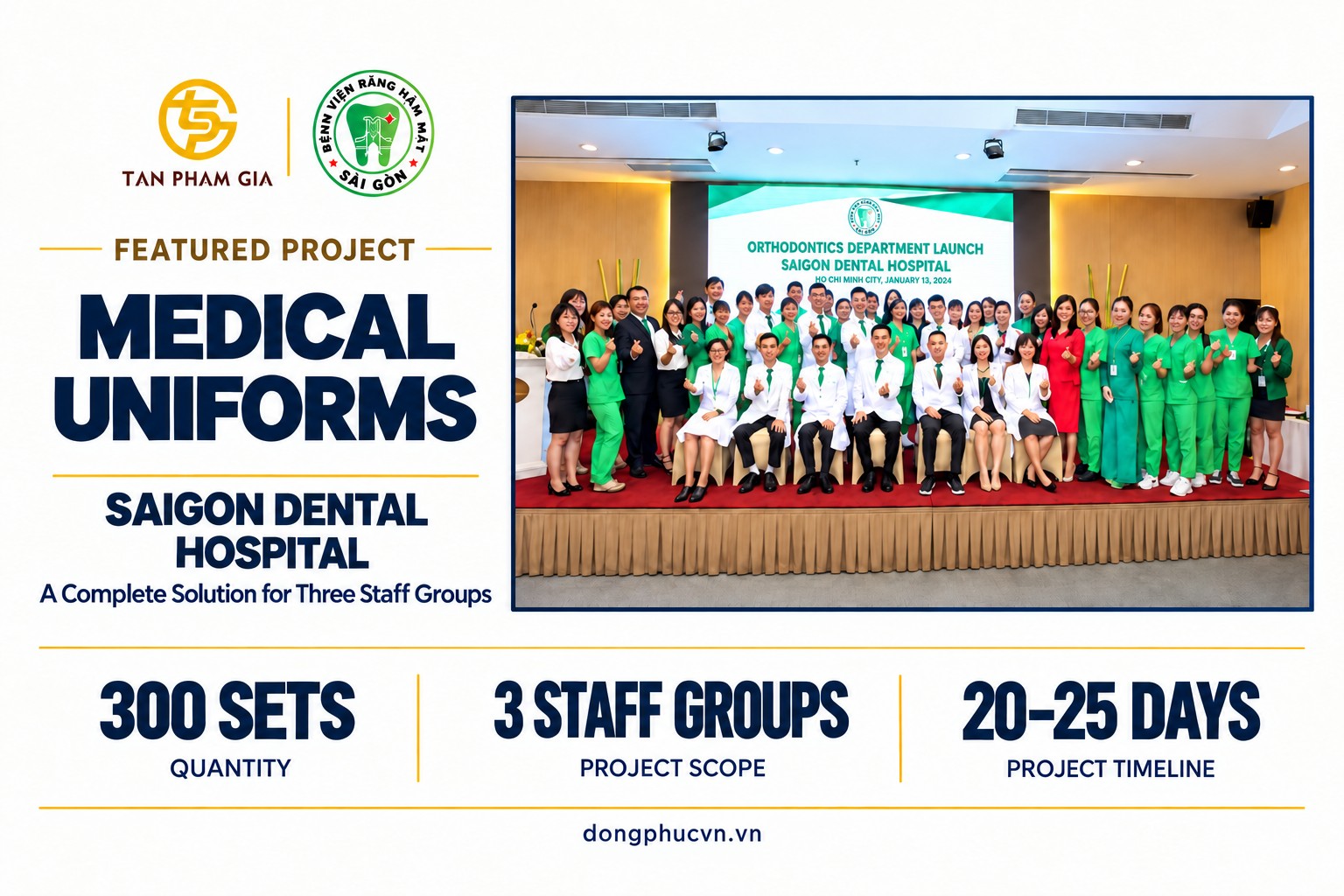
Saigon Dental Hospital needed a uniform solution that balanced cost, durability, and everyday comfort. Its previous uniforms had recurring problems: seams coming undone, excessive shrinkage, fading, and color bleeding during washing.
Tan Pham Gia Uniform worked with the hospital to develop three uniform designs for doctors and two nursing staff groups at its District 5 and District 10 locations. The project combined Vietnamese-made “kaki” fabric with revised construction specifications and fabric treatment before cutting.
A total of 300 uniform sets were delivered within 20–25 days of sample approval.
Following delivery, the client reported fewer problems with stitching, shrinkage, fading, and color bleeding compared with the previous uniforms. The relationship also led to further business introductions from the hospital.
Project Overview: Saigon Dental Hospital
Saigon Dental Hospital is a specialist dental hospital in Ho Chi Minh City, providing dental implants, orthodontics, dental crowns and prosthetic restorations, and general dentistry. The hospital received its operating license from Vietnam’s Ministry of Health in June 2020.
Its network has expanded across Ho Chi Minh City and other southern Vietnamese cities, including My Tho, Can Tho, and Bien Hoa. According to the hospital’s published announcement, the opening of its Bien Hoa location on July 28, 2024 marked its 18th branch.
The project with Tan Pham Gia Uniform covered three staff groups at the District 5 and District 10 locations. With 300 sets required, the hospital needed consistent staff apparel that met its budget, durability expectations, and comfort requirements.

The Background: Uniforms Needed to Look Consistent and Withstand Daily Use
Uniforms help create a coordinated appearance for hospital staff. To perform well in everyday use, they also need to provide comfort, allow movement, and remain serviceable after repeated laundering.
At Saigon Dental Hospital, feedback on the previous uniforms identified several areas for improvement. Seams came undone, garments shrank excessively, and fabric colors were unstable during washing.
These issues prompted the hospital to review both the materials and the manufacturing approach.
With two locations included in the project, the hospital also needed consistent specifications from the approved samples through to final delivery. This became the basis for Tan Pham Gia Uniform’s fabric recommendations and construction changes.
The Challenge: Balancing Cost, Durability, and Comfort
Finding an Option That Met the Budget
The client was dissatisfied with the previous supplier’s pricing and wanted an alternative that better matched its budget while meeting the demands of daily hospital work.
Tan Pham Gia Uniform prepared a pricing proposal based on the material, quantity, and production requirements. The client accepted the proposal, allowing the project to proceed to sampling and production.
Addressing Stitching and Fabric Performance
According to the client, the previous uniforms had experienced:
- Seams coming undone.
- Excessive shrinkage after wear and washing.
- Fading and color bleeding during laundering.
- Durability that fell short of long-term expectations.
Tan Pham Gia Uniform reviewed the fabric, sewing thread, seam construction, and fabric preparation process together.
Each problem required a corresponding measure. Thread selection and sewing adjustments addressed seam strength. Fabric treatment before cutting was intended to limit shrinkage, while material selection addressed concerns about fading and color bleeding.
Assessing Comfort During Extended Wear
Comfort was another priority alongside cost and durability.
Uniforms needed to suit the routine tasks of the three staff groups. Feedback from sample wearers helped the hospital assess comfort, ease of movement, and wrinkle behavior before approving bulk production.
How Tan Pham Gia Uniform Developed the Solution
Three Medical Uniform Designs for Three Staff Groups
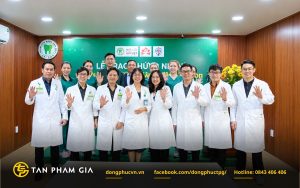
Tan Pham Gia Uniform developed three designs for doctors, nurses, and nursing staff.
Separate designs allowed the hospital to assess the needs of each group before production. The approved samples then established the reference for the full order.
The final allocation included:
- 200 sets for nurses.
- 60 sets for nursing staff.
- 40 sets for doctors.
Together, these made up the complete 300-set order.
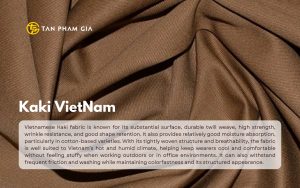
Selecting Vietnamese-Made “Kaki” Fabric
The material was selected around the hospital’s requirements and feedback from sample wearers.
Employees described the sample fabric as comfortable and less prone to wrinkling. Reviewing actual garments gave the client a direct basis for assessing the proposed material before committing to the full order.
Fabric selection also formed part of the response to earlier concerns about fading and color bleeding.
The project’s material assessment focused on sample-wear feedback and the client’s observations after delivery.
Standardizing Construction to Improve Durability
Tan Pham Gia Uniform changed the sewing thread, reinforced stress points, and revised seam construction.
These adjustments were intended to strengthen areas regularly affected by movement during wear.
The fabric was also treated before cutting to help limit shrinkage and support dimensional consistency. Construction specifications were established through the approved samples and applied during bulk production.
This combined approach addressed both material performance and garment construction.
The Implementation Process: Quality Control at Each Stage
Step 1: Review Requirements and Previous Uniform Issues
Tan Pham Gia Uniform gathered requirements for the two locations, three staff groups, and total quantity.
Feedback on the previous uniforms became part of the project brief. The priorities were acceptable pricing, stronger stitching, reduced shrinkage, and improved color stability.
Step 2: Recommend Materials and Construction Changes
The team proposed Vietnamese-made “kaki” fabric alongside changes to thread selection, seam construction, stress-point reinforcement, and fabric treatment before cutting.
The client accepted the pricing proposal. The material and manufacturing approach then moved into sample development for review.
Step 3: Develop and Produce Samples
Three designs were developed for doctors, nurses, and nursing staff.
Physical samples allowed the hospital to inspect the garments and evaluate wearing comfort. They also provided an opportunity to compare the proposed solution with the original requirements.
Step 4: Obtain Sample Approval
The client approved the samples as the production reference.
This established the agreed material and construction specifications. Sample approval also marked the start of the project’s actual 20–25-day production and delivery period.
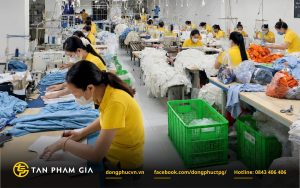
Step 5: Manufacture 300 Uniform Sets
Production followed the approved designs and specifications.
Fabric preparation, thread selection, revised seams, and reinforcement were incorporated into the manufacturing process. Shared sample references helped control variation across the order.
Step 6: Inspect and Deliver the Completed Order
Before delivery, inspection covered:
- Garment measurements and fit.
- Stitching and construction.
- Color and branding details against the approved samples.
- Quantities.
- Finished garment condition.
All 300 uniform sets were delivered for the District 5 and District 10 locations within 20–25 days of sample approval.
Project Results: Improved Uniform Performance and Client Trust
300 Uniform Sets Across Three Designs
The completed project provided 300 sets for doctors, nurses, and nursing staff.
Producing the three designs within one order allowed the hospital to coordinate its uniform requirements across both locations.
Client-Reported Improvements in Stitching, Shrinkage, and Color Retention
Following delivery, the client reported fewer instances of seams coming undone, shrinkage, fading, and color bleeding compared with the previous uniforms.
This feedback supported the combined approach of revising thread and seam specifications, reinforcing stress points, treating fabric before cutting, and selecting an appropriate material.
The reported improvements reflect the client’s observations after delivery.
Delivery Within 20–25 Days
The full order was delivered within 20–25 days of sample approval.
This was the actual completion timeframe for the project. A clearly defined approval date provided a shared starting point for production and delivery coordination.
Further Business Introductions
Following the project, Saigon Dental Hospital directly introduced Tan Pham Gia Uniform to other organizations, including:
- Sai Gon Eye Hospital.
- Parkway Dental.
- Betrimex.
- Agris.
According to the project account, these introductions developed into contracts and subsequent projects.
The referrals demonstrated the client’s confidence in the relationship and created further opportunities for collaboration.
Lessons from the Project: Choose the Right Fabric and Standardize Garment Construction from the Start
Select Materials Around Actual Use
Fabric selection should account for the working environment, laundering frequency, and wearer experience.
In this project, physical samples provided direct feedback on comfort and wrinkle behavior before bulk production.
The earlier problems with fading and color bleeding also showed why material selection needed to be considered alongside the budget. An appropriate solution must address both purchasing costs and everyday use.
Define Construction Specifications in the First Approved Sample
Stitching problems require specific manufacturing changes.
Agreeing on thread selection, seam construction, and reinforcement positions during sampling provides a clear reference for the full order.
Fabric treatment before cutting should also be included in the production plan when shrinkage is a concern. Defining these measures early gives the manufacturer a consistent basis for production.
Monitor Quality Throughout Manufacturing
For a 300-set order, quality control needs to cover fabric preparation, sewing, and inspection before delivery.
Reviewing each stage helps identify variation early and reduces the risk of the same issue appearing across multiple garments.
The project illustrates how material selection, construction specifications, and production control work together to improve uniform quality.
Tan Pham Gia Uniform: Custom Medical Uniform Manufacturing
The Saigon Dental Hospital project demonstrates Tan Pham Gia Uniform’s approach to reviewing client requirements, recommending materials and construction changes, and producing coordinated uniforms for several staff groups within one order.
Tan Pham Gia Uniform accepts custom medical uniform orders starting from 100 sets, supporting hospitals, clinics, and businesses with:
- Material recommendations based on the working environment and intended use.
- Role-specific uniform design.
- Physical samples before bulk production.
- Agreed construction specifications and quality control.
- Coordinated manufacturing for the required quantities.
Planning Medical Uniforms for Your Organization? Contact Tan Pham Gia Uniform to discuss materials, designs, and pricing based on your requirements.
- Hotline/Zalo: 0843 406 406
- Email: dongphuc@tanphamgia.com.vn
- Submit your requirements: Contact Tan Pham Gia Uniform
- Further resources: Tan Pham Gia Uniform Resources