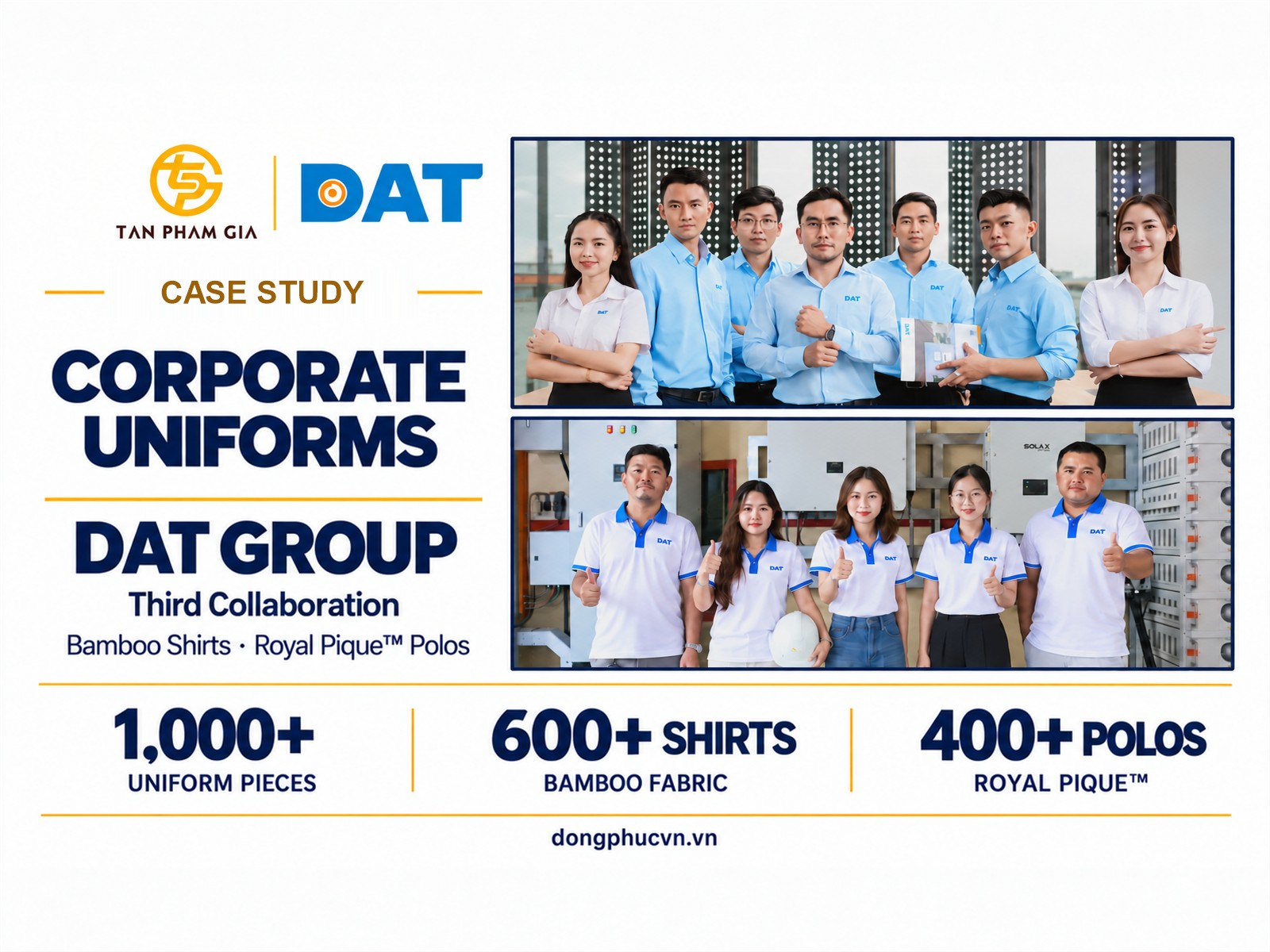
The DAT Group uniform project is a representative corporate uniform case study showing why a uniform program should begin with actual working conditions rather than a single garment design. DAT Group employees work in offices, meet with business partners, travel to project sites, and participate in internal activities. As a result, each employee group has different requirements for fabric, fit, durability, and ease of movement. This is a common consideration for businesses planning uniforms for teams with multiple job functions.
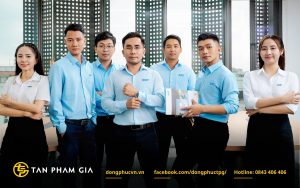
For the third collaboration, Tan Pham Gia Uniform completed more than 1,000 garments for DAT Group, including Bamboo button-up shirts and Royal Pique™ polo shirts. Each product line was selected for the working environment of its intended wearer group. The collar, placket, and cuffs were also refined based on feedback from the previous two uniform programs. This case study explains that approach and provides a practical reference for businesses developing uniforms for different employee groups.
Project Overview: DAT Group Joint Stock Company – DAT Group
DAT Group operates in industrial automation and renewable energy and has more than 20 years of experience. This uniform project, completed by Tan Pham Gia Uniform, marked the third collaboration between the two companies. The project included more than 1,000 garments for office employees and engineers across DAT Group’s organization.
DAT Group Employees Work in Different Environments
DAT Group employees do not work exclusively in an office. They also meet with business partners, travel to project sites, and take part in internal activities. Each setting creates different requirements for comfort, appearance, and mobility. The uniform program therefore needed to address the needs of each employee group instead of applying one standard garment to the entire company.
The Third Collaboration Required Further Refinement
The project did not begin with an entirely new design. Instead, it built on the experience gained from the previous two programs. Feedback collected during actual use gave Tan Pham Gia Uniform a basis for refining the fabric selection and design details. This approach helped the third program align more closely with employees’ practical needs instead of simply repeating an earlier design.
Wearer Experience Was Part of the Uniform Strategy
In addition to representing the brand, a uniform must suit the number of hours it is worn, the nature of the work, and the wearer’s level of movement. A garment may look appropriate at first but provide limited value if it becomes uncomfortable after several hours. For this reason, wearer experience was considered from the beginning of the DAT Group uniform program.
Context: Uniforms for Multiple Working Environments
Corporate uniforms need to support different working environments because each employee group has distinct practical requirements. At DAT Group, the differences were clear among office employees, partner-facing personnel, engineers visiting project sites, and team members participating in weekend activities. The following four considerations shaped the proposed solution.
One Uniform Is Unlikely to Suit Every Use Case
Office employees, partner-facing personnel, and engineers traveling to project sites have different needs from employees wearing uniforms during internal weekend activities. Each group has its own wearing duration, activity level, and garment-care routine. Using the same fabric and garment style for every role would make it difficult to address all of these conditions effectively.
Balancing Comfort with a Professional Appearance
The button-up shirt needed to remain comfortable through extended wear while maintaining a polished appearance in the office, during partner meetings, and on visits to project sites. Balancing these priorities influenced the fabric and fit selected for employees who would wear the shirts.
Prioritizing Durability and Easy Care for Polo Shirts
The polo shirts would be worn frequently during internal activities, so durability, shape retention, and ease of care were key priorities. With regular use, these characteristics directly affect the wearer’s experience over time. The selection criteria for the polo shirts therefore differed from those used for the button-up shirts.
Improving the Design Through Wearer Feedback
The collar, placket, and cuffs needed refinement to better support DAT Group’s modern image and the movement requirements of its technical team. Although these details may appear small, they are noticeable during daily wear. Feedback from actual users therefore became an important source of information for design improvements.
The Challenge: Maintaining a Consistent Image Across Employee Groups
The central challenge was to maintain a consistent company image while meeting the needs of different employee groups. The following three questions summarize what needed to be resolved before the fabrics and designs could be finalized. Framing the project this way kept the selection process focused on practical use rather than existing garment templates alone.
How Can Different Garments Still Present One Brand Identity?
The two product lines used different fabrics and garment styles, but both still needed to feel like part of the same DAT Group uniform system. This required coordination across color placement, logo position, and the overall appearance of employees when different teams were seen together. Without this consistency, separate product lines could fragment the company’s visual identity.
How Should Fabrics Be Selected for Each Employee Group?
Fabric selection needed to reflect the working environment, wearing duration, and care requirements of each employee group. This role-based approach gave employees garments suited to their daily work. It was also the reason the project did not apply one fabric to the entire workforce.
How Can Wearer Feedback Become a Design Decision?
Feedback from the previous two programs needed to be translated into specific refinements to the collar, placket, and cuffs. Recording and applying this feedback helped the next garments align more closely with wearers’ practical needs. This was the point where user experience became a concrete design decision.
How Tan Pham Gia Uniform Addressed DAT Group’s Uniform Requirements
Tan Pham Gia Uniform divided the program into two product lines based on the intended working environment. Each line had its own fabric and performance priorities, while DAT Group’s colors and brand identity brought the products together as one coordinated uniform system. The collar, placket, and cuffs were then refined using feedback from the previous programs.
Two Product Lines for Two Sets of Working Conditions
- Button-up uniform shirts: For office employees, partner meetings, and visits to project sites.
- Polo uniform shirts: For internal weekend activities and other frequent-use occasions.
This use-based approach avoided applying one fabric to all employees. It gave each group a garment suited to its typical wearing duration and work requirements while keeping both product lines within the same corporate uniform system.
Bamboo Fabric for More Than 600 Button-Up Shirts
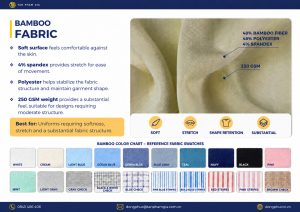
Bamboo fabric was selected for more than 600 button-up shirts because it met the project’s priorities for wearer comfort and a polished appearance. Office employees, partner-facing personnel, and engineers traveling to project sites all needed a shirt that would feel comfortable during extended wear while maintaining a professional look. The specific fabric composition is included in the comparison table below.
The Bamboo fabric was selected to provide:
- A soft, breathable feel.
- Comfort during extended working hours.
- Shape retention and reduced wrinkling during use.
- Moderate stretch for work that involves regular movement.
- Suitability for office work, partner meetings, and travel to project sites.
Royal Pique™ Fabric for More Than 400 Polo Shirts
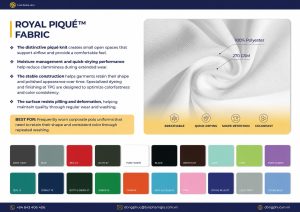
Royal Pique™ was selected for more than 400 polo shirts, with durability and ease of care prioritized for frequent wear. The polos were primarily intended for internal and weekend activities, where employees needed a garment that could retain its shape and remain straightforward to care for. The fabric specifications are included in the comparison table below.
The Royal Pique™ fabric was selected to provide:
- Durability for frequent use.
- Shape retention.
- Easy garment care.
- Suitability for internal activities and weekend wear.
Quick Comparison of the Two Fabrics
The two fabrics were selected using different criteria. The table below provides a quick comparison of quantities, composition, weight, working environments, and priorities for each product line.
Note: GSM means grams per square meter and indicates fabric weight. In general, a higher GSM represents a heavier and often thicker fabric.
Refining the Collar for a More Balanced Appearance
The collar was made more compact based on feedback from the previous programs, creating a more modern and balanced appearance. This refinement helped the shirt look neater during daily wear. Although it was a relatively small adjustment, it influenced the overall appearance of the team.
Improving the Placket for Better Structure
The placket was refined to give the front of the shirt more structure and create a more polished appearance. This detail helped the garment maintain a consistent look while employees moved and worked throughout the day. The adjustment was based on feedback gathered from earlier programs.
Adjusting the Cuffs for the Technical Team
The cuffs were modified to better suit the work and movement requirements of DAT Group’s engineers. Because the technical team moves differently throughout the workday, the wrist area needed to be more practical during wear. This refinement illustrates why uniform design should begin with an understanding of how employees perform their jobs.
Coordinating DAT Group’s Colors and Brand Identity
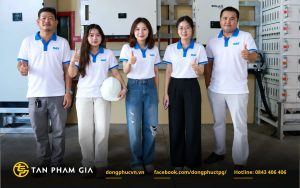
The polo shirt design included:
- A white body.
- Blue collar and sleeve cuffs with white stripes.
- An embroidered DAT logo on the left chest.
Blue, white, and orange maintained DAT Group’s brand identity across the uniform program. Coordinated color placement helped the button-up shirts and polo shirts remain part of one visual system despite their different fabrics and garment styles.
Implementation Process: From Wearer Feedback to More Than 1,000 Garments
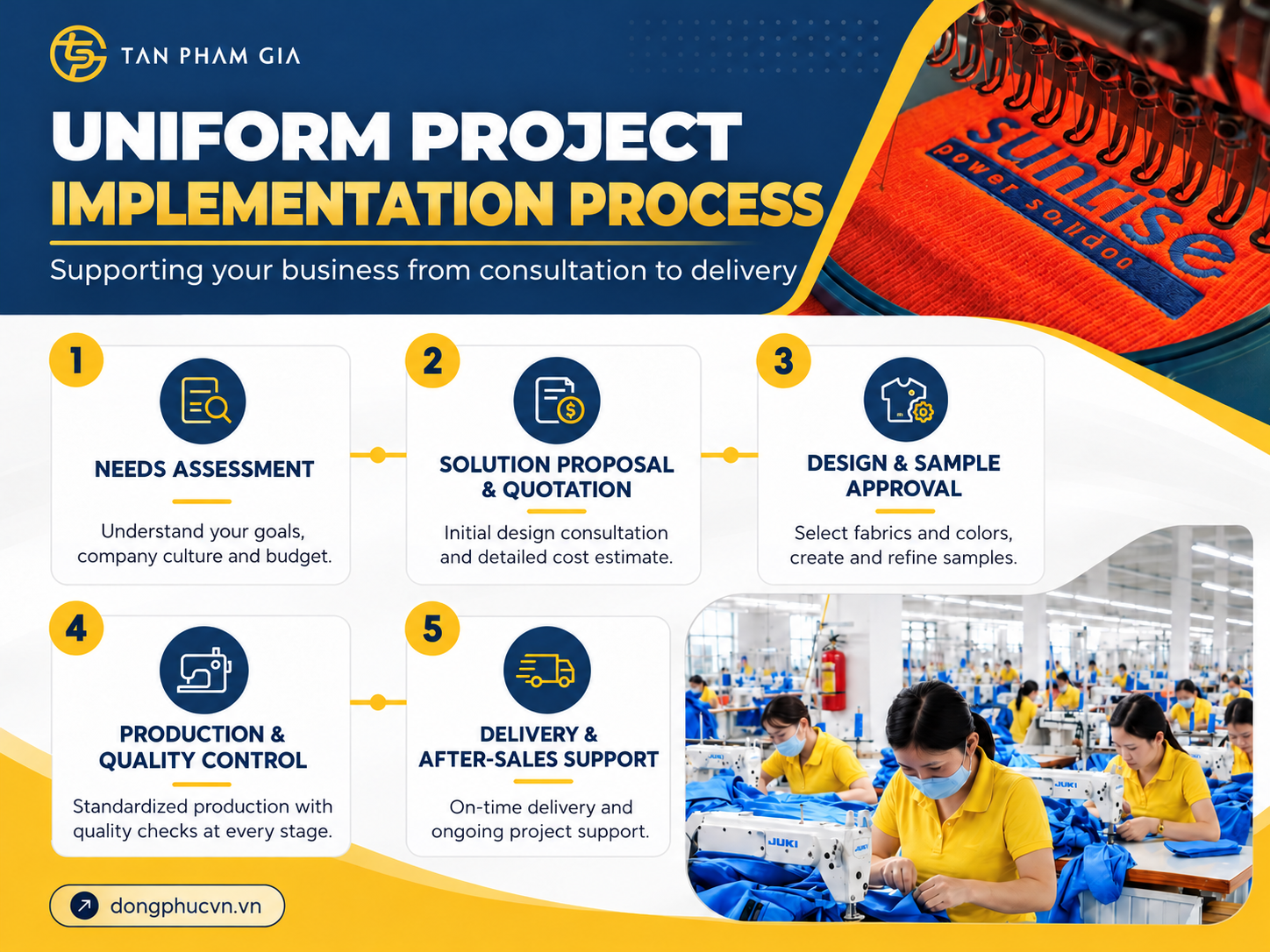
The project followed five stages, beginning with feedback from the previous collaborations and ending with the production of more than 1,000 garments. The process placed employee groups and working environments ahead of fabric recommendations. This gave each material and design decision a basis in actual use.
- Consolidate feedback from the previous uniform programs.
- Analyze employee groups and their respective working environments.
- Recommend Bamboo fabric for the button-up shirts and Royal Pique™ for the polo shirts.
- Refine the collar, placket, and cuffs.
- Produce and deliver more than 1,000 garments for employees and engineers across DAT Group’s organization.
How Long Did the Project Take?
According to the project information, sample development took 10 days, followed by a production period of 20–25 days. Sample development covered the completion of the pre-production sample, while the production stage covered the full order of more than 1,000 button-up shirts and polo shirts. Separating these stages helps businesses understand the milestones that should be considered when planning a multi-team uniform program.
Actual lead times may vary depending on order quantity and design requirements. Businesses should discuss their plans with Tan Pham Gia Uniform early so that an appropriate project schedule can be developed.
Results: Two Uniform Lines for Different Working Environments
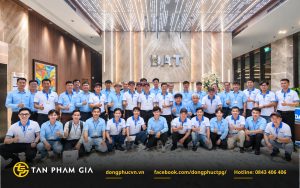
The project delivered more than 1,000 garments for DAT Group’s office employees and engineers across the organization. The result included two product lines, each serving a specific set of needs, along with design details refined through actual wearer feedback.
More Than 1,000 Uniform Garments Completed
- More than 600 button-up shirts.
- More than 400 polo shirts.
- Garments for office employees and engineers across DAT Group’s organization.
Each Product Line Addressed a Specific Need
The button-up shirts prioritized wearer comfort, a professional appearance, and flexibility during travel. The polo shirts prioritized durability, shape retention, and convenient garment care. This division gave each employee group a product connected to its working environment instead of using one solution for every role.
Design Details Improved Through Actual Use
The value of the third collaboration was not limited to the number of garments produced. The collar, placket, and cuffs were further refined using feedback from wearers, demonstrating an ongoing improvement process across each uniform program. This value came from practical use as well as the garments’ appearance.
Continuing the Partnership Between the Two Companies
The third collaboration shows how the uniform program developed as an ongoing cycle: implementation, wearer feedback, and refinement for the next order. This approach gave both companies practical information to support future decisions. The partnership therefore continued by building on earlier programs rather than restarting the process each time.
Lessons from the Project: Uniforms Should Begin with Their Use Context
The primary lesson from this corporate uniform case study is that a business should begin with how employees work each day, not simply with an available garment design. The following four principles reflect how Tan Pham Gia Uniform and DAT Group approached the program over three collaborations. They can also help other businesses plan uniforms for multiple employee groups.
One Fabric Should Not Automatically Be Applied to Every Role
Fabric should be selected according to wearing duration, movement level, working environment, and care requirements. Each factor affects the wearer’s experience differently. A single fabric is therefore unlikely to meet every condition equally well across all employee groups.
Post-Use Feedback Provides a Basis for Improvement
Small refinements to the collar, placket, and cuffs can make a garment more appropriate for the wearer’s appearance and daily activities. Issues with these details may only become apparent after employees have worn the garments over time. Post-use feedback is therefore a valuable source of information for the next uniform program.
Brand Identity and Employee Experience Should Work Together
An effective uniform does more than display a logo. It should also help employees feel comfortable and move appropriately in their actual working environment. When these priorities work together, the uniform can maintain the company’s brand image while supporting employees’ daily responsibilities.
Long-Term Uniform Programs Need Continuity
Retaining feedback, approved designs, and fabric selections from previous orders gives businesses a clear foundation for future improvements. This is especially important for uniform programs involving repeat orders. Continuity helps each new implementation remain more consistent and makes decisions easier to support with practical information.
Tan Pham Gia Uniform: Custom Corporate Uniform Solutions for Businesses
Tan Pham Gia Uniform provides corporate uniform solutions covering design, production, and finishing based on each business’s requirements. With more than 23 years of experience in the fashion and garment industry, Tan Pham Gia Uniform has worked with more than 500 businesses. As demonstrated by the DAT Group project, its approach focuses on five areas:
- Analyzing the needs of each employee group.
- Recommending fabrics based on the working environment.
- Developing multiple product lines within one coordinated uniform system.
- Refining garment designs using feedback from actual wear.
- Producing and implementing uniform programs for businesses with multiple job functions.
For businesses with both office employees and technical teams, this approach provides a clearer basis for fabric selection, design decisions, and implementation planning from the beginning. Each decision reflects the intended working environment and actual wearer feedback rather than applying one standard garment to every employee.
Is your business planning uniforms for both office employees and technical teams? Provide the required quantities, employee groups, working environments, brand colors, and expected timeline so Tan Pham Gia Uniform can recommend suitable fabrics, designs, and an implementation plan.