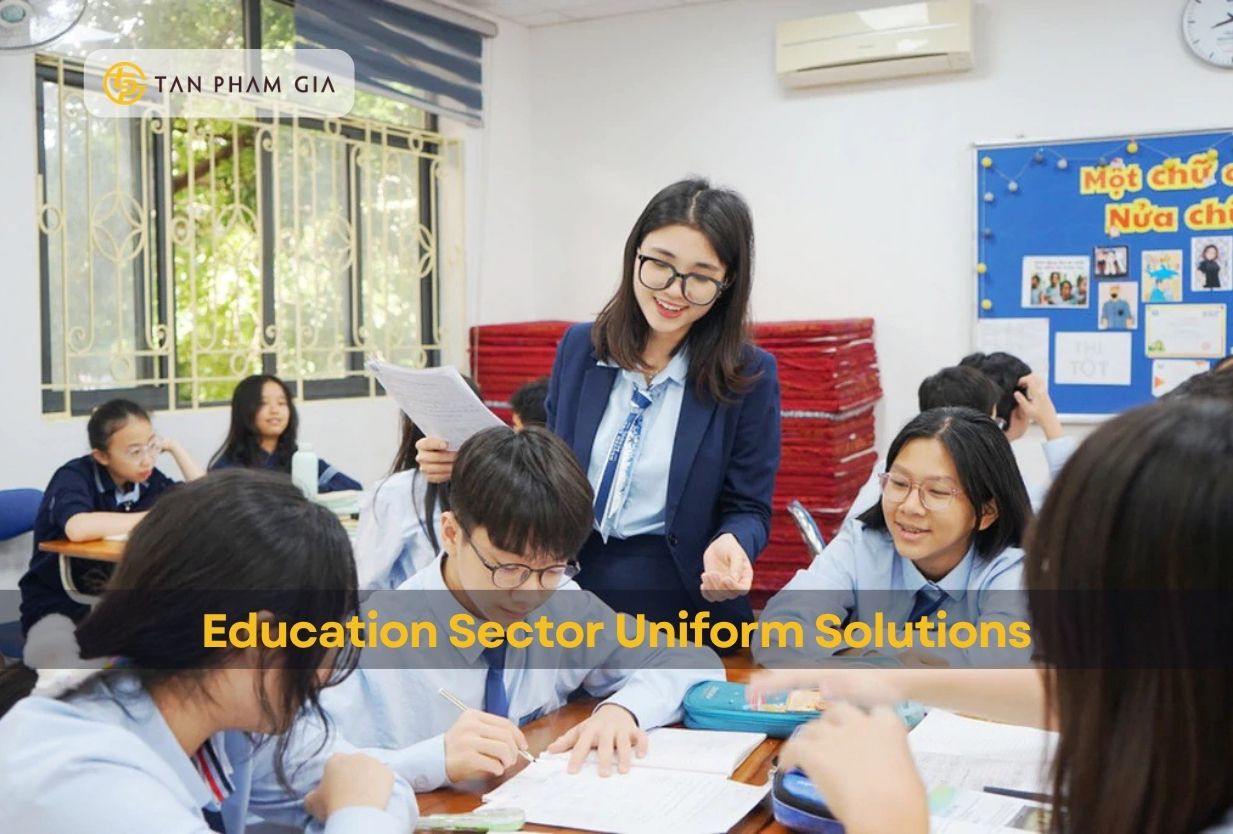
Education sector uniforms are more than everyday garments. They contribute to a school’s visual identity, professional image, and sense of consistency across students, teachers, and staff. For schools, education systems, and training organizations with large numbers of wearers, uniform planning needs to address design, fabric selection, wearer groups, production, and future reorders as one integrated solution.
Tan Pham Gia Uniform develops customized uniform solutions based on the practical requirements of each educational organization. By combining design consultation, fabric selection, sample development, and large-volume manufacturing, we help schools establish uniform systems that are consistent, practical, and suitable for long-term use.
Key Requirements for Education Sector Uniform Programs
Education sector uniform programs differ from standard corporate uniforms in three key areas: the diversity of wearer groups, the need to balance appearance with wearer comfort, and the importance of maintaining consistency as the program grows over time.
Uniforms Need to Serve Different Wearer Groups
An education system typically includes multiple wearer groups, each with different requirements. These groups should be identified before the uniform system is designed:
- Students across different grade levels
- Teachers and lecturers
- Administrative and operations staff
- Support and service personnel
- Teams participating in extracurricular activities and school events
Each group has different wearing frequency, activity levels, and appearance requirements. Rather than applying one uniform design across the entire organization, an effective education sector uniform program should develop appropriate options for each group while maintaining a consistent school identity.
Balancing School Identity With Wearer Comfort
Education sector uniforms need to achieve two objectives at the same time: representing the school’s identity and providing comfort for extended periods of wear.
Key considerations include:
- School colors and logo usage
- Styles appropriate for an educational environment
- Comfort during extended wear
- Freedom of movement for learning and group activities
- Appropriate fabric construction and garment fit
A uniform that focuses only on visual appearance without considering wearer experience may become uncomfortable for students, teachers, or staff during daily use.
Maintaining Consistency Across Large-Scale Programs
Schools with multiple grade levels, campuses, or branches need to maintain consistent specifications for:
- Colors
- Fabrics
- Garment fit
- Logo and branding placement
- Size charts
- Manufacturing specifications
Standardizing these specifications from the beginning helps minimize variations between production batches, particularly when schools need to replenish uniforms or expand the program to new campuses.
Common Challenges When Ordering School Uniforms
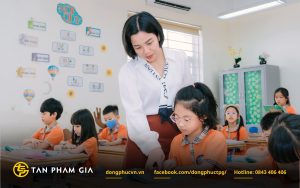
Many challenges in education sector uniform programs occur during implementation and quality control across multiple production cycles rather than during the initial design stage.
One Uniform Design May Not Suit Every Wearer Group
Applying one uniform design to students, teachers, and operations staff can result in garments that do not fully meet the needs of each group.
Students may require greater freedom of movement for learning and physical activities, while teachers and administrative staff may need a more polished and professional fit.
Fabric May Not Match the Wearing Environment
Education sector uniforms are often worn for extended periods and across different environments, including classrooms, school grounds, and outdoor activities.
If the fabric is not selected according to the intended application, garments may become uncomfortable or lose their appearance more quickly with frequent use and washing.
Colors, Fit, and Branding May Vary Between Production Batches
When different production orders are not based on the same technical specifications, variations may occur in fabric color, garment measurements, fit, or logo placement.
These differences may not be immediately obvious when each batch is reviewed separately but can become noticeable when students or staff from different production batches wear the uniforms together.
Managing Sizes and Quantities at Scale
Large education organizations often need to manage multiple age groups, body types, departments, and campuses.
Accurate size collection, quantity allocation, and inventory planning are therefore essential. Without a structured process, schools may experience shortages or excess inventory in specific sizes.
Reorders May Not Match the Original Approved Sample
Schools often need to replenish or replace uniforms for new academic years or incoming student groups.
If the original fabric, color, pattern, size specifications, and branding details are not properly documented, subsequent orders may differ from the original approved sample.
Education Sector Uniform Solutions by Wearer Group
An effective education sector uniform program should be structured around the actual wearer groups rather than applying one standard solution across the entire school.
Student Uniforms
Student uniforms should support learning, movement, and different seasonal requirements throughout the academic year.
Typical uniform categories may include:
- Uniform polo shirts
- Uniform T-shirts
- Uniform shirts
- Trousers and skirts
- Sports uniforms
- Jackets or seasonal outerwear
Each garment should be developed according to the students’ age group, activity level, school environment, and daily wearing requirements.

Teacher and Lecturer Uniforms
Teacher and lecturer uniforms should balance professionalism, comfort, and suitability for classroom environments.
Key considerations include:
- Polished and professional styling
- Appropriate fit for teaching environments
- Comfortable fabrics for extended wear
- Options to differentiate departments or management levels when required
For teachers, lecturers, and senior administrative personnel who require a more refined appearance, TPG SIGNATURE™ materials such as Silva Rayon™ and Elite Pique™ can be considered for professional, business-casual uniform applications.

Administrative and Operations Staff Uniforms
This group may include employees who regularly interact with students, parents, visitors, and external partners, such as:
- Reception staff
- Office staff
- Admissions consultants
- Support staff
- Technical and operations personnel
For office and education environments, TPG COTTONFLEX™, including Natural Cotton™, can be considered when everyday comfort and ease of wear are key requirements.
>>> Explore More: #1 Premium Corporate Uniform Solutions to Elevate Your Corporate Image
Extracurricular and Event Uniforms
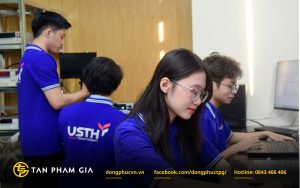
Extracurricular programs, school sports, and events often require uniforms specifically designed for active use.
Options may include:
- Polo shirts
- T-shirts
- Sportswear
- Event uniforms aligned with the school’s visual identity
For activities involving frequent movement, TPG AIRPIQUE™, including AeroGrid™ and AirMax Tech™, can be considered for applications requiring stretch and breathability.

Education Sector Uniform Fabric Consultation Based on Usage
A single fabric should not necessarily be applied across an entire education sector uniform program. Tan Pham Gia recommends fabric options based on intended use, wearing frequency, activity level, working environment, and the desired school image.
| Wearer / Application | Key Requirements | Fabric Options to Consider |
|---|---|---|
| Daily learning | Comfortable, soft, durable, easy to care for, suitable for frequent wear | Cotton / cotton blends / piqué – prioritize comfort, shape retention, and durability |
| Sports activities | Stretch, breathability, lightweight construction, freedom of movement | Performance polyester / polyester-spandex / sports piqué |
| Outdoor activities | Lightweight, moisture management, quick drying, ease of movement | Functional polyester / polyester-spandex |
| Teachers / lecturers | Professional appearance, shape retention, comfort, suitable for the school’s image |
|
| Administrative staff | Professional, easy to coordinate, shape retention, long-wearing comfort | Poly-spun / rayon blends / premium piqué |
Fabric Recommendations Based on Wearing Conditions
The same fabric does not need to be used across every uniform category. Tan Pham Gia recommends materials based on wearing duration, activity level, and working environment.
- Students and office staff: TPG COTTONFLEX™, including Natural Cotton™, can be considered for applications where softness and everyday comfort are priorities. Suitable applications may include:
- Student uniforms
- Teacher uniforms
- Office and administrative uniforms
- Uniforms for education and healthcare environments
- Sports and outdoor activities: TPG AIRPIQUE™, including AeroGrid™ and AirMax Tech™, can be considered for activities involving frequent movement, with stretch and breathable performance characteristics. Applications may include:
- Physical education sector uniforms
- Team-building activities
- Extracurricular programs
- Outdoor activities such as running and pickleball
Fabric Selection Based on School Image and Brand Identity
Fabric affects more than wearer comfort. It also influences drape, garment structure, shape retention, and how colors and logos appear on the finished uniform.
Therefore, fabric selection should be considered alongside the image the school wants to establish for each wearer group.
- Teachers and administrative staff: TPG SIGNATURE™ with Silva Rayon™ (AT220) can be considered for professional dress shirts where a refined appearance, natural drape, and shape retention are important.
- Admissions consultants and reception staff: Elite Pique™ from TPG SIGNATURE™ can be considered for business-casual polo uniforms used by customer-facing staff who regularly interact with students, parents, and visitors.
Segmenting fabrics by role allows schools to maintain a consistent overall brand identity while matching the garment to the requirements of each position.
Standardizing Fabric Specifications for Future Reorders
Once a fabric and uniform design have been approved, schools should maintain a complete technical specification as a reference for future production.
Key specifications should include:
- Fabric name and collection
- Fiber composition
- Fabric weight (GSM)
- Approved color and color reference
- Approved design specifications and uniform sample
Standardized documentation helps ensure that future reorders – whether for a new academic year or a new campus – maintain consistency in fabric, color, fit, and overall brand presentation.
Schools can contact Tan Pham Gia for detailed information about the TPG Fabric Collection™ and fabric options for different wearer groups.
Uniform Design Solutions Aligned With School Identity
Education sector uniform design should reflect the school’s visual identity while remaining practical for each wearer group.
Develop Designs Based on the School’s Brand Identity
Uniform development should incorporate the school’s existing brand elements, including:
- Brand colors
- Logo
- Typography and visual details
- Logo placement guidelines
- Overall visual language
Using these elements consistently helps transform uniforms into an extension of the school’s identity rather than simply everyday workwear.
Segment Designs by Role and Intended Use
Instead of applying one uniform design to everyone, schools can develop a coordinated uniform system for different wearer groups while maintaining common visual elements.
This approach allows each group to have garments suited to its role while preserving a recognizable overall school identity.
Develop and Approve Samples Before Bulk Production
Tan Pham Gia supports 2D/3D design development, sample making, and physical review before bulk production.
3D pattern development and mannequin-based fitting help evaluate garment proportions and fit before the design is scaled to larger production quantities, reducing the risk of inconsistencies during bulk manufacturing.

Education Sector Uniform Production Process at Tan Pham Gia
Step 1 – Requirements Assessment and Consultation
At the initial stage, Tan Pham Gia works with the school or education organization to identify:
- Required quantity
- Wearer groups
- Working and activity environments
- Brand identity requirements
- Fabric preferences
- Project budget
- Implementation timeline
Step 2 – Design and Fabric Consultation
Based on the requirements, Tan Pham Gia recommends appropriate garment designs and fabric options for each wearer group within the education system.
Step 3 – Design Development and Quotation
Once the direction is agreed upon, the design team develops detailed garment specifications and prepares a project-based quotation based on quantity, fabrics, construction, branding, and other technical requirements.
Step 4 – Sample Development and Approval
Before bulk production, physical samples can be developed for the school to review the garment fit, fabric, construction, color, and branding details.
Step 5 – Bulk Production and Quality Control
After sample approval, Tan Pham Gia proceeds with bulk production and quality control across key manufacturing stages, from incoming materials through finished garments.
Step 6 – Delivery and Future Reorders
After delivery, technical specifications and approved samples can be retained as references for future replenishment or replacement orders in subsequent academic years.
This helps maintain consistency across recurring education sector uniform programs.
Education Sector Uniform Manufacturing Capabilities of Tan Pham Gia
More Than 20 Years of Apparel and Manufacturing Experience
With more than 20 years of experience in apparel and garment manufacturing, Tan Pham Gia has developed practical expertise in uniform design, fabric selection, pattern development, garment construction, and production for different organizational environments.
Large-Volume Production Capability
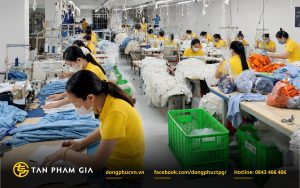
Tan Pham Gia’s production capabilities include:
- 20+ years of experience
- 2,000 m² factory
- Approximately 30,000 garments per month
- Corporate uniform orders from 100 units
This production setup supports schools, education systems, and organizations implementing uniforms for large numbers of wearers.
Quality Control From Materials to Finished Garments
Quality control is carried out across key production stages, from incoming materials to finished garments before delivery.
This approach helps reduce variations between production batches, which is particularly important for education sector uniform programs involving multiple orders throughout the academic year.
Technical Documentation for Future Reorders
Maintaining technical specifications, approved samples, size charts, colors, and production records helps support consistent replenishment and replacement orders.
This is particularly valuable for education organizations that need to maintain the same uniform standards across different academic years or campuses.
Why Choose Tan Pham Gia for Education Sector Uniform Projects?
Solution-Based Consultation
Tan Pham Gia approaches education sector uniform projects based on the school’s actual operational requirements rather than simply supplying standard garments.
This allows the uniform solution to be developed around wearer groups, environments, brand identity, production scale, and long-term use.
Custom Designs Based on School Identity
Each uniform design can be developed around the school’s own visual identity, including colors, logos, garment details, and branding requirements.
This creates a more distinctive uniform system rather than relying on generic designs.
Fabric Recommendations Based on Intended Use
Fabric selection is based on the environment, wearing frequency, activity level, and requirements of each wearer group.
This helps schools avoid applying one fabric across applications with very different performance and comfort requirements.
Approved Sample and Production Specification Control
Approved samples and technical specifications can be retained as references for subsequent production batches.
This provides a consistent basis for future reorders and helps maintain uniform standards over multiple academic years.
Capacity for Large-Volume Education Sector Uniform Projects
With a structured manufacturing system and large-volume production capability, Tan Pham Gia can support education sector uniform projects involving large numbers of students, teachers, and staff.
Support for Reorders and Long-Term Consistency
Technical documentation from previous orders can be used when schools need to replenish or replace uniforms, helping maintain consistency in fabric, color, fit, and branding over time.
(FAQs) Frequently Asked Questions About Education Sector Uniforms
Questions 1. How should schools choose uniforms for different grade levels?
Uniforms should be developed according to the students’ age, activity level, body proportions, and learning environment.
Younger students may require simpler garments with greater freedom of movement, while older students may place greater emphasis on a more polished appearance and school identity.
Questions 2. Which fabrics are suitable for student uniforms?
For everyday student uniforms, cotton, cotton blends, and piqué fabrics can be considered for comfort, shape retention, and durability under frequent washing.
For sports and outdoor activities, polyester or polyester-spandex performance fabrics may be more suitable where breathability, stretch, and freedom of movement are priorities.
Questions 3. Can Tan Pham Gia design uniforms based on the school’s identity?
Yes. Tan Pham Gia can develop uniform designs around the school’s colors, logo, and other visual identity elements.
The uniform system can also be segmented by wearer group while maintaining consistent visual elements across the school.
Questions 4. Does Tan Pham Gia provide physical samples before bulk production?
Yes. Physical samples can be developed before bulk production so the school can review the fabric, fit, construction, color, and branding details.
The design and development process can include 3D pattern development and mannequin-based fitting to support fit evaluation before larger-scale manufacturing.
Questions 5. How can schools ensure future reorders match the original approved uniform?
Tan Pham Gia can retain the technical specifications and approved sample as references for future production.
These records may include fabric specifications, size charts, approved colors, garment measurements, and logo placement, providing a consistent reference for subsequent orders.
Questions 6. Can Tan Pham Gia handle large-volume uniform projects for schools and education systems?
Yes. Tan Pham Gia provides corporate and organizational uniform manufacturing from 100 units, with production capacity designed to support larger projects depending on project requirements.
Questions 7. Can different uniform designs and fabrics be developed for different staff groups?
Yes. Different wearer groups can be assigned appropriate garment styles and fabric options while maintaining common brand elements such as school colors, logos, and visual details.
Request an Education Sector Uniform Consultation
An effective education sector uniform program requires more than selecting a garment. It involves wearer segmentation, fabric selection, brand-aligned design, sample approval, production quality control, and a clear approach to future reorders.
Tan Pham Gia provides custom uniform solutions for schools and education organizations, from design and fabric consultation to sample development, bulk manufacturing, quality control, and nationwide delivery.
Is your school or education system planning a new uniform program?
Share your required quantity, wearer groups, intended use, brand guidelines, and project requirements with Tan Pham Gia for a tailored uniform solution.
Hotline/Zalo 0843 406 406