Spa uniforms contribute to the overall image of a beauty and wellness business while supporting the specific responsibilities of receptionists, managers, and spa therapists. When selecting a uniform, businesses should consider the style, fabric, color, fit, and branding details to maintain a consistent appearance without restricting employees during their work.
This guide from Tan Pham Gia Uniform introduces popular spa uniform styles, recommendations for different staff roles, and the key factors businesses should evaluate before ordering custom uniforms.
What Are Spa Uniforms, and Why Should Spas Invest in Custom Designs?
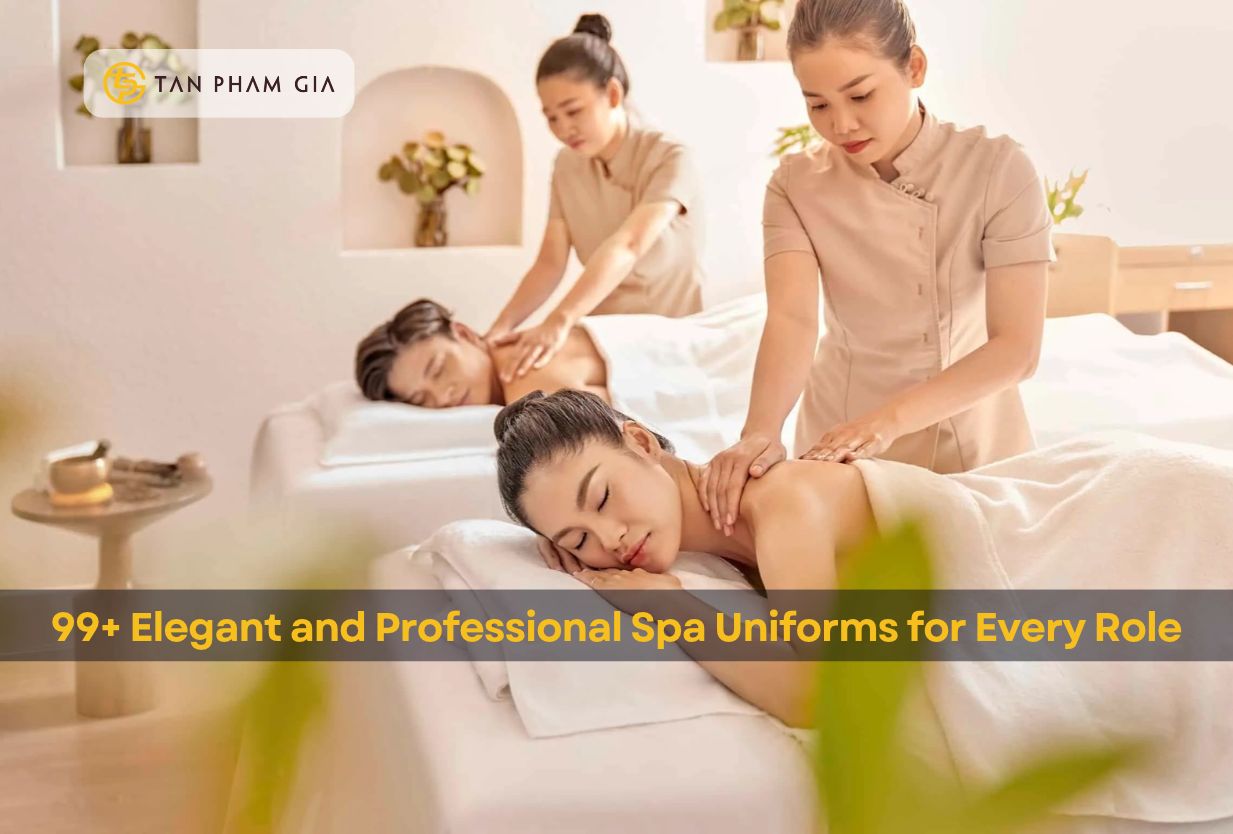
Spa uniforms are coordinated garments designed for employees working in beauty, wellness, and relaxation facilities. In addition to creating a polished appearance, each uniform should support the movements and working conditions associated with the wearer’s role.
Understanding the function of spa uniforms helps businesses define their design direction before selecting specific styles.
Uniforms should be chosen according to the responsibilities of receptionists, managers, and spa therapists. Each role involves different levels of customer interaction, movement, and hands-on work. Their uniforms may therefore require different structures while remaining connected through a shared color palette, logo, and brand details.
What Are Spa Uniforms?
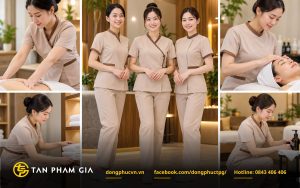
Spa uniforms are standardized garments that share coordinated styles, colors, fabrics, and branding details across a spa or multi-location spa chain. A uniform system may include tunics and pants for therapists, dresses or button-up shirts for receptionists, and blazers for managers.
Consistency does not mean that every employee must wear exactly the same outfit. A well-planned uniform system allows customers to recognize the brand while distinguishing employees by role.
Key Characteristics of Spa Staff Uniforms
Spa uniforms should be neat, modest, easy to move in, and practical to clean. These requirements directly affect employee comfort throughout a shift.
Important details to consider include:
- Appropriate fit: Provide sufficient ease through the shoulders, underarms, hips, and thighs.
- Adequate neckline coverage: Prevent excessive exposure when employees bend forward.
- Streamlined sleeves: Keep sleeves from catching on equipment or touching the treatment area.
- Suitable fabric surface: Avoid fabrics that are overly thin, prone to pilling, or uncomfortable against the skin.
- Minimal decorative details: Limit long bows, oversized buttons, and accessories that may catch on objects.
- Suitability for frequent washing: Match the fabric and construction to the facility’s wear frequency and cleaning procedures.
Why Should Spas Invest in Custom Uniform Designs?
Custom spa uniforms address four important needs: creating a coordinated team appearance, expressing the brand identity, distinguishing staff roles, and helping employees work comfortably. These priorities also apply to Tan Pham Gia Uniform’s solutions for healthcare, spa, and service-sector businesses.
Create a Professional and Consistent Team Appearance
Spa uniforms help employees maintain the same dress standard across different shifts. When colors, logos, and garment fits are standardized, the team appears more polished at the reception desk, in treatment rooms, and throughout consultation areas.
Businesses should also establish guidelines for footwear, name badges, and accessories to prevent inconsistent styling among employees.
Reinforce the Spa’s Brand Identity
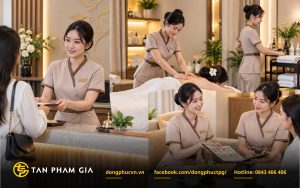
Well-designed spa uniforms integrate the brand’s colors and visual style into the customer experience. A minimalist spa may use a beige base with subtle piping, while an Asian-inspired facility may select Mandarin collars or crossover tops.
The logo should remain clear, correctly proportioned, and positioned where customers can see it. A uniform does not need to feature every brand color to create effective recognition.
Help Customers Identify Different Staff Roles
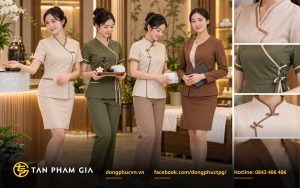
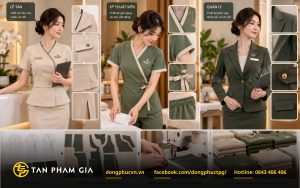
Using different garments for each role helps customers find the appropriate employee. Receptionists may wear dresses or button-up shirts, therapists may wear matching tunic-and-pant sets, and managers may add a blazer or a distinct branding detail.
These differences should be noticeable without disrupting the overall system. A shared base color, trim treatment, or logo can connect every role.
Improve Employee Comfort During Work
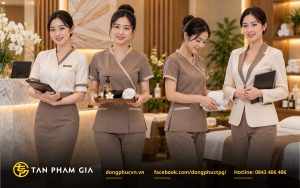
Suitable spa uniforms allow employees to perform their tasks without repeatedly adjusting their clothing. For therapists, range of motion and sleeve construction are often more important than figure-shaping details.
Samples should be tested while standing, sitting, bending, and reaching forward. An outfit that looks attractive while the wearer is standing still may not remain practical throughout a full shift.
How Should Spa Uniforms Be Selected for Different Staff Roles?
Uniforms should be chosen according to the movements and customer-contact requirements of each position before being coordinated into one brand system.
Spa Receptionist Uniforms
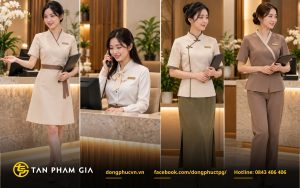
Spa receptionist uniforms should look elegant, fit appropriately, and complement the reception area. Because receptionists create the initial impression, their clothing should remain polished whether they are standing to welcome customers or sitting at a desk. Options to consider include:
- A-line dresses: Create a soft appearance while providing movement through the lower body.
- Button-up shirts with tailored pants: Suitable for employees who move between different areas.
- Mandarin-collar tops with skirts: Appropriate for spas with an Asian-inspired identity.
- Minimalist tops with pants: Adaptable to teams with diverse body types.
Dresses should provide appropriate coverage when the wearer is seated. Necklines, button plackets, and waist shaping should be tested on actual employees to prevent gaping or pulling.
Spa Manager Uniforms
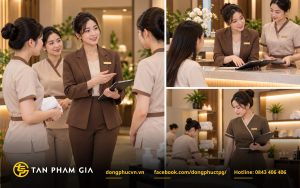
Spa manager uniforms should communicate a supervisory role while remaining practical for movement between departments. A lightweight blazer worn with a button-up shirt or minimalist top can work well in customer-facing areas.
If managers regularly inspect treatment rooms, businesses may select a Mandarin-collar top or tunic-and-pant set from the same design system used for therapists. A darker color or role-specific name badge can distinguish management staff.
Managers do not automatically need thick, closely fitted, or heavily layered garments. The level of formality should reflect the environment and the length of time the uniform will be worn.
Spa Therapist Uniforms
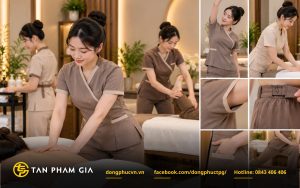
Spa uniforms for therapists should prioritize range of motion, appropriate coverage, and ease of care. A streamlined short-sleeve or elbow-length tunic paired with moderately relaxed straight-leg pants is often more practical than a fitted dress.
For massage and treatment staff, samples should be checked carefully around the shoulders, underarms, back, and pant rise. The uniform should not pull when employees reach forward, take a wider step, or shift their body weight.
Useful design details include:
- Moderate side vents to improve movement.
- An adjustable or flexible waistband.
- Low-profile pockets positioned away from areas that may press against customers.
- Zippers or buttons placed where they will not cause discomfort during treatments.
Businesses can review uniform projects completed by Tan Pham Gia Uniform for ideas on styling and differentiating garments by staff role. Companies seeking a more detailed spa uniform solution can also request project information relevant to their operating model.
Spa Uniforms for Different Business Models
Every spa model has different requirements for appearance, movement, and cleaning frequency. Uniforms should be selected according to the services actually provided rather than relying only on the business category.
Day Spas and Relaxation Spas
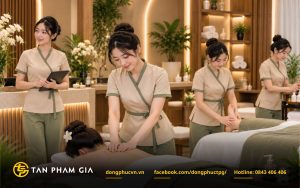
Day spas should consider garments with a visually light appearance, streamlined construction, and approachable styling. V-neck, low Mandarin-collar, or minimalist tops paired with pants can be combined with sage green, beige, blush pink, or light brown.
If the facility provides multiple massage services, the fabric and fit should support frequent movement. Long draped details and rigid accessories should be limited to prevent interference with treatments.
Clinic Spas and Aesthetic Clinics
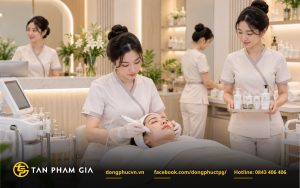
Clinic spas and aesthetic clinics may use white, light beige, or light gray to create a clean, clear, and polished appearance. Minimalist tunic-and-pant designs can help distinguish treatment staff from reception and consultation teams.
For light-colored garments, opacity should be checked under the lighting used in treatment rooms. White can create a visual impression of cleanliness, but it does not replace hygiene procedures or task-specific protective equipment.
Hotel and Resort Spas
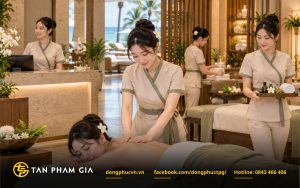
Spa uniforms used in hotels and resorts should coordinate with the color palette of the lobby and hotel reception team. The design may have softer lines while maintaining a connection through the collar, piping, or branded pattern.
The fabric should remain suitable for both air-conditioned treatment rooms and movement between different areas of the property.
>>> See also: 199+ Elegant, Premium, and Professional Hotel Uniform Designs
Nail & Beauty Salons
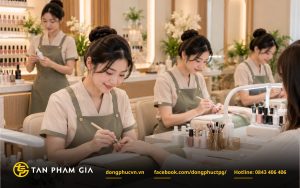
Nail and beauty salons should choose lightweight, easy-care garments with minimal details that could interfere with work. Employees may come into contact with nail dust, nail products, and cleaning solutions, so an appropriate apron may also be required.
Sleeves should remain streamlined while employees work at a table. Ordinary uniforms should not be treated as specialized chemical-protective clothing. Any protective requirements must be evaluated separately according to the products used and the tasks performed.
Popular Spa Uniform Styles
Four versatile design directions for spa uniforms are V-neck tops, Korean-inspired minimalist styles, Mandarin collars, and crossover tops. Each style can be adjusted through sleeve length, body fit, base color, and trim details to suit different employee groups.
Elegant, Modern V-Neck Designs
V-neck tunics create clean lines and pair easily with matching pants. This style can work well for spa therapists when the neckline depth is controlled and the body provides sufficient ease of movement.
Suggested color combinations include:
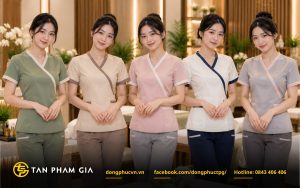
- Sage green V-neck top with matching pants and cream piping.
- Beige V-neck top with light brown pants and a brown logo.
- Blush pink V-neck top with light gray pants and white piping.
- Ivory V-neck top with navy pants and a matching navy logo.
- Light gray V-neck top with dark gray pants and pastel trim.
Samples should be tested while bending and reaching to confirm adequate coverage. A neckline that is too low or a body that is too fitted may require employees to adjust their clothing repeatedly.
Youthful Korean-Inspired Minimalist Styles
Korean-inspired spa uniforms are generally characterized by clean lines, soft colors, and restrained details. Businesses should provide a clear visual reference because this description does not refer to one standardized garment construction.
Possible design directions include:
- A round-neck top with straight-leg beige pants.
- A low stand-collar top with a concealed button placket in light blue.
- A moderately relaxed top with streamlined elbow-length sleeves in dusty pink.
- An A-line round-neck dress with subtle piping for receptionists.
- A cream top with gray pants and a single-color logo.
Balanced garment proportions and minimal surface details are important. A moderately relaxed fit can create a soft appearance while remaining practical for work.
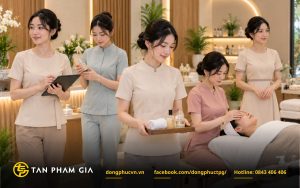
Traditional Mandarin-Collar Designs
Mandarin-collar tops can suit Asian-inspired spas, wellness centers, and interiors featuring natural wood. A low stand collar and streamlined body create a traditional influence while remaining practical.
Suggested combinations include:
- Beige Mandarin-collar top with brown piping.
- Light moss-green Mandarin-collar top with matching buttons.
- Ivory Mandarin-collar top with navy piping.
- Cocoa-brown Mandarin-collar top with cream piping.
- Dusty pink Mandarin-collar top with light brown pants.
The collar height and fit should be checked while the wearer turns their head and bends forward. A collar that is too stiff or tight may become uncomfortable during a long shift.
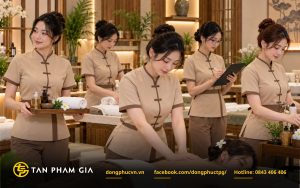
Distinctive Crossover Tops
Crossover tops create a distinctive look through overlapping front panels and diagonal trim. This style can give a spa a recognizable identity without requiring elaborate patterns.
Suggested options include:
- Beige crossover top with brown piping and matching pants.
- Sage green crossover top with ivory piping.
- Blush pink crossover top with gray piping.
- Ivory crossover top with moss-green piping.
- Light brown crossover top with cream piping.
The overlapping panels should be secured so they do not shift during work. Ties should remain short and streamlined or be replaced with a suitable concealed fastening system.
Businesses can combine these four design directions with five base colors and five finishing options: solid color, collar piping, sleeve piping, pocket piping, or a contrast placket. This approach creates 100 possible concept combinations, although every selected design should still be evaluated and sampled before use.
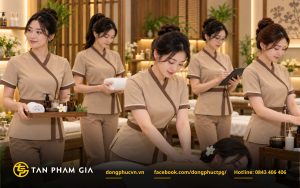
Which Fabrics Should Be Considered for Spa Uniforms?
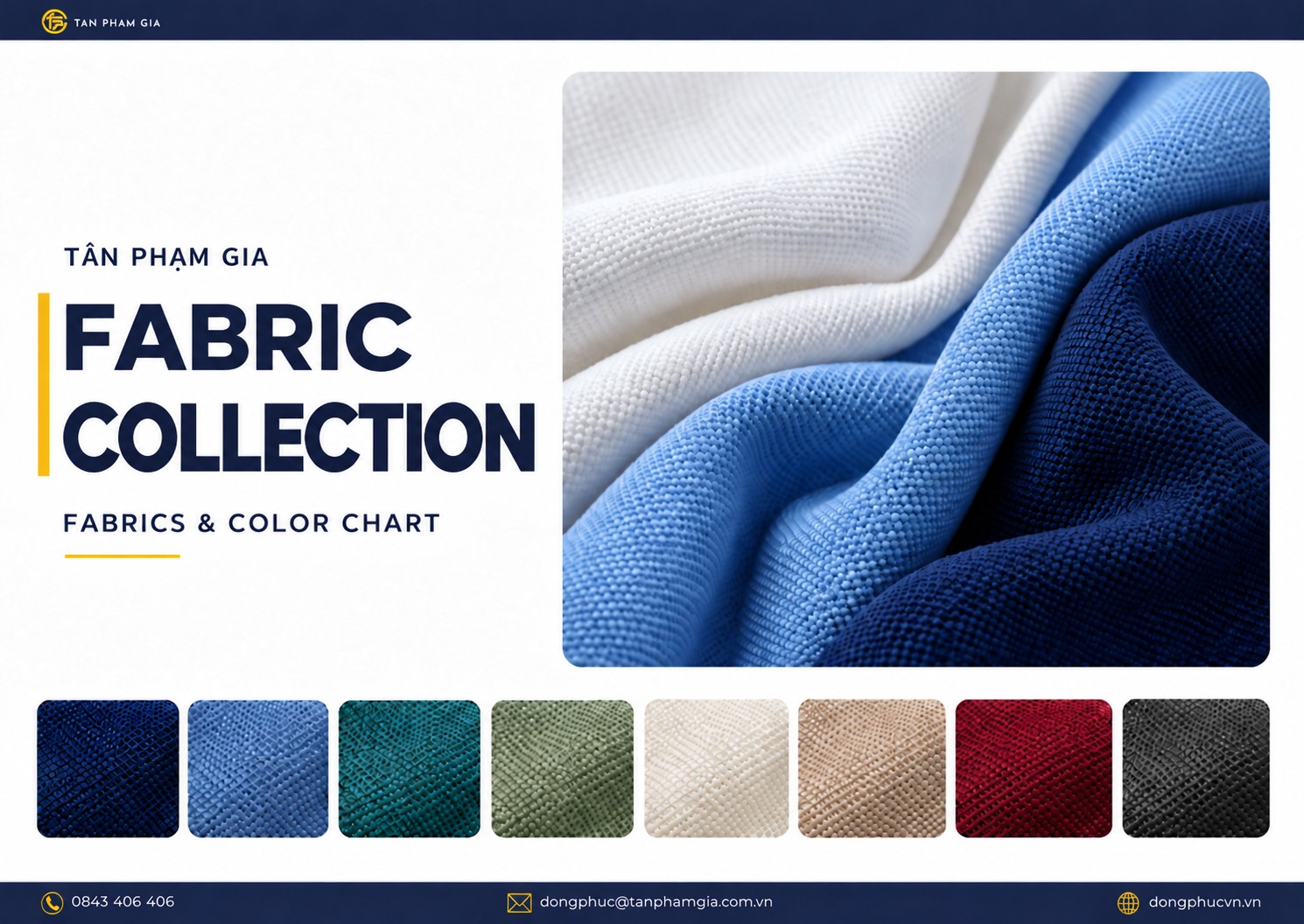
Fabric affects comfort, shape retention, and the cleaning requirements of spa uniforms. Businesses should compare fiber composition, fabric weight, stretch, and physical samples instead of selecting a material solely by its trade name.
The following trade-name fabric groups provide a starting point for discussing options for different roles and working conditions. Exact composition and performance should be confirmed against the selected fabric code and approved sample.
Khaki Vietnam fabric (MOST POPULAR)
Khaki Vietnam fabric may be considered for spa uniforms that require a structured silhouette, polished surface, and practical tunic-and-pant construction. It can be used for V-neck, Mandarin-collar, and crossover tops, as well as pants for spa therapists.
Businesses should select an appropriate weight that provides coverage without making the garment unnecessarily heavy. For employees who move frequently, the selected fabric should offer suitable flexibility and be evaluated as part of a completed garment sample.
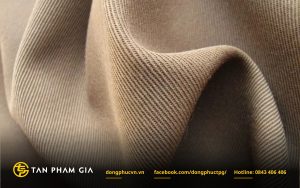
Korean cotton fabric
Korean cotton fabric may be considered for garments that require a soft surface and comfortable feel. Possible applications include therapist tops, receptionist blouses, and simple tunic-and-pant sets.
Before ordering, businesses should verify the fabric composition and test dimensional change after washing. An approved sample should maintain suitable coverage and dimensions without pulling during work-related movements.
Ponte di Roma fabric
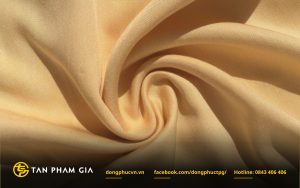
Ponte di Roma fabric is commonly considered for pants, dresses, and garments that require a polished silhouette. It may suit spa receptionist or manager uniforms.
The fabric weight and drape should be evaluated according to the construction of each garment. A dress should retain its shape while remaining comfortable when seated, while pants need sufficient room through the hips, thighs, and knees.
Cold Cotton Fabric
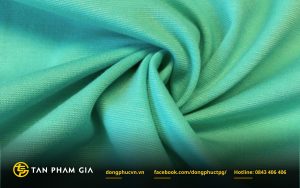
Cold Cotton Fabric may be considered for designs that require a soft surface and flexibility. It can be used for minimalist tunic-and-pant sets or spa therapist uniforms.
The selected fabric should provide sufficient coverage. Stretch recovery and dimensional stability after washing should also be tested before bulk production.
Stretch khaki fabric
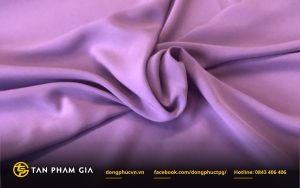
Stretch khaki fabric may suit spa uniforms that need to combine a defined silhouette with stretch. It can be considered for tops and pants worn by massage or treatment staff.
Garment samples should be tested while bending, sitting, and reaching forward. Fabric stretch must be supported by suitable pattern construction so that the garment does not become overly tight around the shoulders, underarms, or thighs.
Kate Silk fabric
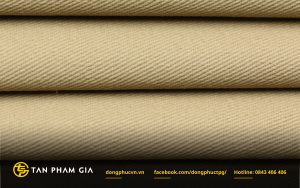
Kate Silk may be used for button-up shirts and receptionist tops that require a polished surface. Simple designs, solid colors, and a small logo can be coordinated with tailored pants or skirts.
During fabric approval, businesses should check opacity, wrinkling, and color retention. Light-colored garments should be viewed under the actual lighting used at the reception desk.
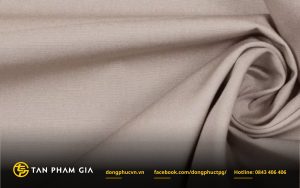
Raw silk fabric
Raw silk fabric may suit spa uniforms with a natural, understated appearance. Its textured surface can add visual interest to Mandarin-collar tops, crossover styles, and neutral-colored uniform sets.
The material should be evaluated against the spa’s garment-care requirements. If the uniform must maintain a consistently crisp appearance, businesses should test wrinkling after washing and consider the ironing required.
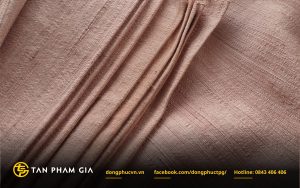
Linen fabric
Linen may suit resort spas or facilities with a nature-inspired interior. Relaxed tops, low Mandarin collars, and beige, light brown, or moss-green colors can coordinate well with wood finishes.
When selecting linen, businesses should balance its surface character against the acceptable level of wrinkling. Linen blends may also be considered depending on the intended use, but drape and garment fit should still be approved on a finished sample.
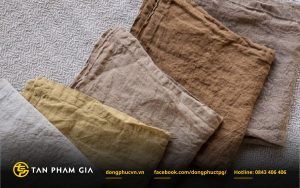
Criteria for Selecting Spa Uniform Fabrics
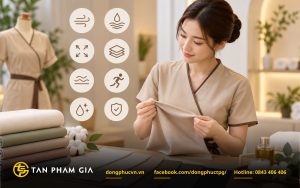
A suitable fabric should support both wearer comfort and the spa’s actual cleaning requirements. Breathability, moisture management, stretch, shape retention, stain removal, and coverage should be evaluated together.
Massage oils, essential oils, creams, and waxes should be tested on a fabric swatch before final approval. Using the same products applied at the spa provides a more realistic indication of stain removal and possible color changes after washing.
The following table provides a quick comparison of potential applications:
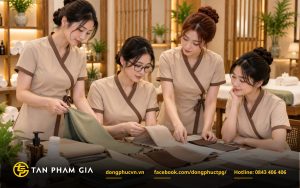
Which Colors Work Well for Spa Uniforms?
Color connects spa uniforms with the interior and overall brand style. In addition to reviewing colors in a digital design, businesses should inspect physical fabric under the facility’s actual lighting and consider garment-care requirements.
A coordinated palette can distinguish departments while maintaining a calm and consistent appearance.
Pastel Colors for Spa Uniforms
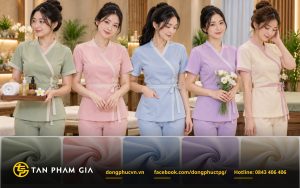
Pastels can suit spas seeking a soft, approachable image. Light sage green, blush pink, pale blue, and light purple can be used for both therapist uniforms and receptionist attire.
The selected shade should provide enough contrast for the logo and name badge to remain visible. For employees who frequently handle massage oils or skincare products, light colors should be evaluated for coverage and visible staining.
Neutral Colors: White, Beige, Gray, and Brown
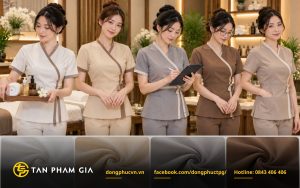
Neutral colors are easy to coordinate across multiple departments and provide a versatile background for branded details. Each color creates a different visual effect.
Coordinate Colors with the Spa’s Brand Identity
Color planning should begin with the brand’s primary color and the function of each garment group. A spa does not need to place every color from its logo on the same uniform.
For example, a brand using moss green and cream could select cream tops for receptionists, light moss-green sets for therapists, and dark moss-green blazers for managers. The logo and name badge would connect the groups visually.
Add Brand Accents Through Piping, Logos, and Contrast Details
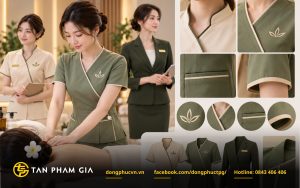
Piping and logos can create visible brand recognition without overloading the garment with decorative elements. Possible accent locations include the collar, placket, pocket opening, and sleeve edge.
The sample-approval process should confirm:
- Printed or embroidered thread colors.
- Logo size and placement.
- Piping width.
- How piping joins at the collar, placket, and pockets.
- Contrast between the base fabric and accent details.
Areas that may press against customers should not feature thick embroidery or raised decorations. Branding details should look polished without interfering with treatment work.
Common Mistakes When Ordering Spa Uniforms
Problems often begin during requirement planning and sample approval. An unsuitable decision may affect both the team’s appearance and the way uniforms are distributed and used.
Careful evaluation of garment styles, size charts, and approved-sample records helps reduce the risk of corrections after delivery.
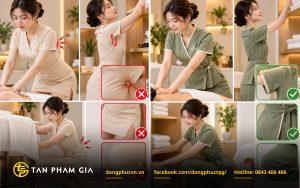
Choosing an Attractive Design Without Considering Employee Movement
Spa uniforms that are too tight, have restrictive sleeves, or use narrow fitted skirts may interfere with work. This is especially important for massage and treatment staff.
Employees should perform their regular work movements while wearing the sample. Any pulling around the shoulders, underarms, hips, or knees should be corrected before bulk production.
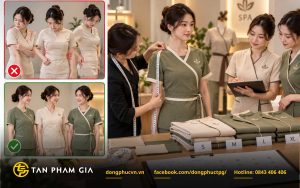
Failing to Standardize the Size Chart Before a Bulk Order
Ordering based only on sizes employees remember wearing can cause discrepancies. Measurements for S, M, or L can vary between garment styles and manufacturers.
Spas should use an agreed measurement chart and organize sample fittings whenever possible. Employees requiring individual adjustments should be recorded clearly.
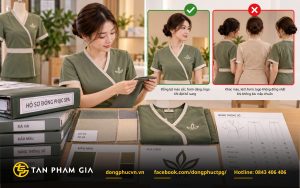
Failing to Retain an Approved Reference Sample
Without an approved reference sample, repeat orders may differ in color, fit, or logo size. This risk becomes more significant as a spa adds branches or orders uniforms in multiple batches.
Businesses should retain the fabric code, color swatch, measurement specifications, logo file, and approved garment sample. These records provide a reference for future production.
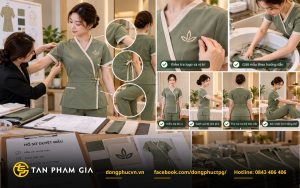
Skipping Sample Approval Before Bulk Production
A digital design cannot fully demonstrate drape, coverage, or wearer comfort. A physical sample allows these factors to be checked before the uniform is issued across the workforce.
In addition to evaluating fit, businesses should approve the logo application and wash the sample according to the recommended instructions. Final changes should be documented in the approval record to prevent production errors.
What Factors Affect the Cost of Custom Spa Uniforms?
The budget should be calculated according to the configuration of each uniform set. Fabric, design count, quantity, and finishing requirements all affect unit cost.
Understanding these factors helps spas prepare accurate information and compare quotations based on the same specifications.
Selected Fabric
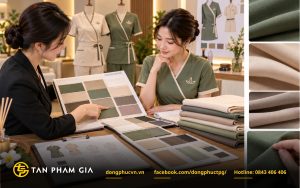
Fabric affects cost through its composition, weight, width, and finishing requirements. Materials with the same trade name may still vary in specification and price.
When comparing quotations, businesses should verify the exact fabric code and approved sample. A material should be selected according to the job and expected wear frequency rather than price alone.
Order Quantity
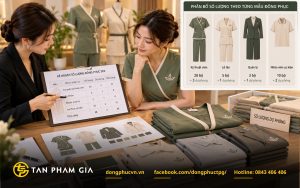
Order quantity affects how sample-development and production-setup costs are allocated. The total should be divided clearly by garment style, color, and staff group.
Spas should calculate the number of sets issued to each employee and include an appropriate reserve. Orders divided into several small design groups should be quoted according to their actual structure.
Garment Style and Design Complexity
Designs with multiple plackets, zippers, linings, or shaping details generally require additional production steps. Receptionist dresses, manager blazers, and therapist sets have different construction requirements.
To manage the budget, businesses can choose a streamlined structure for therapists and concentrate distinctive design details on customer-facing roles. Shared colors and logos can maintain consistency across the team.
Contrast Panels and Piping
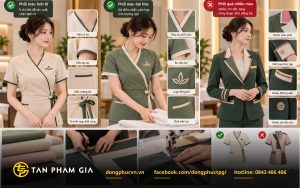
Contrast panels and piping increase cutting, sewing, and consistency-control requirements. Long piping lines or details that intersect at several points require accurate construction.
Businesses should retain details that serve a clear branding purpose. Adding too many colors may increase production work without improving the overall appearance.
Logo Printing or Embroidery
Logo cost depends on the design size, number of locations, and complexity. Printing or embroidery should suit the selected fabric and expected washing conditions.
The logo should be approved on the actual production fabric. Small lettering, color accuracy, and the fabric surface around the application should all be inspected.
Example quotation brief: A spa chain has five locations and 50 employees, with two uniform sets required per person. The team includes 10 receptionists, five managers, and 35 therapists. The total requirement is 100 sets: 20 receptionist sets, 10 manager sets, and 70 therapist sets.
When requesting a quotation, the chain should provide design references, quantities and sizes for each uniform category, logo-printing or embroidery requirements, and the expected delivery date.
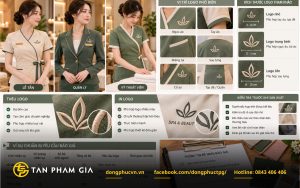
Does your spa require uniforms for several different roles? Send the quantities, employee groups, and design requirements so Tan Pham Gia Uniform can recommend an appropriate solution and prepare a quotation based on the business’s actual needs.
Tan Pham Gia Uniform’s Professional Spa Uniform Ordering Process
A successful uniform program requires coordination between the business and the manufacturer from the initial planning stage. Design, fabric, sizing, and delivery criteria should be agreed upon before production begins.
The following process helps spas prepare the necessary information and evaluate products at each stage.
Step 1: Define the Spa’s Uniform Requirements
The spa should list staff roles, quantities, and working conditions. This information provides the basis for developing an appropriate solution for each department.
Information to prepare includes:
- Spa model and primary services.
- Number of employees in each role.
- Number of sets required per employee.
- Brand colors and original logo files.
- Design references.
- Budget and required delivery date.
- Future reorder requirements.
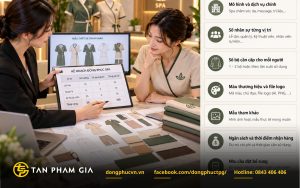
Step 2: Select Suitable Styles and Fabrics
Spa uniform styles and fabrics should be selected according to the work environment, employee role, and expected wear frequency. Receptionists require a polished customer-facing appearance, while therapists need greater attention to movement and garment care.
Tan Pham Gia Uniform recommends options for each employee group instead of applying one design to the entire team.
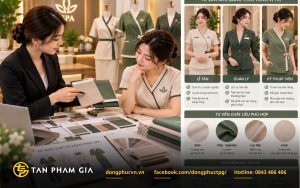
Step 3: Develop Designs Around the Spa’s Brand Identity
A spa uniform design should show the intended fit, colors, logo placement, and contrast details. The spa should provide its brand guidelines and images of the facility to establish a consistent visual direction.
At this stage, both parties should confirm the design scope, revision allowance, and sample-development cost in the quotation. Early agreement makes the approval process easier to manage.
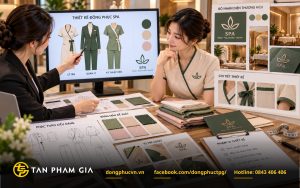
Step 4: Approve the Fabric and Garment Sample
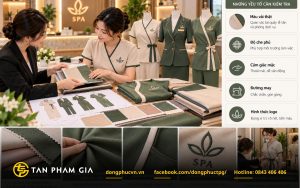
The spa should approve the physical fabric color and completed garment sample before confirming production. Coverage, wearer comfort, stitching, and logo appearance should all be inspected.
The color should also be reviewed at the reception desk and in treatment rooms. Evaluating the sample under the facility’s actual lighting provides a more accurate indication of how it coordinates with the interior.
Step 5: Review and Evaluate the Spa Uniform Sample
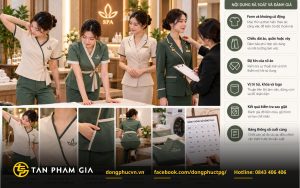
Representatives from each staff group should wear the sample while performing their regular work movements. Feedback should identify areas of tension, discomfort, or details requiring adjustment.
Final approval should cover:
- Fit and range of motion.
- Tunic, pant, or dress length.
- Neckline coverage.
- Pocket, zipper, and logo placement.
- Results after sample washing.
- Final measurement specifications.
Step 6: Begin Bulk Production
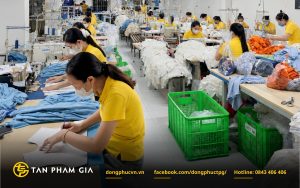
Bulk production proceeds according to the approved sample and confirmed size list. Quantity, schedule, payment terms, and acceptance criteria should be documented in the agreement.
Any change requested after production begins should be confirmed by both parties. This helps prevent discrepancies between the approved requirements and delivered products.
Step 7: Conduct Quality Control and Deliver the Spa Uniforms
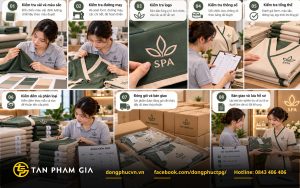
Before delivery, products should be checked for fabric, color, measurements, stitching, and logo application. Tan Pham Gia Uniform applies quality control to raw materials, work in progress, and finished garments.
Upon delivery, the spa should count the garments by design and size to simplify employee distribution. Approval records should be retained for acceptance and future repeat orders.
Frequently Asked Questions About Spa Uniforms
Questions 1. Which Fabric Is Suitable for Comfortable and Breathable Spa Uniforms?
Fabric should be selected according to the employee’s role and the results of sample testing. Therapists may prioritize comfort, flexibility, and suitability for frequent washing, while receptionists and managers may also require stronger shape retention.
Before approval, check the composition, coverage, wearer experience, and stain-removal performance with the oils and skincare products used at the spa.
Questions 2. Which Spa Uniform Colors Create a Relaxing Atmosphere?
Beige, light sage green, blush pink, and other pastel colors can support a soft visual environment. The selected shade should coordinate with the spa’s interior, lighting, and brand identity.
For employees who regularly handle massage oils or creams, test staining and cleaning on the actual fabric before making a final selection.
Questions 3. Which Spa Uniform Styles Are Currently Popular?
Versatile options include V-neck tunics, Korean-inspired minimalist designs, Mandarin collars, and crossover tops. Receptionists may wear dresses or button-up shirts with pants, while managers may use lightweight blazers.
The final style should support the employee’s actual movements and be tested on the wearer before production.
Questions 4. What Factors Affect the Cost of Custom Spa Uniforms?
Cost depends on the fabric, quantity, number of garment styles, construction, contrast details, and logo requirements.
Spas should provide the number of sets required for each role, the size breakdown, design references, and expected delivery date. Quotations should be compared using the same specifications and delivery conditions.
Questions 5. How Long Do Spa Uniform Sampling and Production Take?
Sample development takes approximately 10 days, while bulk production takes approximately 20–25 days. The business should provide its required delivery date during the initial consultation.
The schedule for each stage and the final delivery date should be confirmed according to the specific order.
Questions 6. Can Different Spa Uniforms Be Designed for Each Department?
Yes. Receptionists, managers, and therapists can use different garments suited to their responsibilities.
The designs should remain visually connected through shared colors, logos, piping, or other coordinated details. This allows the team to look consistent while making individual roles easy to identify.
Questions 7. What Information Should a Spa Provide to Receive a Quotation?
The spa should provide the total quantity, number of sets for each role, design references, colors, fabric requirements, original logo file, and required delivery date.
If the business already has a target budget or size chart, these should also be included so Tan Pham Gia Uniform can recommend and quote a more appropriate solution.
Questions 8. Can Tan Pham Gia Uniform Issue a VAT Invoice?
Yes. Tan Pham Gia Uniform can issue a VAT invoice for business uniform orders. The business should provide its invoicing information and confirm how VAT is presented in the quotation before approving the order.
Questions 9. Should a Spa Choose Printing or Embroidery for Its Logo?
The choice depends on the fabric, logo design, placement, and expected washing conditions. Embroidery can add texture to a logo, while printing may suit artwork with more detail or applications requiring a flatter surface.
Both options should be approved on the actual fabric, particularly when the logo is positioned in an area that may press against a customer during treatments.
Questions 10. How Should a Spa Uniform Sample Be Tested Before Production?
Representatives from each department should wear the sample while standing, sitting, bending, and reaching. The spa should evaluate coverage, range of motion, pocket and zipper placement, and logo positioning.
The fabric color should also be viewed under the facility’s actual lighting. Washing the sample according to the recommended instructions helps assess dimensions, color, and garment shape.
Questions 11. Which Records Should Be Retained for Repeat Spa Uniform Orders?
The spa should retain the fabric code, color swatch, size specifications, logo file, printing or embroidery requirements, and approved garment sample.
For repeat orders, the business should provide quantities by design and confirm current fabric and color availability. Complete records help maintain consistency between production batches.
Questions 12. Can Receptionists and Therapists Wear the Same Spa Uniform Design?
They can if the design supports the work requirements of both groups. However, receptionists generally prioritize a polished customer-facing appearance, while therapists require more range of motion and practical construction.
The spa should evaluate the sample on actual employees before deciding whether to use one shared design or separate styles.
Questions 13. What Is Tan Pham Gia Uniform’s Minimum Order Quantity for Spa Uniforms?
Tan Pham Gia Uniform accepts custom spa uniform orders starting from 100 sets. Businesses should provide the estimated quantity for each group – such as receptionists, managers, and therapists – to receive guidance on the appropriate design, fabric, and production structure.
Order Custom Spa Uniforms from Tan Pham Gia Uniform
Custom production allows a spa to develop a coordinated uniform system suited to its workforce and brand image. Starting with an initial reference, the business can adjust the garment style, color, and fabric for each employee group.
Tan Pham Gia Uniform supports businesses through consultation, sample development, production, quality control, and delivery.
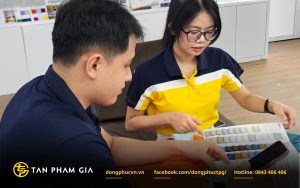
Spa Uniform Designs from Tan Pham Gia Uniform
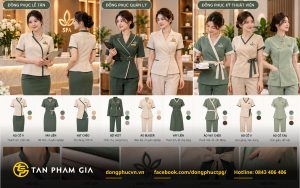
Spas can discuss their requirements and receive recommendations for receptionists, managers, and therapists. V-neck, Mandarin-collar, crossover, dress, and tunic-and-pant designs can be developed around the desired brand style.
When reviewing a proposed uniform, businesses should consider both the overall appearance and the construction details. A suitable design should meet operational, garment-care, and budget requirements.
Uniform Design Based on the Spa’s Brand Identity
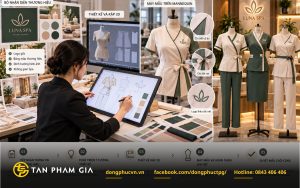
Brand-led spa uniform design connects colors, logos, and garment styling into one coordinated system. Tan Pham Gia Uniform combines applied fashion design, digital 3D patternmaking, and dress-form sample development to refine the garment fit.
The spa should provide the original logo file, brand color palette, and desired visual direction. This information helps align the design with the brand from the beginning.
Selecting Garment Styles, Colors, and Fabrics
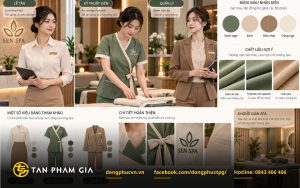
Uniform planning should balance appearance with working conditions. Different departments may use different garment structures while sharing the same brand colors and logo details.
For example, a nature-inspired spa may choose sage green crossover tops for therapists, cream button-up shirts for receptionists, and light brown blazers for managers. The fabric code, color shade, and garment fit should be finalized during sample approval.
Logo Printing and Embroidery
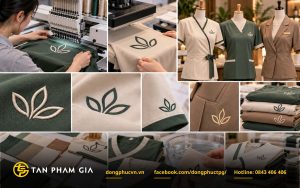
Printing and embroidery complete the brand identity on spa uniforms. The application method should be selected according to the fabric, artwork size, and garment-care requirements.
Tan Pham Gia Uniform provides logo printing and embroidery as part of its uniform solution. The logo should be approved on the actual fabric to evaluate color, clarity, and wearer comfort.
Contact Tan Pham Gia Uniform for Bulk Spa Uniform Orders
Spas should provide quantities by department, design requirements, and the required delivery date to receive specific recommendations. Multi-location spa systems should also include their distribution plan and anticipated reorder requirements.
- Hotline/Zalo: 0843 406 406
- Email: dongphuc@tanphamgia.com.vn
- Contact form: HERE
Suitable spa uniforms should look polished when welcoming customers, remain comfortable during work, and be practical to care for after every shift. Selecting garments by role, testing the fabric, and approving a completed sample before bulk production help businesses create a consistent team image.
Contact Tan Pham Gia Uniform at +84 843 406 406 or complete the contact form for guidance on spa uniform styles, fabrics, and bulk-order solutions.